
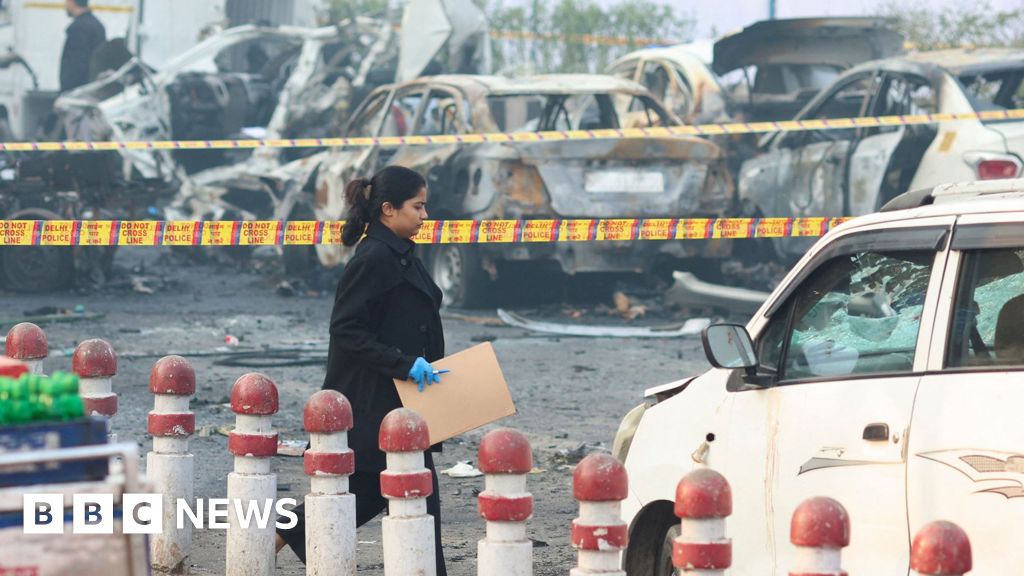
On a typical bustling Monday evening near the Red Fort metro station in Delhi, India’s capital, an unexpected and devastating event shattered the usual rhythm of the city. A powerful explosion ripped through a car parked on a busy road between two iconic and densely populated landmarks—the 17th-century Red Fort and Chandni Chowk, a vibrant commercial and clothing district. The blast claimed the lives of at least eight people and left more than twenty injured, sending shockwaves not only through the immediate vicinity but across the entire city and beyond.
The explosion was so intense that nearby vehicles were severely damaged, some nearly melting under the force and heat. Witnesses reported hearing the blast from several kilometers away, a grim testament to its magnitude. The location of the blast—a highly secure and heavily trafficked area—has intensified the impact on public consciousness. With Chandni Chowk abuzz due to the peak wedding season and the Red Fort drawing thousands of tourists daily, the site is normally a hub of lively commerce and culture. Instead, it became a scene of chaos and tragedy within moments.
Residents close to the blast site were among the first to react to the horror. Mohamed Hafiz, living less than 200 meters from the explosion, described how his home shook violently, and he initially feared an earthquake. Upon rushing outside, he was confronted with a terrifying scene: people running in panic, vehicles engulfed in flames, and bodies strewn across the street. Local bystanders scrambled to assist the injured amid the carnage. Hafiz recounted the distressing sight of blood everywhere and even body parts, painting a vivid picture of the blast’s brutal aftermath.
News of the explosion spread rapidly, prompting an immediate and heightened security response. Police declared a high alert across Delhi, with neighboring states following suit to prevent further incidents. Security checkpoints were established at key entry points into the city, including the border crossing from Noida, a suburban area adjacent to Delhi. Journalists traveling into the capital encountered long queues of vehicles undergoing meticulous searches by tense and vigilant police officers. The atmosphere was heavy with disbelief, as many residents grappled with the reality that such a violent attack had struck their city for the first time in over a decade.
Inside the capital, the streets were eerily quiet, a stark contrast to the usual late-evening activity. Most roads were deserted as people stayed indoors in fear and uncertainty. At Lok Nayak Hospital, where the injured were rushed for treatment, a crowd gathered behind police barricades, seeking information about their loved ones and the unfolding situation. Confusion and speculation ran high among onlookers and journalists alike, with many struggling to comprehend the cause and implications of the blast.
Among the worried crowd was Rajesh Kumar, a tea shop worker near the hospital. He expressed a mixture of shock and cautious optimism, reflecting the sentiments of many Delhi residents. Kumar shared that while his family in the neighboring state of Uttar Pradesh urged him to leave the city out of panic, he believed in the capabilities of the security forces to uncover the truth behind the attack. “I am a little worried and shocked but I don’t think Delhi has suddenly become unsafe,” he said, embodying a common hope that the city would soon regain its sense of security.
However, not everyone had the luxury of reassurance. Many were desperately searching for missing relatives caught near the blast site. Mohammed Azghar, whose brother worked as an electric rickshaw driver in the area, was among them. Since the explosion, his brother had been unreachable, and despite searches around Red Fort, Chandni Chowk, and the surrounding streets, there was no sign of him. Adding to the anguish, the police had confiscated his brother’s vehicle as part of the investigation, but Azghar pleaded for help in locating his sibling. “I just want some news—good or bad,” he said, highlighting the painful uncertainty faced by families in the wake of the tragedy.
Visiting the blast site later that evening provided a stark visual of the destruction wrought. The once lively road lay deserted, an unusual sight given the location’s typical nighttime activity. Only security personnel and members of the press were present, permitted closer access as officials eased some restrictions to allow coverage of the incident. The scene was grim: twisted wreckage of cars, rickshaws, and tuk-tuks scattered across the street, some burned beyond recognition. Blood stains marked the pavement, silent reminders of the lives lost and injured in the explosion.
Local residents