
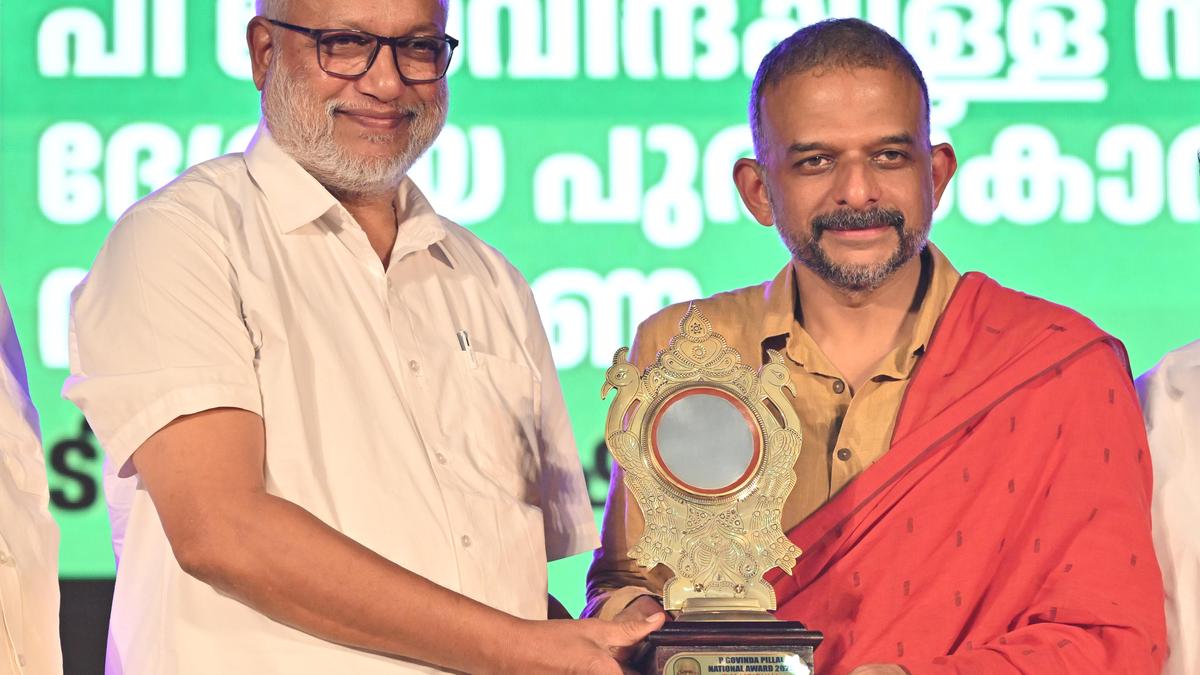
On November 22, 2025, renowned Carnatic musician T.M. Krishna was honored with the fifth P. Govinda Pillai memorial national award at a ceremony held at the University Senate Hall in Thiruvananthapuram. The award, instituted by the PG Samskrithi Kendram in memory of the late Marxist ideologue and scholar P. Govinda Pillai, was presented by Communist Party of India (Marxist) national general secretary M.A. Baby. The occasion marked the 13th death anniversary of P. Govinda Pillai and gathered an audience comprising political leaders, cultural figures, and family members of the late scholar.
T.M. Krishna, widely respected for his deep engagement with the art form of Carnatic music, used the platform to express his belief that art must serve as a reflection of reality rather than an escape from it. He emphasized that the true essence of an artist lies in their honesty and authenticity, not only towards themselves but also towards the society and environment they inhabit. According to Krishna, art forms such as music, dance, theatre, and painting should maintain a continuous dialogue with the world around them to be meaningful and relevant.
Drawing on the legacy of great Carnatic composers like Tyagaraja and Muthuswami Dikshitar, Krishna noted that their genius stemmed from their ability to engage with their times — to respond thoughtfully and critically to the social and cultural contexts of their era. This, he argued, is what made their compositions timeless and powerful. Extending this thought to contemporary art, Krishna asserted that art must be present and modern, constantly asking challenging questions and provoking thought. He expressed a strong personal commitment to this ideal, stating that his art aims to “bother” the audience — to evoke even the slightest movement or change within them. For Krishna, if his art fails to move either himself or his listeners, then it is a failure of purpose and a waste of time.
Receiving an award named after P. Govinda Pillai held special significance for Krishna, who admired Pillai’s steadfast dedication to humanity, social justice, and equality. He also noted Pillai’s lifelong passion for books and learning, attributing this intellectual curiosity as an inspiration for his own artistic journey. The musician’s reflections highlighted the close alignment between his own values and those represented by the award’s namesake.
M.A. Baby, who inaugurated the event and presented the award, praised T.M. Krishna for his efforts to challenge and reshape the traditional structures of Carnatic music performance. Baby acknowledged Krishna’s innovative approach, which introduced creative changes without compromising the scientific rigor and classical foundations of the art form. This recognition underscored Krishna’s role not only as a performer but also as a transformative figure striving to bring fresh perspectives into a deeply rooted musical tradition.
The ceremony was presided over by former Kerala Assembly Speaker M. Vijayakumar, and attended by key dignitaries including Communist Party of India State secretary Binoy Viswam, Kerala’s Minister for General Education V. Sivankutty, and R. Parvathy Devi, PG Samskrithi Kendram secretary and daughter of P. Govinda Pillai. The citation for the award was read by the journalist M.G. Radhakrishnan, who is also Pillai’s son. The keynote address was delivered by dancer Rajasree Warrier, who added a cultural and artistic dimension to the event.
Before the award presentation, T.M. Krishna performed an hour-long concert featuring compositions primarily by Kerala’s distinguished musical figures such as Sree Narayana Guru, Walsalam Sastriyar, and Swati Tirunal. This choice of repertoire reflected Krishna’s deep respect for regional musical heritage and his commitment to bringing diverse voices into the mainstream classical music narrative.
The P. Govinda Pillai memorial national award carries a cash prize of ₹3 lakh along with a citation, symbolizing recognition not only of artistic excellence but also of a commitment to social and intellectual ideals embodied by P. Govinda Pillai. Instituted in memory of Pillai’s contributions as a Marxist ideologue and cultural thinker, the award celebrates individuals who, like him, integrate art and social consciousness.
This event and award ceremony are significant in the cultural landscape as they highlight the intersection of art, politics, and social thought. T.M. Krishna’s acceptance speech and performance illustrated how art can serve as a powerful vehicle for engaging with contemporary issues, challenging conventions, and fostering