
A groundbreaking new map has dramatically expanded our understanding of the ancient Roman Empire’s vast road network, adding more than 60,000 miles of previously unrecorded routes. This updated map charts the intricate web of Roman roads spanning from Great Britain in the north to North Africa in the south, providing the most comprehensive view yet of one of history’s most remarkable transportation systems. The findings, published recently in the journal Scientific Data, shed new light on the scale and complexity of Roman infrastructure at its height around 150 CE, a time when the empire was experiencing considerable prosperity.
The project behind this achievement is an online database called Itiner-e, which was compiled by an international team of archaeologists and historians. Using a combination of earlier databases, satellite imagery, and archaeological reports, the researchers painstakingly pieced together the road network that connected the sprawling Roman territories. “For the first time, we have a good, Empire-wide overview of almost the complete Roman road network with main and secondary roads,” said Adam Pažout, an archaeologist at the Autonomous University of Barcelona and co-lead author of the study. The map includes not only major highways that linked cities and military installations but also smaller, local routes that had previously been overlooked.
The Roman road system was essential for the empire’s administration, military operations, trade, and communication. Major roads such as the famous Appian Way, which radiated south from Rome, were engineering marvels of their time, constructed with carefully layered materials including sand, gravel, and stone to ensure durability. These roads facilitated the rapid movement of Roman legions, goods, and information across vast distances, helping to unify the empire and sustain its power. Historian Ray Laurence of Macquarie University in Australia, who was not involved in the study, emphasized the importance of these roads: “Fundamentally, the road system underwrote the development of a Roman empire.”
Interestingly, many modern roads still follow the paths laid down by the Romans. For instance, a section of the United Kingdom’s A5 highway, running between London and Wroxeter near the Welsh border, traces the route of a major Roman road later known as Watling Street. However, the Roman road network extended far beyond these well-known arteries. “The roads are anywhere that the Romans walked,” explained Tom Brughmans, an archaeologist at Aarhus University in Denmark and co-lead author of the study. “There were villas and towns and farms all over the Roman Empire, and every one of them was reachable by a road.”
The newly mapped network totals over 185,000 miles of roads—nearly twice the length reported by previous research. This staggering figure includes main thoroughfares as well as secondary and local routes that were often missing from earlier reconstructions. Yet the researchers caution that only a small percentage of these roads are known with certainty. According to Brughmans, about 90 percent of the network is “conjectured” based on strong evidence but not definitively confirmed, while roughly 7 percent is considered “hypothetical,” representing locations where roads likely existed but where precise routes remain uncertain.
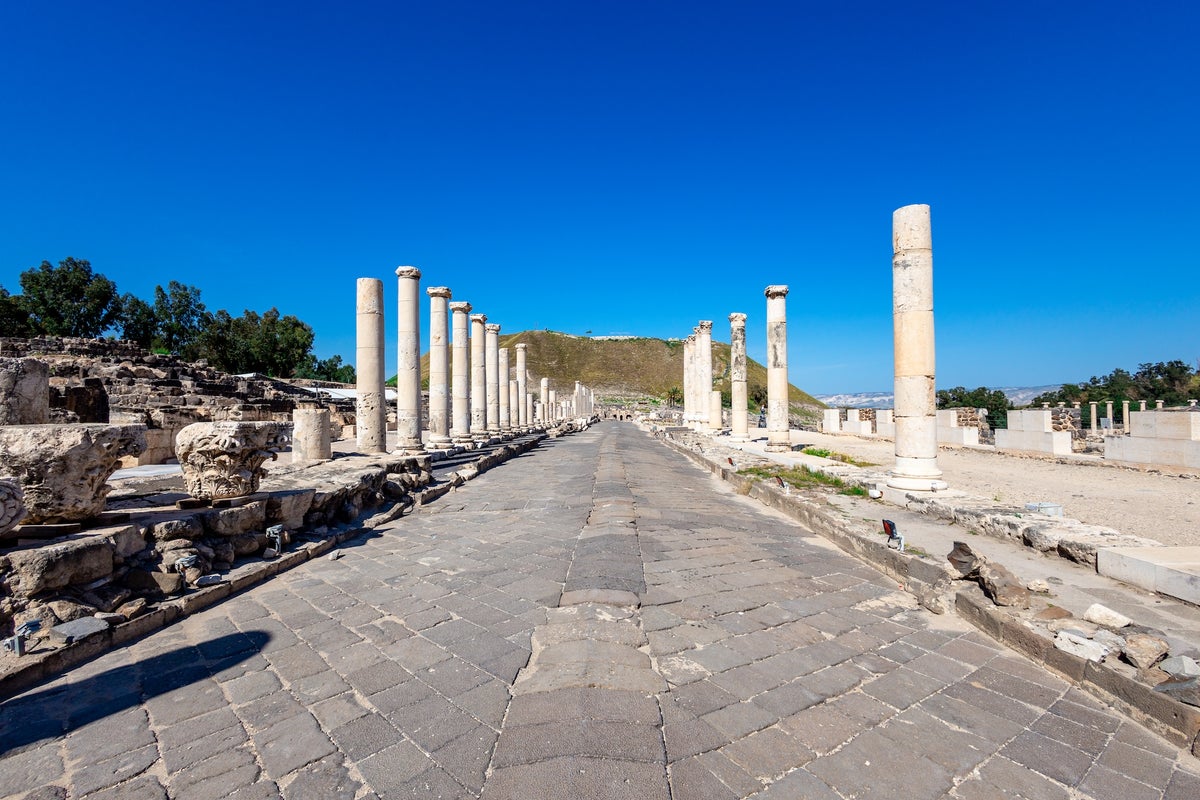
One illustrative example comes from modern-day Israel, where Roman records mention a road running between the coast and a military camp. While the existence of the road is documented, its exact path has been inferred rather than directly observed. This uncertainty highlights the challenges archaeologists face in reconstructing ancient infrastructure, especially in regions where physical traces have eroded or been obscured by later development.
The Itiner-e project not only provides a detailed map but also serves as a “confidence map” indicating which parts of the network are well established and which areas require further investigation. Brughmans describes this as a “call to action” for researchers, encouraging targeted archaeological work to refine our understanding of Roman roads’ precise locations. By identifying gaps in the current knowledge, the study aims to guide future explorations and discoveries.
Beyond their historical significance, Roman roads offer insights into broader social and economic patterns within the empire. The network facilitated mobility for people and goods, enabling trade across diverse regions and contributing to the spread of cultural practices and even diseases. Understanding the full extent of these roads can help historians and scientists analyze how the Roman Empire functioned and adapted over time.
The creation of the Itiner-e database represents a significant advance in digital archaeology and historical cartography. By integrating diverse data sources and employing modern technologies such as satellite imaging, the researchers have produced a resource