
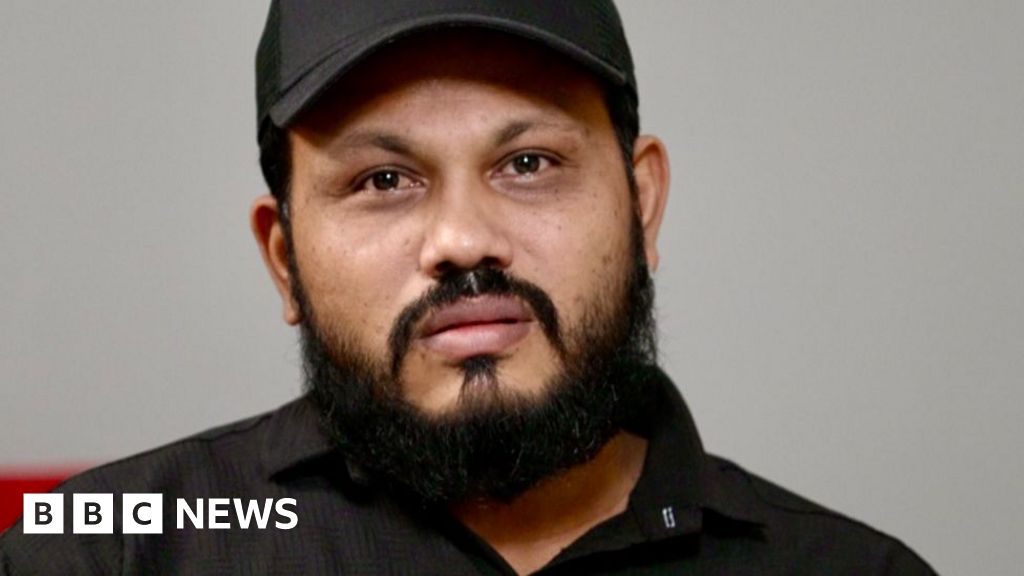
The sole survivor of the tragic Air India plane crash that claimed the lives of 241 people on board has opened up about his harrowing experience, his ongoing struggles, and the profound impact the disaster has had on his life and family. Viswashkumar Ramesh, who miraculously escaped the crash, describes himself as the “luckiest man” alive, yet he is grappling with severe physical injuries and deep psychological trauma.
The crash occurred in June when a Boeing 787 flight bound for London went down shortly after taking off from Ahmedabad, in western India. Flames engulfed the aircraft in a horrifying scene that shocked the world. Video footage from the aftermath showed Mr. Ramesh walking away from the wreckage with only superficial injuries, smoke billowing behind him, an image that captured global attention and hope amid the tragedy.
Despite his survival, Mr. Ramesh’s story is marked by tremendous loss. His younger brother, Ajay, was a few seats away on the same flight and perished in the crash. Mr. Ramesh described his brother as his “backbone,” someone who had supported him for years. The devastation of losing his brother, combined with his own injuries and trauma, has left him feeling isolated and profoundly affected.
Since returning to his home in Leicester, UK, Mr. Ramesh has struggled immensely with post-traumatic stress disorder (PTSD). His advisers reveal that he has found it difficult to communicate even with his wife and four-year-old son, choosing instead to isolate himself in his room. “Now I’m alone. I just sit in my room alone, not talking with my wife, my son. I just like to be alone in my house,” he said during a recent interview with BBC News, his first extensive media engagement since the crash.
Speaking emotionally, and at times breaking down, Mr. Ramesh recounted the mental and physical toll the crash has taken on him and his family. His mother, too, has been deeply affected, reportedly sitting outside the door every day, silent and withdrawn. “I’m thinking all night, I’m suffering mentally. Every day is painful for the whole family,” he said. The psychological scars are profound, with Mr. Ramesh unable to revisit the memories of the crash itself. “I can’t say anything about that now,” he admitted, highlighting the depth of his trauma.
Physically, Mr. Ramesh bears the marks of the crash. He escaped the wreckage by unbuckling his seatbelt and crawling through an opening in the fuselage near his seat, 11A. However, he now suffers from persistent pain in his leg, shoulder, knee, and back, which has left him unable to work or drive. “When I walk, not walk properly, slowly, slowly, my wife helps,” he explained. Despite being diagnosed with PTSD while still hospitalized in India, he has not received any ongoing medical treatment for his condition since returning to the UK.
The crash resulted in the deaths of 241 people, including 169 Indian nationals, 52 Britons, and 19 individuals on the ground. A preliminary report released by India’s Aircraft Accident Investigation Bureau in July indicated that the fuel supply to the engines was cut off just seconds after takeoff, though the full investigation remains ongoing.
Mr. Ramesh’s advisers have expressed concern not only for his mental and physical health but also for the treatment he has received since the disaster. They describe him as “lost and broken,” facing a long road to recovery with limited support. The family’s fishing business in Diu, India, which Mr. Ramesh and his brother managed before the crash, has collapsed, adding financial hardship to their list of challenges.
Relations with Air India, the airline operating the ill-fated flight, have become a source of frustration. The airline has made an interim compensation payment of £21,500 to Mr. Ramesh, which he has accepted, but advisers say this amount is far from sufficient to cover his immediate needs or the long-term impact of the tragedy. The family and their representatives have invited Air India executives to meet with them on three occasions, but their requests have been either ignored or declined. This lack of engagement has prompted the family’s spokesman, Radd Seiger, to publicly appeal once more for a meeting, hoping to establish dialogue and seek better support for Mr. Ramesh and other affected families.
“It