
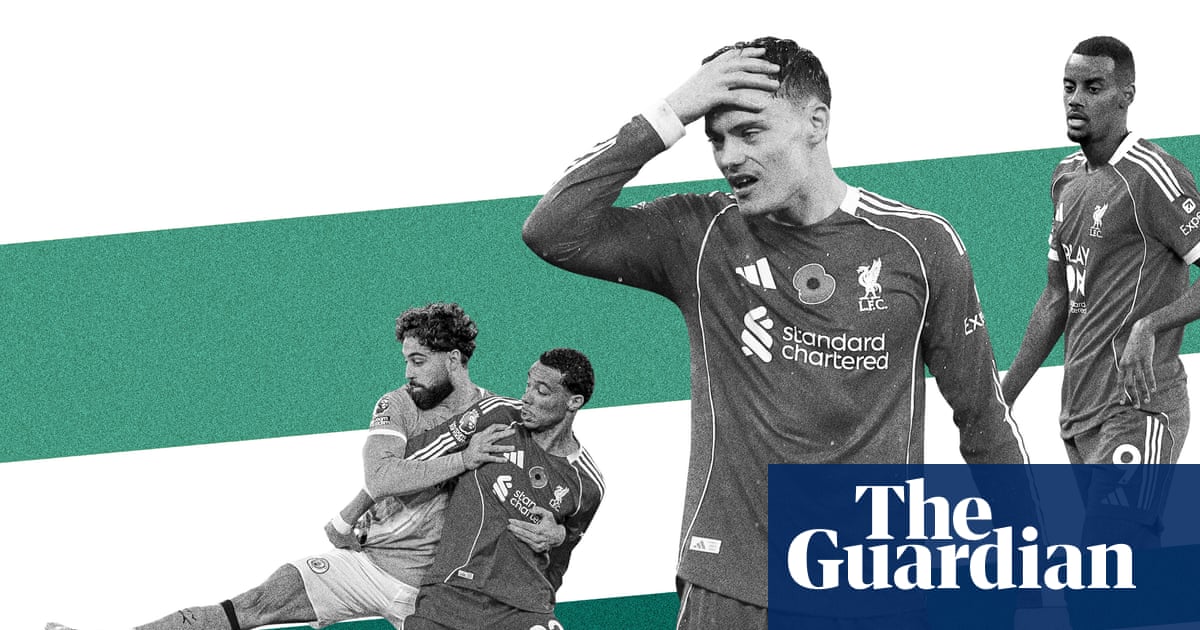
Liverpool entered the current Premier League season as defending champions, having invested heavily over the summer in an attempt to refresh and strengthen their squad. The club spent a staggering £424 million (approximately $550 million) on new signings, with an additional £40 million ($53 million) reportedly lined up for Crystal Palace centre-back Marc Guéhi, a deal that ultimately fell through. Despite this enormous financial outlay, the team’s performances have been perplexing, leaving fans and analysts alike questioning the coherence and direction of the squad’s rebuild. The pressing question remains: what was Liverpool trying to achieve with these changes, and how exactly was the new team supposed to function on the pitch?
At first glance, the need for reinforcements was clear. Injuries and dips in form had exposed weaknesses in the squad, particularly in defense. The absence of Giovanni Lo Celso and the underwhelming displays from Ibrahima Konaté, especially highlighted in the recent 3-0 defeat to Manchester City, have drawn attention to Liverpool’s defensive fragility. For instance, an early penalty conceded against Manchester City arose from Konaté’s unfortunate positioning, which interfered with teammate Conor Bradley as Jérémy Doku cut inside from the left flank. The defensive partnership of Konaté and Virgil van Dijk, once a stalwart duo for Liverpool, has failed to inspire confidence this season, with both players struggling to replicate their previous standards.
However, Liverpool’s defensive troubles appear to stem less from individual errors and more from broader structural issues within the team. The club’s defensive vulnerabilities have been glaring, particularly their susceptibility to direct balls played behind the full-backs. This structural weakness persisted despite attempts to revert to the midfield setup from the previous season. For example, in recent matches against Aston Villa and Real Madrid, Liverpool fielded largely the same core squad from last season, including 10 players who were already at the club, supplemented by new signing Hugo Ekitike and, later, Florian Wirtz replacing Cody Gakpo. While Liverpool won both matches, their defensive frailty was not truly tested by these opponents, leaving lingering concerns about the team’s overall balance.
The complexity of Liverpool’s current predicament is compounded by the delicate nature of team dynamics in soccer. Tactical changes ripple through the entire lineup, affecting not only individual roles but also the interplay between players. Take, for instance, the absence of Trent Alexander-Arnold, whose unique ability to invert from right-back to operate almost as an auxiliary holding midfielder has been critical. His presence provides protection for the centre-backs, while enabling midfielders like Ryan Gravenberch, Alexis Mac Allister, and Dominik Szoboszlai to operate more freely. Alexander-Arnold’s capacity to deliver pinpoint long passes to switch play and quick balls to release Mohamed Salah on the right wing is another vital component of Liverpool’s attacking arsenal. His absence or reduced role has forced the team to adapt in ways that have perhaps unsettled the established balance.
Manager Arne Slot, who took over this season, inherited a squad molded by Jürgen Klopp’s tenure, but it was inevitable that his side would begin to take on his own identity. Slot, convinced that Liverpool had become predictable to opponents — a consequence, in part, of limited transfer activity last summer — sought to implement significant changes. Yet these changes appear to have been introduced too rapidly and without a clear, cohesive plan, making it difficult to discern what the intended style of play was meant to be.
A major element of Liverpool’s summer strategy was investing heavily in attacking talent. The club signed two centre-forwards, Alexander Isak and Hugo Ekitike, for a combined fee of £210 million ($276 million). This level of spending on forwards is exceptional, suggesting that Liverpool aimed to have a powerful, dynamic attack with options to rotate and keep players fresh. There is speculation that the club might have planned to use only one of these strikers at a time, keeping the other as an impact substitute, a strategy reminiscent of how West Brom once managed Romelu Lukaku and Shane Long. Both Isak and Ekitike also offer the flexibility to operate wide if necessary, adding depth to the squad.
Yet the integration of Florian Wirtz, signed for around £100 million ($131 million) plus add-ons, has been more problematic. Wirtz was reportedly promised a central creative role, a key factor in persuading him to join Liverpool over