
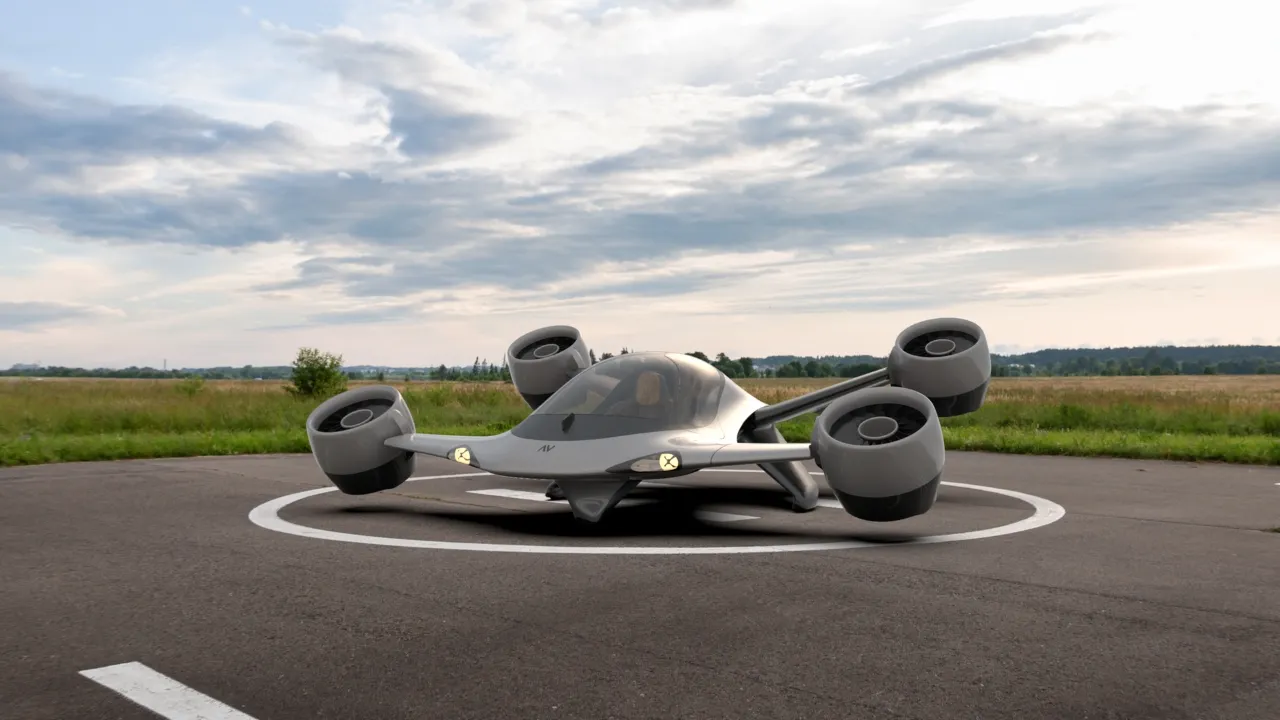
Tech expert Kurt Knutsson recently reported on a groundbreaking development in personal aviation: the unveiling of the world’s first electric vertical takeoff and landing (eVTOL) aircraft configurator by the innovative company AltoVolo. This unique online tool allows prospective buyers and enthusiasts to customize their own flying vehicle entirely from their laptop, marking a significant leap toward making the long-held dream of personal flight a tangible reality.
To understand the significance of this breakthrough, it helps to know what an eVTOL is. The term stands for electric vertical takeoff and landing, describing a new class of aircraft designed to lift off vertically like a helicopter and transition to forward flight like a traditional airplane. Powered by electric or hybrid engines, these vehicles promise quieter, more efficient, and environmentally friendly urban air mobility. AltoVolo’s new configurator builds on this concept by enabling users to design every detail of their own eVTOL, breaking down barriers that have historically made private aircraft ownership complex and inaccessible.
At the heart of this innovation is AltoVolo’s flagship model, the Sigma. This three-seater hybrid-electric aircraft combines performance, quiet operation, and long-range capability in a compact, sleek design. Capable of flying approximately 500 miles at speeds exceeding 220 miles per hour, the Sigma is designed to be more than 80% quieter than a typical helicopter. This low noise profile is critical for urban air travel, as it opens the possibility of discreetly connecting cities, suburbs, and towns without the disruptive noise pollution traditionally associated with rotorcraft.
Safety, naturally, is a top priority for AltoVolo. The Sigma is engineered with redundancy in mind; it can continue flying even if one of its small electric jet engines fails. Additionally, it is equipped with a ballistic parachute system for emergency situations, providing an extra layer of security for pilots and passengers alike. Despite its advanced capabilities, the aircraft remains relatively compact and lightweight—measuring just under 16 feet in width and weighing slightly over 2,100 pounds—making it more manageable to operate and store than one might expect from a personal aircraft.
What truly sets AltoVolo apart is the user-centric approach embodied in their online configurator. Much like customizing a high-end sports car online, customers can tailor every aspect of their Sigma, from exterior colors and interior materials to intricate details like seatbelts’ stitching. The company’s founder and CEO, Will Wood, emphasizes that their competition is not about price but about delivering a superior experience and technological refinement. The initial production run of 100 Sigma models will be limited editions featuring exclusive finishes and premium materials unavailable in future versions, adding an element of exclusivity and craftsmanship to the ownership experience.
Beyond customization, AltoVolo has invested heavily in creating a comprehensive ecosystem for prospective owners. One standout feature is their high-fidelity flight simulator, meticulously designed to replicate the Sigma’s cockpit environment, including carbon fiber surfaces and soft leather seats. This simulator offers customers the opportunity to train and become familiar with their personalized aircraft before ever taking to the skies. In fact, hours logged in the simulator can count toward obtaining a pilot’s license, making the transition to actual flight smoother and more accessible. For those curious but not yet ready to commit, AltoVolo shares flight footage and simulator experiences on YouTube, providing a transparent look at how the Sigma handles in flight.
The launch of the Sigma and its configurator is more than just a product release—it represents a milestone in the evolution of personal air travel. Wood highlights that opening the order book and securing initial financial commitments from early customers validates real market demand, which in turn supports further investment for product finalization, certification, and production scaling. The flight simulator has proven to be a valuable tool in this process, allowing potential buyers to appreciate how intuitive and manageable flying the Sigma will be.
Another fascinating aspect of the Sigma is the attention given to the in-cabin experience, particularly regarding sound. AltoVolo’s engineers are working to minimize vibrations and interior noise to create a serene and smooth flight environment. Complementing this is an innovative synthesized soundscape—a subtle, dynamic background sound that shifts in response to the aircraft’s power usage. This feature not only enhances pilot awareness of the vehicle’s performance but also adds a cinematic quality to the experience, blending technology with artistry to create a human-centered design.
From a regulatory perspective, the Sigma stands to benefit from recent changes in U.S. aviation rules under the MOSAIC framework. These updated regulations simplify