
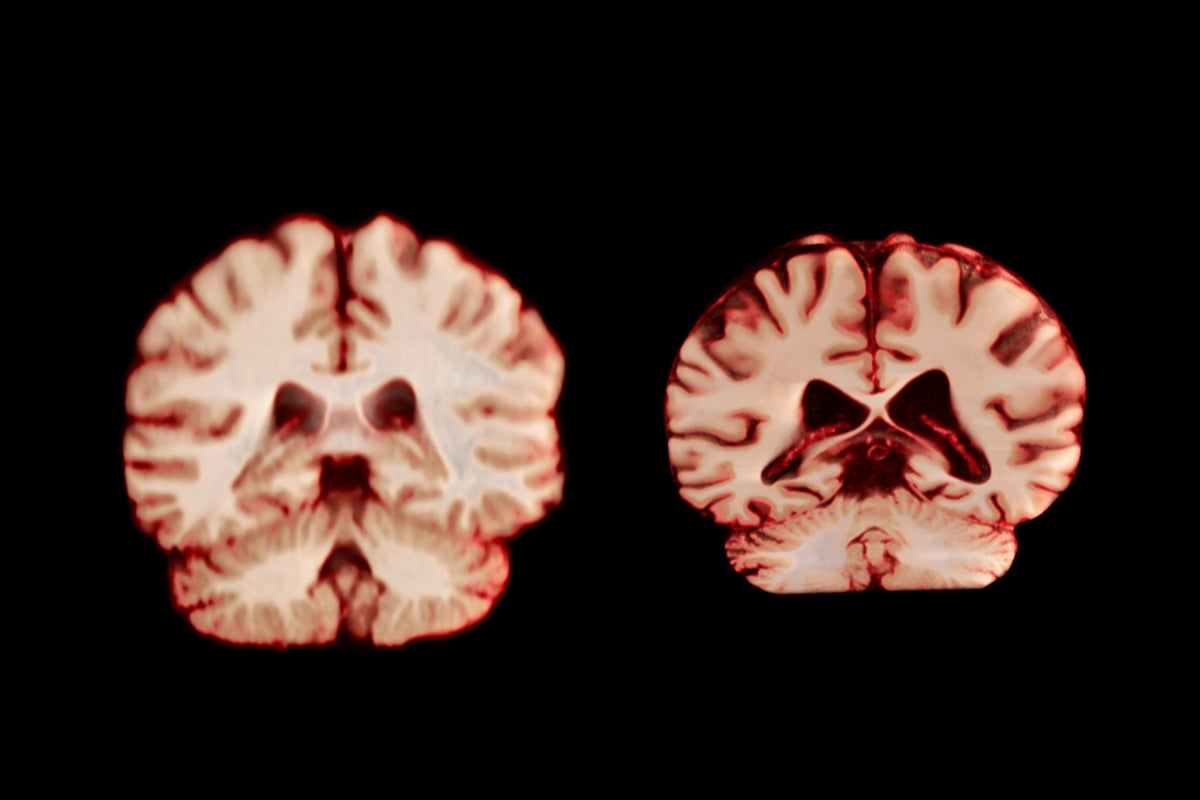
**Summary: Men’s Brains Shrink Faster Than Women’s—But That Doesn’t Explain Higher Alzheimer’s Rates in Women**
A recent longitudinal study, published in the *Proceedings of the National Academy of Sciences*, has shed new light on how men’s and women’s brains age differently, and what this might mean for understanding Alzheimer’s disease. The research, conducted by an international team of scientists, analyzed over 12,500 brain scans from nearly 5,000 healthy adults to compare how brain structures change over time in men and women. Their findings challenge some common assumptions about the relationship between brain aging and Alzheimer’s, especially regarding why women are more frequently diagnosed with the disease.
**Background: The Puzzle of Sex Differences in Alzheimer’s**
Alzheimer’s disease is the most common form of dementia, and its prevalence increases dramatically with age. Notably, almost twice as many women are diagnosed with Alzheimer’s as men. This striking difference has led scientists to investigate whether the aging process affects men’s and women’s brains differently in ways that might explain this gap.
One intuitive hypothesis is that if women’s brains aged more rapidly, or experienced greater atrophy in regions critical for memory and cognition, this could help explain their higher rates of Alzheimer’s. But so far, research into sex differences in brain aging has produced mixed results. Some studies have found that men lose more grey matter and experience greater shrinkage in the hippocampus—a brain region essential for memory—than women. Other studies, however, have found that women may experience a sharper decline in grey matter over time.
**The New Study: A Large-Scale, Longitudinal Approach**
To get a clearer picture, the new study looked at brain scans from 4,726 adults who participated in various large-scale research projects. Each participant underwent at least two MRI scans, spaced on average three years apart, and none showed signs of Alzheimer’s or cognitive impairment at the start of the study. This allowed the researchers to track changes in brain structure over time in healthy individuals, focusing on key areas linked to Alzheimer’s, such as the hippocampus and other regions involved in sensory processing and memory.
The researchers measured changes in the thickness of grey matter and the volume of specific brain regions. By analyzing data across a large and diverse group of people, they aimed to determine whether men or women experience more rapid or widespread brain shrinkage as they age.
**Key Findings: Men’s Brains Shrink More, and Faster**
The study found that, overall, men experienced a greater reduction in brain volume across more regions than women did. For instance, the postcentral cortex—a part of the brain responsible for processing touch, pain, temperature, and body position—shrunk by about 2.0% per year in men, compared to 1.2% per year in women. Similar patterns were observed in other regions as well.
These results suggest that the male brain ages more rapidly, at least in terms of structural atrophy, than the female brain. Fiona Kumfor, a clinical neuropsychologist at the University of Sydney who was not involved in the study, commented that these findings contribute to our fundamental understanding of how healthy brains age, and reinforce the observation that men generally experience faster biological aging than women. This is consistent with the well-known fact that men tend to have shorter life expectancies overall.
**But Alzheimer’s Still Strikes Women More Often**
If men’s brains shrink more and faster, why are women still more likely to develop Alzheimer’s disease? The study’s authors and outside experts say the findings actually make the Alzheimer’s gender gap even more puzzling.
“If these changes did have a role in the development of Alzheimer’s disease, the study would have shown that women experience a greater decline in areas associated with the disease, such as the hippocampus and precuneus, which are involved in memory,” explains Amy Brodtmann, a clinician researcher at Monash University in Melbourne.
But the data showed the opposite: men’s brains shrank more, including in regions typically affected by Alzheimer’s. This suggests that the structural changes associated with normal aging are not the main reason women are more frequently diagnosed with Alzheimer’s.
Anne Ravndal, a co-author of the study and PhD student at the University of Oslo, notes that the results point to other possible explanations for the sex difference in Alzheimer’s prevalence. These could include differences in overall survival (women tend to live longer, and Alzheimer’s risk grows with