
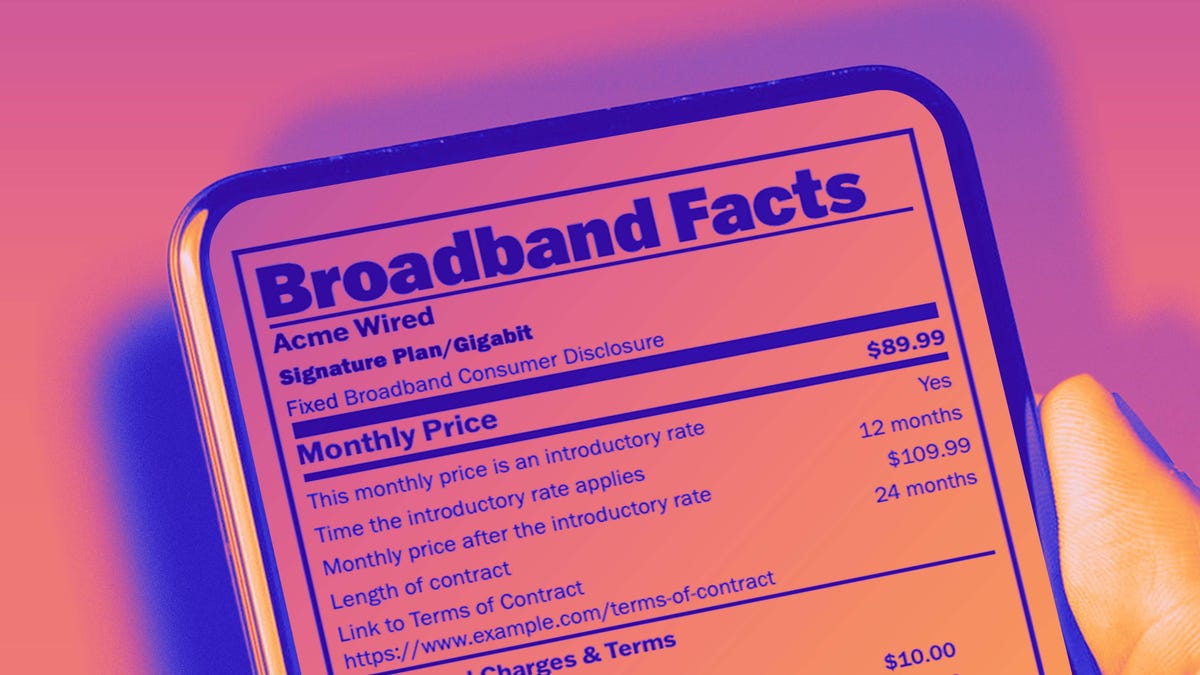
Over the past year and a half, internet consumers shopping for broadband plans have likely encountered a helpful new tool: nutrition-style labels that summarize key information about available internet plans. These labels, introduced in April 2024 by the Federal Communications Commission (FCC), were designed to bring transparency to the often confusing and opaque world of internet service pricing. However, on Tuesday, the FCC took a significant step toward weakening these consumer protections by voting on a proposal that would reduce the requirements internet service providers (ISPs) must follow in presenting these labels. This move has sparked concern among consumer advocates and some commissioners, who fear it could return customers to a state of confusion over broadband pricing.
### What Are Broadband Nutrition Labels?
Broadband nutrition labels were created to simplify the process of comparing internet plans. Prior to their implementation, customers often struggled to understand the true cost of service due to hidden fees, fluctuating prices, and unclear information about advertised speeds versus actual speeds. In many cases, finding basic details about broadband plans felt as complicated as navigating legal contracts. The labels changed that by providing a clear breakdown of what customers should expect to pay—not only immediately but also over longer terms—right at the point of sale or in their online account portals.
For example, these labels display the monthly price, any additional fees, the speed of the plan, and other essential terms in a standardized format, making it easier to compare multiple ISPs side by side. A 2024 survey of more than 2,500 broadband consumers found that 85% of respondents found these labels useful for comparison shopping, indicating strong consumer approval.
### The FCC’s Proposed Rollback
Despite the initial success and positive reception of broadband labels, the FCC, which currently has a Republican majority, voted on a “Notice of Proposed Rulemaking” (NPRM) on Tuesday that would significantly dilute these transparency requirements. This NPRM is the first step in a process that allows public comment before a final vote is taken, which is expected by the end of the year.
If the proposal is adopted, ISPs would no longer be required to read these labels aloud to customers over the phone, provide a full accounting of all fees associated with broadband plans, or make the labels readily accessible in subscribers’ online account portals. Essentially, this would make it harder for consumers to find and understand the full cost of their internet service.
Anna Gomez, the FCC’s only Democratic commissioner, strongly opposed the proposal, calling it “one of the most anti-consumer items I have seen.” She criticized the commission for not providing a clear rationale for why these changes are necessary and argued that instead of scaling back information, the FCC should be working to improve the labels and ensure consumers can benefit from them.
### The Challenges of Locating Labels
One argument put forward by FCC Chair Brendan Carr in favor of the proposed changes is that consumers currently face difficulties locating the broadband labels. Carr cited complaints that finding the necessary information can feel like a “Sisyphean task” or a game of “Where’s Waldo?” He contended that customers often fail to find the information they need in an efficient and timely manner, which undermines the labels’ purpose.
Indeed, even after the labels were introduced, their placement on ISP websites has sometimes been less than user-friendly. For example, when searching for broadband labels on major providers like Xfinity and Spectrum, the labels are typically buried deep within the sales flow or at the very bottom of checkout pages. Customers often have to enter an eligible address before the label appears, making the process cumbersome.
However, rather than adopting measures to make the labels easier to find and understand, the FCC’s proposal would reduce the frequency with which these labels appear, effectively making them less visible to consumers.
### Controversy Over Fee Disclosure
Another key change in the proposed rules involves the disclosure of state and local passthrough fees. Currently, ISPs must itemize these fees on broadband labels, which vary depending on the consumer’s location. The FCC’s NPRM suggests removing this requirement, arguing that listing all these fees could lead to an overwhelming number of labels or excessively long labels that obscure other important information.
Consumer advocates have criticized this rationale. Raza Panjwani, senior policy counsel at New America’s Open Technology Institute, pointed out the irony of ISPs complaining that they have so many fees they can’t fit them on a label. He argued that ISPs could simply incorporate these fees into their advertised prices instead of hiding