
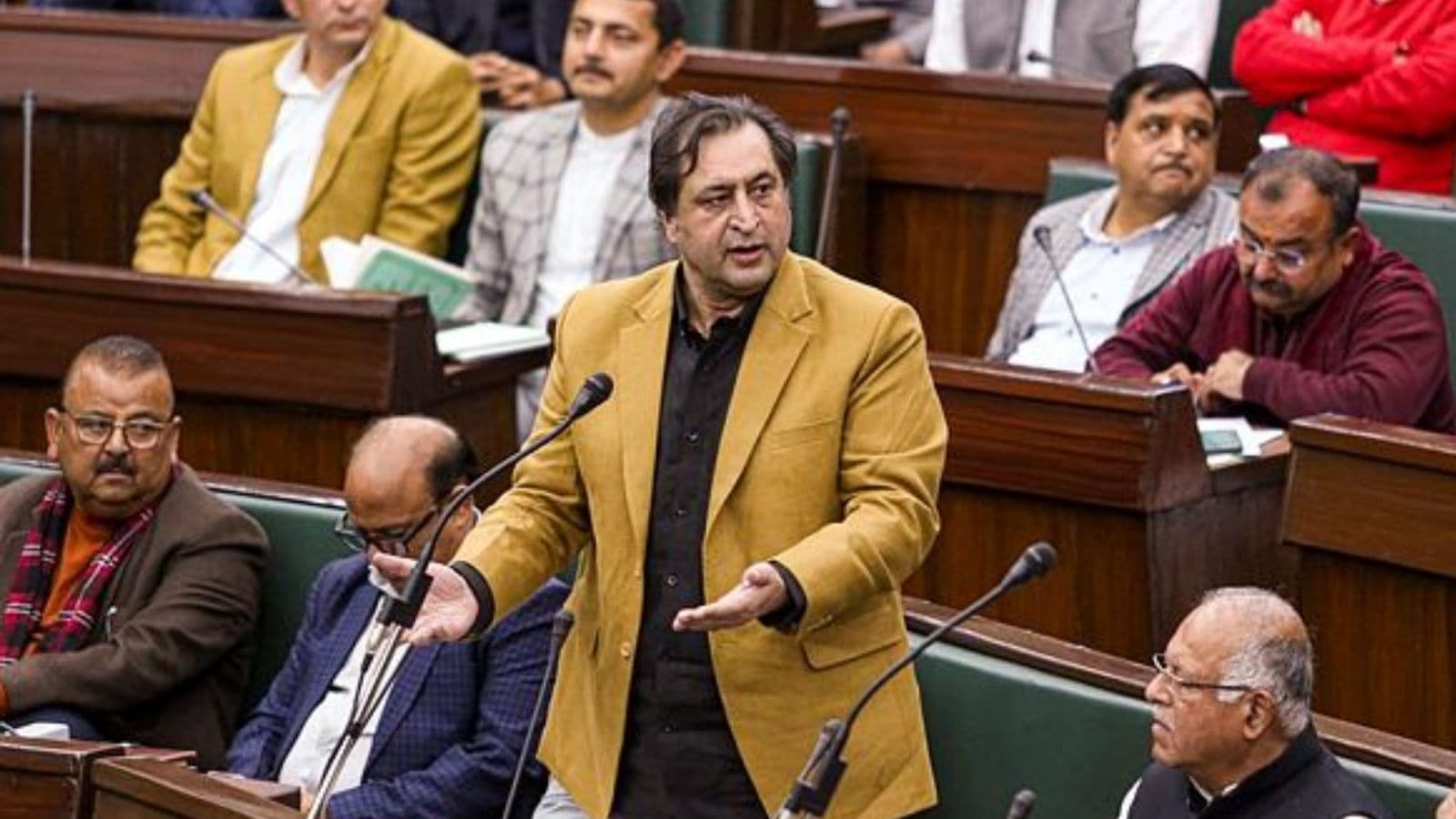
People's Conference chief and Handwara MLA Sajad Lone strongly condemned the recent assassination attempt on former Jammu and Kashmir Chief Minister Farooq Abdullah, drawing a poignant and personal parallel to the killing of his own father, Abdul Ghani Lone, in 2002. Speaking during a legislative assembly debate on the incident, Lone highlighted the ongoing politicisation of security arrangements in Jammu and Kashmir and stressed the urgent need to learn from past mistakes to prevent such attacks.
Lone opened his remarks by acknowledging the complex feelings he experiences when addressing security issues in the assembly, saying, "However, when I stand here in the Legislative Assembly, I also confront my father a little bit." He then paid tribute to Farooq Abdullah, describing him as "one of the most colourful and dynamic human beings I have seen in politics in Jammu and Kashmir." His remarks underscored not only the respect he holds for Abdullah but also the broader dangers faced by political leaders in the region.
During the discussion, Lone recalled the history of political violence in Jammu and Kashmir, noting that over the decades, about 20 members of the legislative house have been martyred, including his own father. He lamented that every assassination attempt reopens old wounds and that while death is inevitable, dying violently leaves a painful and lasting scar on the community and families involved.
Turning to the specific case of his father, Lone recounted the events surrounding Abdul Ghani Lone's assassination in May 2002. At that time, Farooq Abdullah was serving as the Chief Minister of Jammu and Kashmir, effectively acting as the top official in place of the Lieutenant Governor. Lone emphasized that the threat to his father's life was widely known in public circles, including in local markets, where people openly discussed the likelihood of his assassination. Despite this, his father felt helpless in the face of these threats.
One of Lone's key points was the principle that ideological differences should never serve as a justification to deny security protections to anyone. He posed a critical question to his colleagues and the government: "Just because there are ideological differences, shall we allow a person to get killed? That is the big question that we will have to ask ourselves." This statement highlighted the need to separate political differences from basic human rights and safety, a message he implied has been neglected repeatedly.
Lone also shared a deeply personal and painful memory from the aftermath of his father's killing. He revealed that he was not granted security to attend his father's funeral procession. Instead, the burial took place at the site of the assassination itself, located in the Eidgah Assembly constituency, which belonged to National Conference leader Mubarak Gul. Lone named several prominent leaders who were able to attend the funeral, such as Choudhary Mohammad Ramzan, Shafi Uri, Sarief-ud-din Shariq, and M.Y. Tarigami from the CPI-M. However, Lone's own request for police protection was denied by the government out of concern that the security personnel might themselves be targeted.
Reflecting on this exclusion, Lone remarked, "There must be thousands of sons across Kashmir who have faced similar anguish." His words evoked the broader human cost of political violence and the failure of the state to provide adequate protection and support to victims' families.
Lone then linked these past experiences to the recent attempt on Farooq Abdullah's life, highlighting the persistent lapses in security that have plagued Jammu and Kashmir's political landscape. He criticized successive governments for politicising security measures, using them as tools for political advantage rather than ensuring the safety of all public figures impartially. "Whatever today's government is doing, all earlier governments have done it too. That is a reality," he said bluntly. He urged his fellow lawmakers to commit themselves to a policy of zero compromise on security and warned that anyone denying the misuse of security arrangements was not telling the truth.
The assassination attempt on Farooq Abdullah occurred on March 11 during a wedding function in Jammu's Greater Kailash area. A gunman managed to approach Abdullah closely and fire shots, but the former Chief Minister's security team quickly intervened and thwarted the attack. The incident raised serious concerns about a breach in Abdullah's Z+ security cover, which is the highest level of protection designated for high-risk individuals in India. Leaders from across political parties condemned the attack, emphasizing the need for improved security protocols and vigilance.
This recent event has sparked a wider conversation about the protection of political leaders in Jammu and Kashmir, a region that has long been plagued by violence and political instability. The fact that a high-profile figure like Farooq Abdullah could come under such direct threat underscores ongoing vulnerabilities. Sajad Lone's comments serve as a sobering reminder that political violence is not just a historical issue but a continuing threat that demands urgent attention and action.
In conclusion, Sajad Lone's heartfelt speech in the legislative assembly called for a bipartisan commitment to safeguarding lives regardless of political affiliations. He stressed that ideological differences should never translate into security negligence, and that past failures must serve as lessons for future governance. His personal reflections on his father's assassination and the recent attempt on Farooq Abdullah's life brought a human dimension to a debate often dominated by political rhetoric. As Jammu and Kashmir navigates its complex political future, the protection of its leaders and citizens remains a paramount concern that must transcend partisan divides.