
New research has pushed back the timeline for the onset of plate tectonics on Earth, revealing some of the earliest direct evidence of tectonic motion by more than half a billion years. This breakthrough sheds new light on one of the most fundamental questions in Earth science: when and how did plate tectonics begin? The findings, published in the journal Science, also carry important implications for understanding the early evolution of our planet and the origins of life.
Plate tectonics—the movement of large pieces of Earth’s crust, or plates, across the surface—is a defining characteristic of our planet. These colossal motions shape mountains, influence volcanic activity, regulate the atmosphere’s composition, and even affect the planet’s magnetic field. Unlike Earth, our rocky neighbors in the solar system appear to have a single, continuous shell rather than multiple moving plates. However, despite the central role plate tectonics plays today, the timing of its origin remains a mystery.
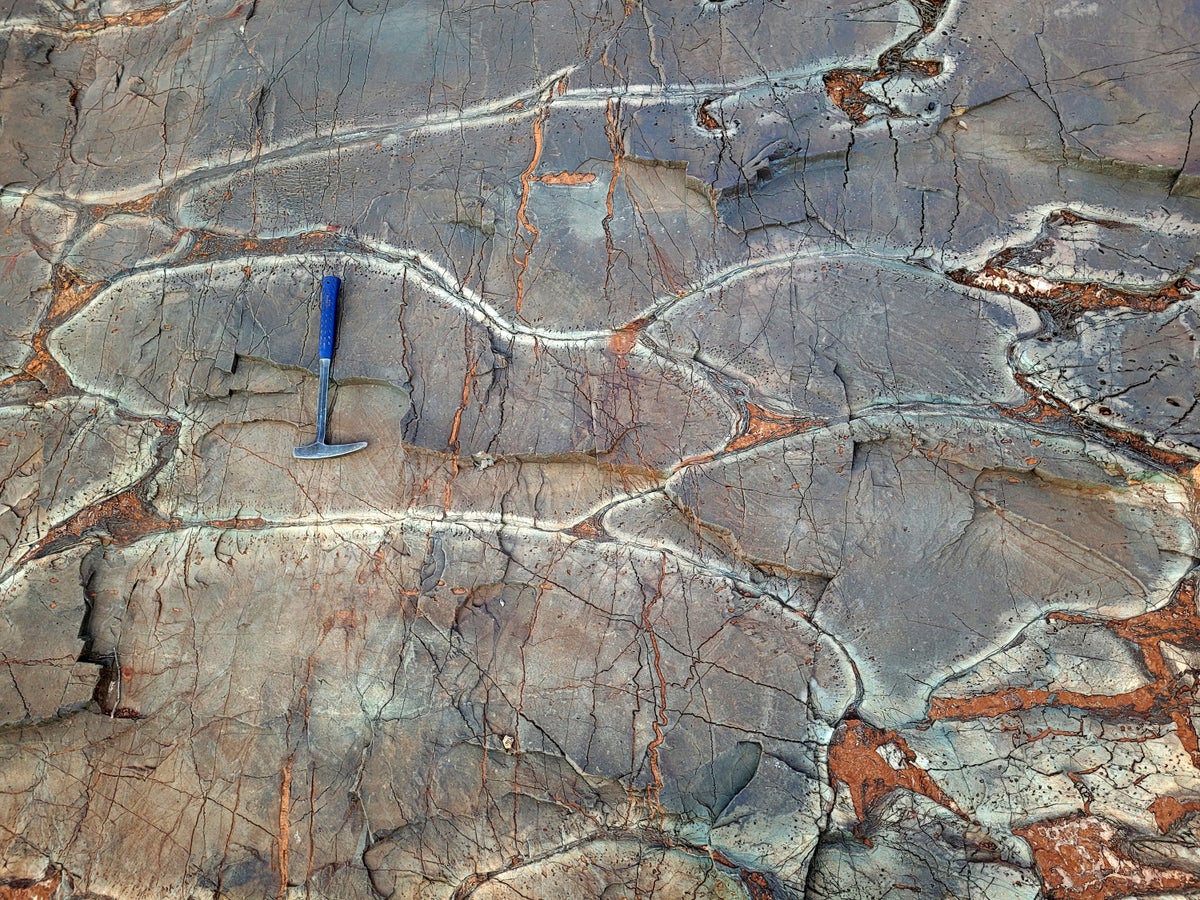
The new study, led by researchers including paleomagnetists at Harvard University, used magnetic signatures preserved in some of the oldest rocks on Earth to reveal that parts of the crust were already moving relative to each other nearly 3.5 billion years ago. Specifically, the researchers analyzed rock samples from two ancient continental cores, or cratons, located in Western Australia and South Africa. These cratons have survived billions of years of geological processes and are among the oldest fragments of Earth’s crust still intact.
Earth’s magnetic field, generated by the motion of its liquid iron core, leaves a fingerprint in cooling volcanic and sedimentary rocks. As molten rock solidifies, tiny magnetic minerals within align with the planet’s magnetic field lines, recording the direction and inclination of the field at the time. Because the magnetic poles roughly align with geographic poles, these magnetic “fossils” can reveal the latitude at which rocks formed and track their movements over time.
By measuring the magnetic orientations in rock samples from the Australian and South African cratons, the team discovered that the Australian craton had shifted northward over several million years, while the South African craton remained largely stationary. This relative motion between two large pieces of crust is the earliest direct evidence of tectonic movement yet found, predating previous evidence by over 500 million years. It strongly suggests that plate boundaries—where one plate moves relative to another—were already active during the Archean eon, a period dating from about 4 to 2.5 billion years ago.
Geologists not involved in the study have praised the findings as a rare and invaluable glimpse into Earth’s distant past. Michael Brown, an emeritus geologist at the University of Maryland, likened the challenge to assembling a massive jigsaw puzzle with very few pieces remaining. Because so few rocks survive from Earth’s first billion years, every new piece of evidence is critical for refining models of early plate tectonics and planetary evolution.
The study also identified the earliest known reversal of Earth’s magnetic poles, occurring around 3.46 billion years ago. Magnetic reversals, where the north and south magnetic poles flip, are a hallmark of Earth’s geodynamo and provide additional clues about the behavior of the planet’s interior. The coexistence of early tectonic motion and magnetic reversals indicates that Earth’s internal processes were operating in ways broadly similar to today, even in the deep past.
These discoveries dovetail with recent research using ancient zircon crystals—minerals found in Western Australia known for their durability—to suggest that parts of Earth’s crust were recycling back into the mantle by about 3.35 billion years ago. Crustal recycling is a key component of plate tectonics, involving the sinking of older crust into the mantle at subduction zones. While interpreting zircon data can be complex, the new magnetic evidence supports the idea that early forms of plate tectonics were already underway during the Archean.
Understanding when tectonic activity began is not just a question of geological curiosity; it has profound implications for the origins of life on Earth. The Western Australian craton studied contains the oldest confirmed fossils of single-celled organisms, dating back roughly 3.48 billion years. Knowing the paleolatitude—the latitude at which these rocks existed—can help scientists reconstruct the environmental conditions in which early life emerged. Moreover, the type of tectonic regime operating at that time would have influenced the planet’s surface environment, including the cycling of nutrients and the stability of habitats.
The findings also open new avenues for comparative planetology and the search for