
A recent study has uncovered a fascinating connection between human preferences and animal mating calls, suggesting that humans tend to favor many of the same sounds that animals themselves find attractive. This intriguing discovery points to a deeper biological attunement to natural sounds, raising new questions about how humans perceive the acoustic world around them.
The natural environment is filled with a wide variety of sounds—chirps, croaks, growls, whistles, and more—that animals use to communicate, especially during mating. While humans often recognize some animal sounds, such as dog barks or distress calls, many animal noises typically go unnoticed or are considered background noise. However, new research involving over 4,000 participants challenges this assumption, revealing that humans are more sensitive to these mating calls than previously thought.
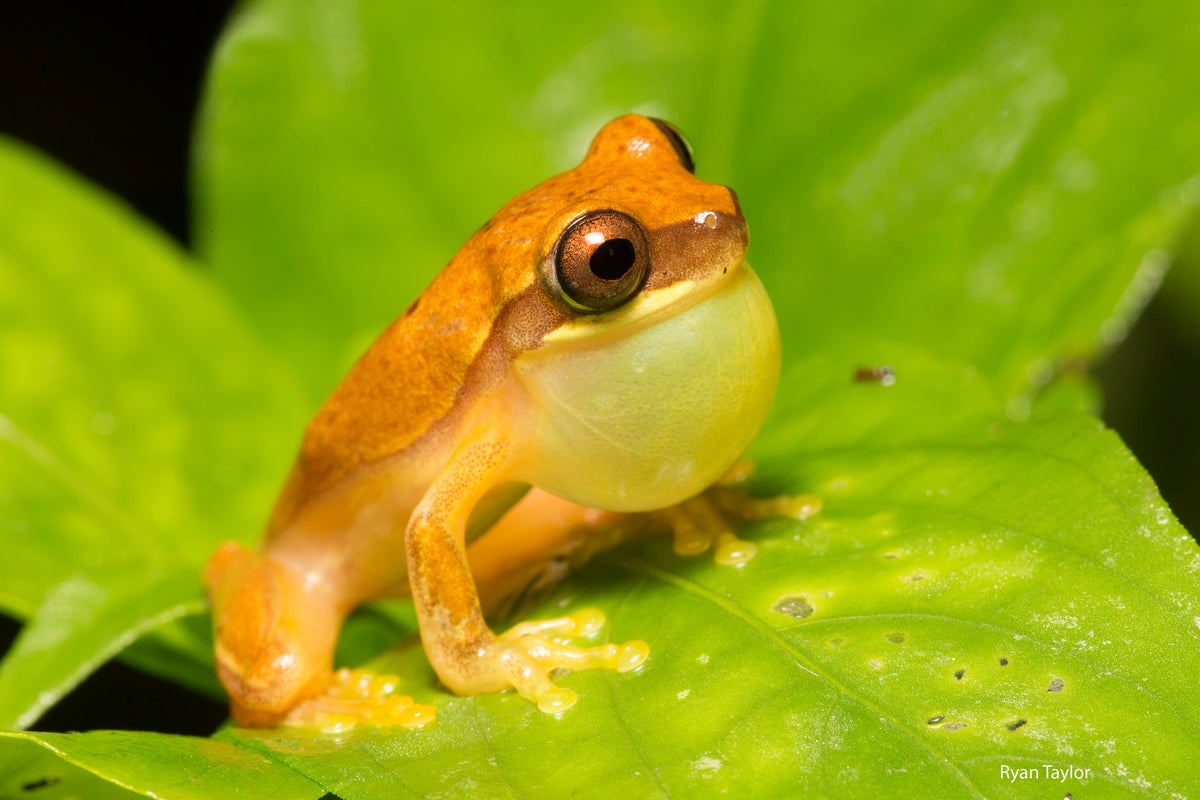
In the study, participants listened to dozens of pairs of mating calls from 16 different animal species, including mammals, birds, frogs, and insects. They were then asked to choose which call they preferred or “liked more.” Remarkably, the participants’ preferences tended to align with the calls that the animals themselves favored, based on previous research measuring animals’ responses and attraction to different sounds.
Logan James, the study’s lead author and a postdoctoral fellow at McGill University and visiting scholar at the University of Texas at Austin, expressed surprise at the strength of the findings. “I was pretty shocked to be honest,” he said. The research team had hypothesized that humans might share some preferences with animals, but they were uncertain whether the data would support this idea so clearly. The results, however, demonstrated a statistically significant tendency for humans to select the same calls that animals found most appealing.
One particularly notable aspect of the study was that humans showed greater agreement with animal preferences when the animals’ own attraction to certain calls was strongest. This suggests that the underlying principles guiding sound preference might be conserved across species. Interestingly, musical training or familiarity with animal sounds did not improve participants’ accuracy in identifying the animals’ favored calls. Experts such as birders performed similarly to laypeople, indicating that this preference is not simply a product of experience or education but may be rooted in more fundamental sensory processing.
The consistency of the findings spanned various animal groups. Whether it was frogs, birds, mammals, or insects, humans tended to prefer the same mating calls that the animals themselves favored more often than would be expected by chance. For example, Song Sparrows and Pacific field crickets showed particularly high alignment between human and animal preferences. Conversely, the calls of geladas, a species of monkey native to Ethiopia, did not always hold the same appeal for humans as they did for the geladas themselves.
The study also highlighted that calls with more “acoustic adornments”—such as added chirps, clicks, or complex sound patterns—were generally preferred over simpler calls. These embellishments may enhance the attractiveness of the sound, not only to the animals but also to human listeners, suggesting shared auditory preferences shaped by evolutionary pressures.
Experts in the field have praised the study. David Reby, a professor of ethology at Jean Monnet University in France, described the research as “well conducted” and expressed a wish to have been involved with the team. However, he also emphasized that a major unanswered question remains: why do humans and animals share these preferences? Animals may be drawn to certain calls because they signal qualities such as size, strength, or fitness in a potential mate—criteria that humans likely do not apply when judging these sounds.
Reby pointed out that understanding the cognitive and emotional mechanisms behind these preferences requires further investigation. “It calls for so much more investigation to understand what is really going on in the minds of the animals and in the minds of the people that are doing these ratings,” he said, underscoring the complexity of auditory perception across species.
One hypothesis proposed by Logan James is that shared sound preferences may arise from commonalities in how humans and animals process acoustic signals. All animals, including humans, must detect vibrations in the air and decode the information they convey to make decisions—whether it’s choosing a mate or navigating the environment. This shared sensory processing framework could explain why humans find certain animal calls appealing, even though they are not the intended audience for these signals.
The study also opens broader questions about how humans perceive beauty in nature. From the melodious songs of birds to the fragrances of flowers and the vibrant colors of butterflies, many natural signals evolved to attract mates or pollinators rather than