
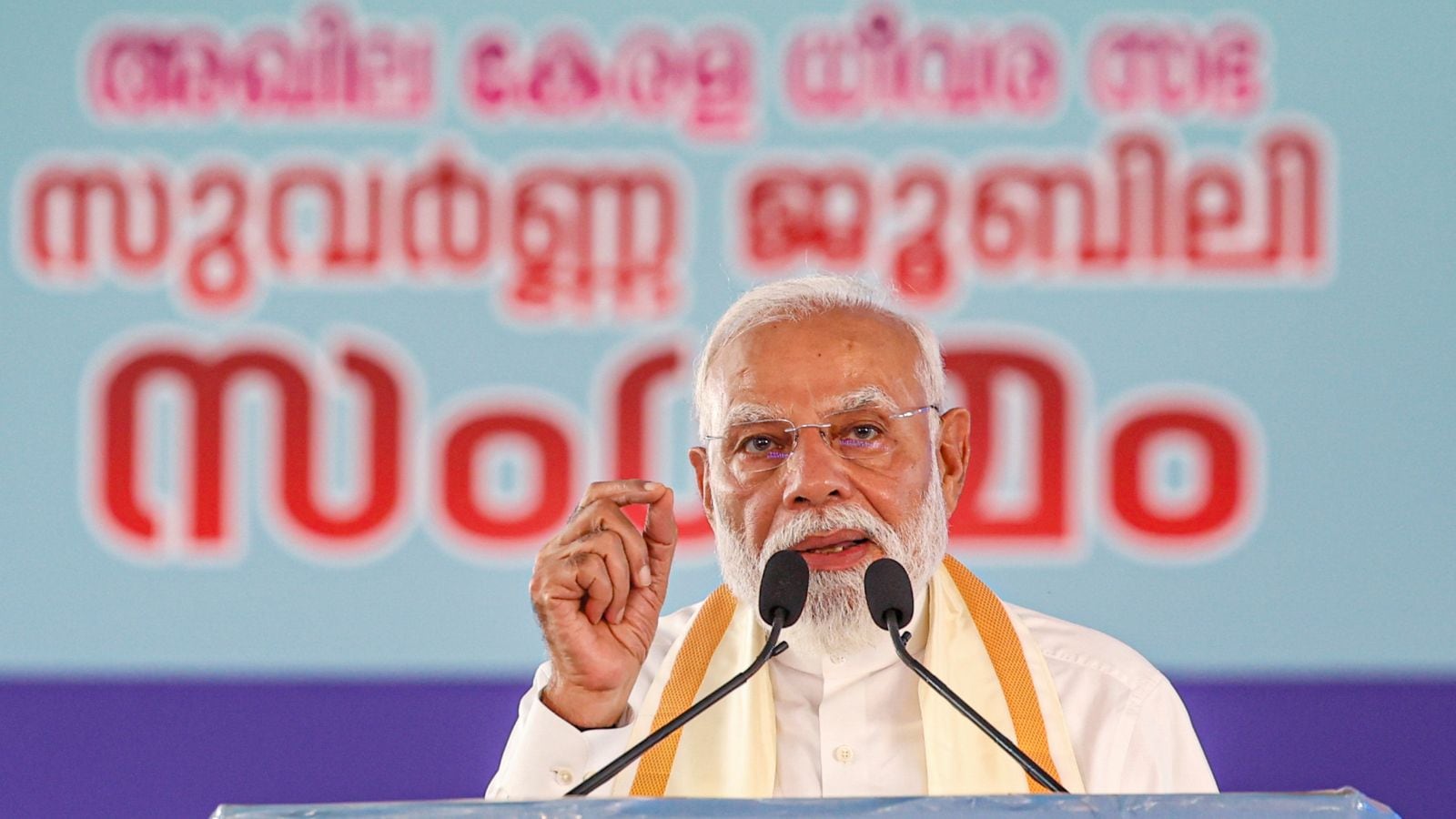
Prime Minister Narendra Modi recently addressed a National Democratic Alliance (NDA) convention in Ernakulam, Kerala, where he emphasized the critical importance of self-reliance, especially in the energy sector, against the backdrop of the ongoing conflict in West Asia. His speech, which coincided with the foundation stone laying of a polypropylene unit at the Kochi Refinery and the inauguration of development projects worth nearly Rs 11,000 crore, touched upon several pressing national concerns, including geopolitical tensions, domestic political dynamics, and Kerala’s upcoming Assembly elections.
Modi began by highlighting the war in West Asia as “a matter of concern for all,” stressing that the crisis underscored the need for India to expand its petroleum sector and strive for self-sufficiency, or “atmanirbhar” status. He pointed out that global conflicts, such as the current war, have repeatedly shown how vulnerable nations can be when overly dependent on foreign resources. Recalling India’s efforts in rescuing its citizens trapped in conflict zones — such as nurses in Iraq and priests in Yemen and Afghanistan — Modi asserted the proactive stance of the BJP-led government in safeguarding Indian nationals abroad. He contrasted this with the opposition Congress party, accusing it of politicizing these sensitive situations by making “provocative and irresponsible statements” aimed at fomenting unrest for political gain.
Modi’s remarks were particularly sharp against the Congress and Left parties, who, he said, were mocking the government’s Atmanirbhar Bharat campaign. He accused these parties of having historically contributed to India’s dependency on foreign powers during their time in government and of now spreading rumors and fear amid the current crisis. The Prime Minister urged citizens to remain vigilant against misinformation propagated by opposition groups, especially during such turbulent times.
The war in West Asia, Modi noted, has once again brought into focus the strategic importance of self-reliance, especially in the energy sector. He highlighted India’s strides in increasing solar power capacity and promoting electric vehicles as part of efforts to reduce fuel dependency. He cited previous global disruptions — such as the Covid-19 pandemic and the Ukraine conflict — to further stress how critical it is for India to develop indigenous capabilities across all sectors.
Taking a pointed jab at Congress leader Rahul Gandhi, Modi criticized the opposition’s skepticism regarding the potential of Indian youth, particularly in the emerging drone manufacturing industry. The Prime Minister noted that many Indian companies are now actively producing drones, a sector that symbolizes technological innovation and forward-looking growth. By dismissing these advancements, Modi argued, the Congress leadership showed a lack of faith in the country’s young entrepreneurs and innovators.
Turning to the political landscape in Kerala, Modi’s comments were equally direct and combative. With Assembly elections looming, he accused both the Congress-led United Democratic Front (UDF) and the Communist Party of India (Marxist)-led Left Democratic Front (LDF) of being “partners in corruption and crime.” He lambasted both coalitions for neglecting development and obstructing industrial progress in the state. Modi also referenced the controversial Sabarimala gold scandal, alleging that members of the LDF were involved in looting gold from the temple, while those from the UDF were complicit in selling the stolen items. This pointed critique was aimed at galvanizing support for the BJP, which is positioning itself as a clean and development-focused alternative in Kerala’s polarized political arena.
Modi’s visit and speech came at a critical juncture for the BJP in Kerala, a state where the party has historically struggled to establish a strong foothold. By addressing local grievances and national concerns simultaneously, Modi sought to consolidate the NDA’s position ahead of the elections, emphasizing governance, development, and national security as key themes.
The broader context of Modi’s address also reflects the BJP’s strategic narrative of self-reliance and resilience in the face of global instability. The government’s focus on expanding the petrochemical sector, as evidenced by the new polypropylene unit at Kochi Refinery, aligns with this vision of reducing dependency on foreign imports and boosting domestic industrial capacity. These development initiatives, amounting to nearly Rs 11,000 crore, signal the government’s commitment to economic growth and infrastructure modernization, particularly in Kerala, a state known for its socio-political complexities.
Behind this coverage is Shaju Philip, Senior Assistant Editor at The Indian Express, who brings over 25 years of journalistic experience focused on Kerala’s socio-political and developmental landscape. Philip is recognized for his in-depth