
Amid escalating geopolitical tensions in the Middle East, the Strait of Hormuz-a critical maritime passage for global energy supplies-has become the focal point of heightened uncertainty and disruption. Recently, Iran asserted "full control" over this strategic waterway following hostilities involving the United States and Israel, raising concerns about the safety and freedom of navigation through the strait. This development has significant implications, not only for regional stability but also for countries like India that rely heavily on the smooth transit of petroleum and liquefied petroleum gas (LPG) shipments through this route.
The Strait of Hormuz is one of the world's most vital energy corridors, handling nearly 20 percent of global petroleum trade. It connects the Persian Gulf with the Gulf of Oman and the Arabian Sea, serving as the main outlet for oil exports from major producers such as Saudi Arabia, Iran, Iraq, Kuwait, and the United Arab Emirates. Any disruption or restriction in shipping movement through the strait can trigger considerable economic and energy supply challenges worldwide.
Recent reports indicate that shipping traffic through the Strait of Hormuz has faced significant restrictions since the onset of the recent conflict. Iran, which controls the northern coast of the strait, has reportedly allowed only limited transit, causing delays and leaving some vessels stranded in the region. This has heightened concerns among nations dependent on these shipments, including India, whose energy security is closely tied to uninterrupted access to petroleum products passing through the strait.
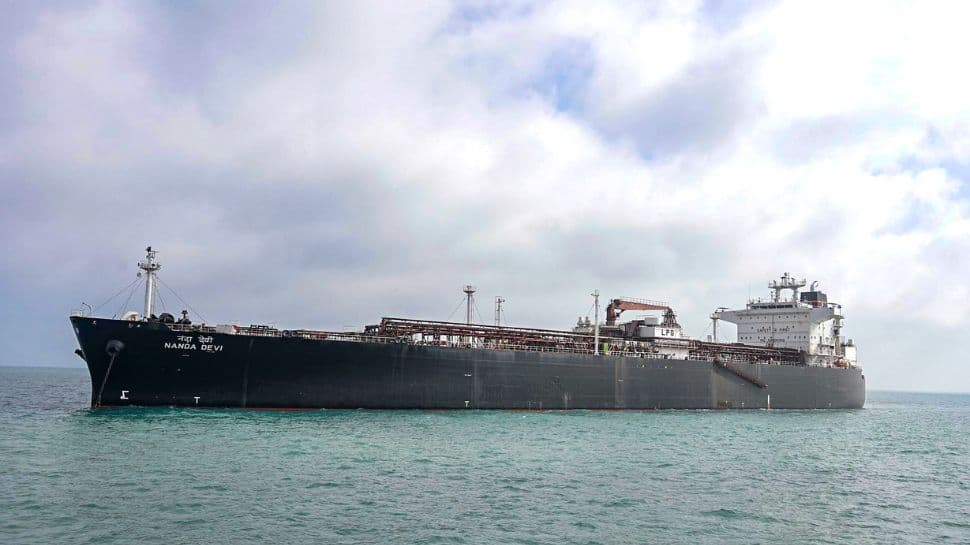
In response to this evolving situation, India has taken proactive steps to safeguard its maritime interests and ensure the continued flow of energy supplies. According to sources, Indian Navy warships have been deployed near key Indian ports to provide assistance and to monitor the safety of Indian-flagged vessels operating in the Persian Gulf region. More Indian vessels are expected to arrive from the Strait of Hormuz in the coming days as part of ongoing efforts to maintain secure transit routes and support Indian seafarers navigating these challenging waters.
The Ministry of External Affairs (MEA) of India confirmed on Friday that four ships carrying LPG have successfully crossed the Strait of Hormuz and arrived safely in India. This development reassures that despite the tense situation, Indian energy shipments are still reaching the country. The MEA also emphasized that New Delhi is in active communication with relevant countries to ensure the safe passage of its ships and to meet India's energy needs amid the current geopolitical complexities.
At a joint inter-ministerial media briefing, Rajesh Kumar Sinha, Special Secretary in the Ministry of Ports, Shipping and Waterways, provided further clarity on the situation. He affirmed that the government is closely monitoring developments and coordinating with all relevant stakeholders, including shipping companies, port authorities, and naval forces. Sinha reassured the public and industry that, as of the last 24 hours, there have been no reported incidents involving Indian-flagged ships or Indian seafarers in the Gulf region. Approximately 20 Indian-flagged vessels with nearly 540 Indian crew members are currently operational in the Persian Gulf, and all are reported to be safe.
Moreover, Sinha highlighted that port operations across India remain unaffected by the crisis. There have been no reports of congestion or operational disruptions at any major ports nationwide, and all port activities are running smoothly. This is a critical reassurance for India's overall trade and supply chains, as any significant disruptions at ports could have ripple effects across multiple sectors.
On the diplomatic front, Iran's Foreign Minister Abbas Araghchi stated that the Strait of Hormuz remains open for "friendly nations," explicitly naming India, China, Russia, and Iraq. This statement aims to signal a degree of controlled access through the strait despite the broader tensions. However, the reality on the ground appears more constrained, with limited transit permitted and delays reported, underscoring the fragile nature of the current maritime security environment.
The situation around the Strait of Hormuz exemplifies the complex interplay between regional power dynamics and global energy security. Iran's declaration of full control over the strait follows a period of heightened hostilities involving the United States and Israel, which has further destabilized an already volatile region. For countries like India, maintaining open and secure sea lanes is paramount to sustaining economic growth and energy security.
India's strategic response-deploying naval assets near critical ports and maintaining close diplomatic engagement-reflects its commitment to protecting its maritime interests and ensuring uninterrupted access to vital energy resources. The government's transparent communication regarding the safety of Indian vessels and seafarers, as well as the status of port operations, aims to provide assurance amid widespread uncertainty.
In conclusion, while the Strait of Hormuz remains a flashpoint amid escalating regional tensions, India's proactive measures and ongoing coordination with international partners are helping to mitigate the risks associated with this critical maritime corridor. The continued safe arrival of petroleum and LPG shipments, coupled with stable port operations, underscores India's resilience in navigating this challenging environment. As the situation evolves, stakeholders will need to remain vigilant and adaptive to ensure the security and stability of this essential global energy route.