
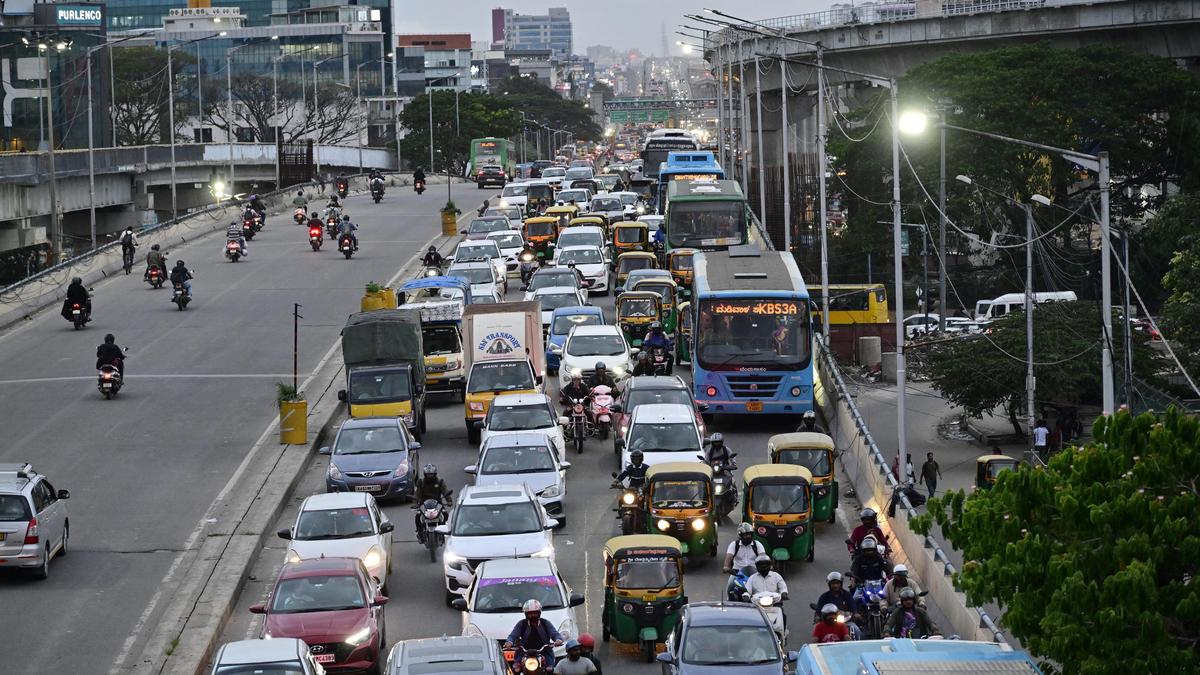
On March 26, 2026, Deputy Chief Minister D.K. Shivakumar addressed the Karnataka Legislative Assembly regarding Bengaluru's persistent traffic congestion and urban development challenges. In his detailed response during a debate on the city's growth and infrastructure, he emphasized the impracticality of widening roads within Bengaluru's densely constructed urban landscape and proposed alternative solutions, particularly the construction of tunnel roads, as the most viable means to ease the city's notorious traffic woes.
Shivakumar began by underscoring the difficulties associated with expanding existing roads in Bengaluru. The city's dense construction and skyrocketing land prices make road widening a prohibitively expensive and logistically challenging option. He explained that acquiring land in the city center would cost an estimated ₹3,000 crore, rendering large-scale road expansion projects financially unfeasible. Instead, he highlighted tunneling as a forward-looking alternative that could bypass these constraints and significantly improve traffic flow.
Focusing on specific traffic bottlenecks, the Deputy Chief Minister pointed to the Goraguntepalya Junction on Tumakuru Road, one of Bengaluru's busiest intersections, as a prime candidate for intervention using tunnel roads or underpasses. By developing underground routes at such critical choke points, the city can alleviate surface congestion without the disruptive and costly process of acquiring and demolishing existing properties.
Shivakumar drew comparisons to other major Indian cities, notably Mumbai, which is currently constructing six to seven tunnel roads to manage its heavy traffic. He noted that Bengaluru has fewer alternatives at its disposal to tackle congestion and that adopting tunnel infrastructure is a pragmatic step that aligns with modern urban transport strategies. The estimated cost for the tunnel road construction is around ₹17,000 crore, with per kilometer costs ranging between ₹700 and ₹800 crore, which is comparatively lower than tunnel road projects in other states that can cost between ₹1,300 and ₹1,400 crore per kilometer. This cost efficiency is an encouraging sign for Bengaluru's infrastructure planners and policymakers.
Addressing concerns about governance and transparency, especially in areas related to property documentation, Shivakumar acknowledged allegations of corruption involving officials who were reportedly accepting bribes in return for issuing e-Khatas-a critical property ownership document in Bengaluru. He assured the Assembly that strict action is underway against those implicated, including suspensions. Out of Bengaluru's approximately 25 lakh properties, about nine lakh have been issued A-Khatas, which legally recognize the properties and allow residents to avail municipal services and obtain building permits. The Deputy Chief Minister's commitment to rooting out corruption reflects the government's effort to improve administrative efficiency and public trust.
Shivakumar also shared ambitious plans for Bengaluru's future development, announcing the proposal to build an "AI city" spanning 8,000 acres near Bidadi in the Bengaluru South district. This project, initially proposed by Union Minister H. D. Kumaraswamy, envisions a technology-driven urban hub focused on artificial intelligence and related cutting-edge industries. The initiative aims to strengthen Bengaluru's position as a global technology powerhouse by fostering innovation, attracting investment, and creating employment opportunities in emerging tech sectors.
Responding to comparisons between Bengaluru and Hyderabad, Shivakumar emphasized Bengaluru's standing as one of the world's premier technology hubs. He cited global rankings that place Bengaluru sixth overall-behind cities like Beijing-while Hyderabad ranks 26th. According to him, Bengaluru's large pool of IT professionals and its concentration of Fortune 500 companies are evidence of the city's unmatched strength in the technology domain. He noted that the city hosts around 26 lakh IT professionals and nearly 400 Fortune 500 companies, significantly outnumbering the 13.5 lakh engineers in California's Silicon Valley, often regarded as the world's preeminent tech cluster. This comparison highlights Bengaluru's unique advantage in scale and talent, which he believes will continue to drive the city's growth and global competitiveness.
In addition to bolstering its technology sector, the Deputy Chief Minister outlined plans to enhance Bengaluru's educational infrastructure by developing more world-class schools. This focus on education aims to nurture the next generation of skilled professionals who can sustain and expand the city's leadership in innovation and technology.
In summary, Deputy Chief Minister D.K. Shivakumar's address to the Karnataka Legislative Assembly laid out a comprehensive vision for tackling Bengaluru's urban challenges and leveraging its strengths. He acknowledged the limitations of traditional road expansion within the city's dense fabric and championed the construction of tunnel roads as an effective, albeit costly, solution to alleviate traffic congestion. His focus on transparency and anti-corruption measures in property documentation, alongside the ambitious AI city project and emphasis on education, reflects a multi-pronged approach to ensuring Bengaluru's continued growth as a global technology leader. The government's plans, if implemented successfully, could significantly transform Bengaluru's infrastructure, economy, and urban landscape in the coming years.