
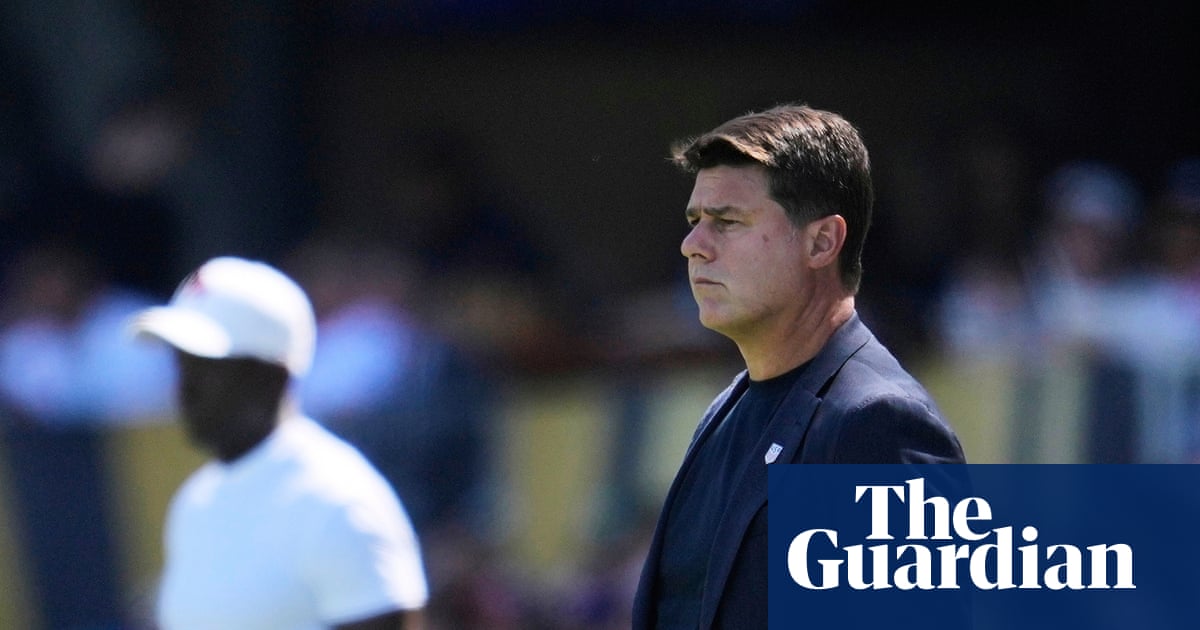
As the United States men's national soccer team (USMNT) approaches the 2026 World Cup, head coach Mauricio Pochettino is looking to finalize his 26-man roster through a pair of high-profile friendlies against Belgium and Portugal. These matches, scheduled just before the roster announcement, serve as crucial opportunities to test and evaluate players against top European competition-teams that could very well pose significant challenges in the World Cup itself.
Interestingly, both Belgium and Portugal were opponents for the US in the 2014 World Cup, but this upcoming series hardly resembles a reunion. Belgium will be without key veterans Romelu Lukaku and Thibaut Courtois, who featured in that previous tournament, and Portugal will be missing their talisman Cristiano Ronaldo due to injury. While Ronaldo's absence may dampen some of the excitement for the friendly in Atlanta, the matches remain vital for Pochettino as he weighs final decisions on his squad.
One of the most pressing questions concerns the goalkeeper position. Since taking over, Pochettino has refrained from definitively naming a first-choice goalkeeper, a situation that is unlikely to continue much longer. During the 2025 Gold Cup, Pochettino gave Matt Freese, the New York City FC goalkeeper, a "trial by fire" by starting him in all matches through the final. This was notable because Matt Turner, the veteran goalkeeper who started in the 2022 World Cup, was available throughout the tournament but was not favored as the starter. Pochettino's strategy appeared to be ensuring a reliable second option in goal with experience in high-pressure situations, which Freese demonstrated by helping the US get past Costa Rica in a quarter-final penalty shootout against Keylor Navas.
Since Pochettino's first match as coach in October 2024, Turner has started seven games, including a difficult 4-0 loss to Switzerland in a pre-Gold Cup friendly last June. In contrast, Freese has started 13 out of the last 14 US matches, debuting in the first Gold Cup tuneup against Turkey. This level of trust and experience in Freese's hands suggests that if he starts against Belgium and Portugal, he may be on track to become the USMNT's goalkeeper for the 2026 World Cup on home soil. Conversely, if Turner gets a start in these friendlies, it could indicate that Pochettino remains uncertain about his top choice.
Beyond the two leading goalkeepers, there is a battle for the third spot on the depth chart. Patrick Schulte, who started at the 2024 Olympics and won the 2023 MLS Cup, appears to be leading the race, bringing valuable experience in important matches despite just turning 25. Meanwhile, 22-year-old Chris Brady is considered a promising prospect for the future but is still relatively raw compared to the others.
Defensively, Pochettino has adjusted his tactics to compensate for a relatively thin pool of center-backs. In September 2025, he added an extra defender to the backline, which helped stabilize the team's style of play. This system has since evolved to include flexible formations that can switch between two or three center-backs depending on the lineup. This adaptability is essential given the limited number of high-caliber center-backs available.
Chris Richards has emerged as a key figure in central defense. His mobility, marking ability, and leadership qualities make him a natural anchor for the backline. He has often paired with veteran Tim Ream, who was part of the 2024 Copa América squad, but Ream's advancing age (38) and declining mobility call into question whether he should be a regular starter at the World Cup. Mark McKenzie, currently playing well with Toulouse, offers a complementary skill set as a ball-playing defender, which could work well alongside Richards. Miles Robinson, despite recent struggles with his club FC Cincinnati, remains a strong aerial presence and has performed well in CONCACAF competitions. Auston Trusty, with experience at Celtic and five US caps at age 27, rounds out the center-back options.
A notable tactical innovation by Pochettino involves utilizing one full-back to push forward in attack while the opposite full-back shifts centrally to create a three-center-back structure in possession. This "elbow-back" role, gaining popularity in European soccer, is relatively new for the US national teams. While Antonee Robinson might seem a natural choice for the advanced full-back role due to his crossing ability, he has not played under Pochettino since November 2024 and might be better suited as a central auxiliary defender on the left side. This positioning would also reduce defensive demands on Christian Pulisic, allowing him to focus more on offensive contributions.
On the right side, Tim Weah is well-equipped to perform the two-way full-back role, having experience with Juventus and Marseille. The young Alex Freeman, just 21 and recently playing for Villarreal, also offers promise in this hybrid position, having excelled in it during his time with Orlando City in 2025. Although there is some debate about the best way to configure the backline, retaining a four-man base defense remains appealing due to the US's abundant midfield options.
The midfield selection process presents Pochettino with a wealth of talent but also some challenging decisions. He is expected to field a midfield trio that will link the defense with an attack featuring Pulisic, Weah, and striker Folarin Balogun. The midfield trio that shined in the previous cycle-Weston McKennie, Yunus Musah, and Tyler Adams (the "MMA" trio)-is unlikely to be replicated in the same form. Musah has not been called up since March 2025, and Adams is currently sidelined with a quadriceps injury, though his club Bournemouth anticipates he will return soon after this international window.
Cristian Roldan is in a strong position to claim a defensive midfield backup role, potentially earning starts during the group stage if Adams cannot maintain fitness. Roldan has revamped his game since the 2022 World Cup, transforming into one of MLS's top defensive midfielders after previously playing more box-to-box roles.
Weston McKennie remains critical to the team's midfield plans. His improved on-ball skills and positional flexibility could see him deployed as the most advanced midfielder in a three-man setup, where he can drift into spaces vacated by teammates. This role might leave the third midfield spot open to Sebastian Berhalter, who has impressed over his nine caps and through his performances with the Vancouver Whitecaps. At 24, Berhalter has demonstrated an ability to break lines with precise passing and has shown increased tactical intelligence by creating passing triangles across the field.
Other midfield contenders vying for roster spots include Aidan Morris, Tanner Tessmann, and Johnny Cardoso. Morris, a consistent performer for Middlesbrough, offers versatility and solid passing and defensive skills. Tessmann, who captained the Olympic team, is comfortable with significant possession responsibility at Lyon and provides an aerial threat. Cardoso, now with Atlético Madrid, has steadied after a shaky start but faces stiff competition to impress the coach.
If McKennie occupies a more forward midfield role, it could limit minutes for Malik Tillman and Gio Reyna. Tillman was among the best performers at last year's Gold Cup but has struggled when played out of his preferred attacking midfielder position. Reyna's move to Borussia Mönchengladbach has not gone as hoped, with just 26 minutes of playing time in 2025. Nevertheless, Reyna remains an important figure for the national team, known for his big-game mentality and exceptional dribbling skills that can dismantle defenses. He has two friendlies to further stake his claim for inclusion in the World Cup squad.
Looking ahead to the upcoming friendly against Belgium, a potential starting lineup might see Freese in goal, a back four of Antonee Robinson, Mark McKenzie, Chris Richards, and Alex Freeman, a midfield trio of Aidan Morris, Cristian Roldan, and Christian Pulisic, with Gio Reyna and Tim Weah supporting striker Folarin Balogun.
For the World Cup itself, the projected best XI could feature Freese in goal, a backline of Robinson, McKenzie, Richards, and Freeman, midfielders Sebastian Berhalter and Tyler Adams (once healthy), and an attacking trio of Pulisic, McKennie, and Weah supporting Balogun up front.
In sum, these friendlies against Belgium and Portugal represent more than mere warm-up matches. They are the final proving grounds where Mauricio Pochettino will test his players, experiment with tactical setups, and make the crucial decisions that will define the USMNT's lineup as they prepare to compete on the world's biggest stage at home. With promising talent across all positions and some intriguing tactical innovations, the team looks poised to make a strong showing in the 2026 World Cup.