
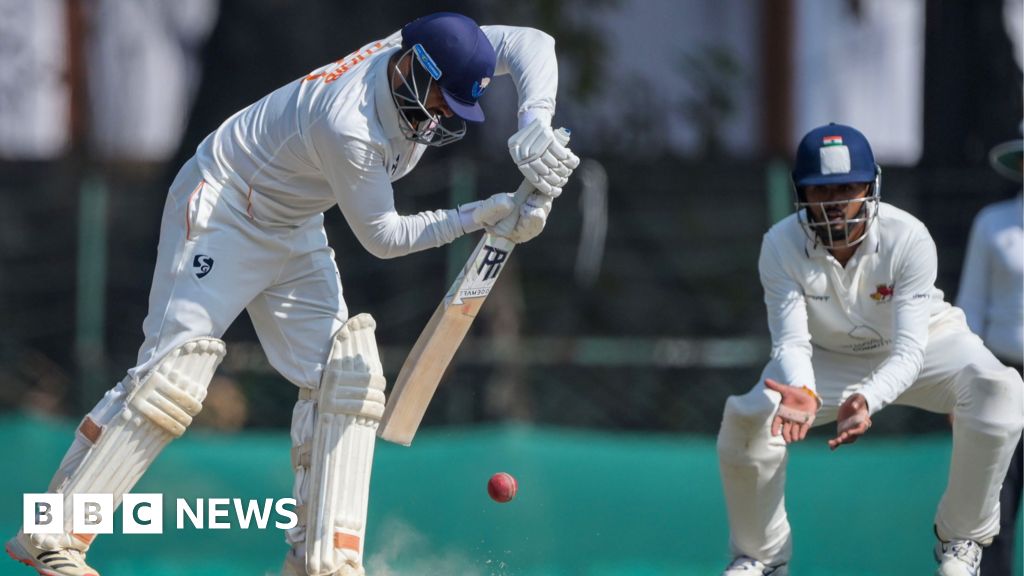
Jammu and Kashmir’s historic victory in India’s premier domestic cricket competition, the Ranji Trophy, last week is far more than just a sporting achievement. It stands as one of the most compelling and inspiring stories in the country’s cricketing landscape, symbolizing a breakthrough decades in the making for a region long on the margins of Indian cricket.
The Ranji Trophy, one of the oldest and most prestigious first-class cricket tournaments in India, carries immense significance. Winning it is widely regarded as a definitive entry into the mainstream of Indian cricket, a sport that enjoys unparalleled popularity and influence in the country. For Jammu and Kashmir, a region often associated with political strife and conflict, claiming this title marks a momentous milestone—a triumph not just of talent and skill, but of perseverance against immense odds.
Cricket in Jammu and Kashmir has deep historical roots, stretching back to the colonial era. The region was renowned for its Kashmir willow, a tough and resilient wood prized for making cricket bats that powered the game across India. Yet despite this early connection to the sport, Jammu and Kashmir’s cricketing journey has been fraught with challenges. The region has endured decades of insurgency, political turmoil, and a pervasive sense of alienation. Tensions peaked in 2019 when the Indian government revoked Jammu and Kashmir’s special autonomy status and reorganized the state into two federally administered territories, further complicating the social and political environment.
Against this backdrop of upheaval, cricket’s appeal remained undiminished in Jammu and Kashmir, but success was hard to come by. That changed dramatically over a remarkable two-week period during the 2023-24 Ranji Trophy season. While the spotlight was largely on the high-profile T20 World Cup, where India was defending its title, this underdog northern team quietly captured the imagination of the cricketing world.
Jammu and Kashmir’s journey to the championship was a classic tale of overcoming the odds. Their campaign began by ousting the seven-time Ranji champions Delhi to secure a knockout berth. They then defeated former champions Madhya Pradesh in the quarter-finals and Bengal in the semi-finals. The final pitted them against Karnataka, an eight-time winner boasting four current Indian internationals—KL Rahul, Mayank Agarwal, Karun Nair, and Prasidh Krishna—along with a wealth of experience. Most experts expected Jammu and Kashmir to falter, but the team displayed remarkable composure, skill, and determination to outplay their decorated rivals and claim the country’s most coveted first-class cricket title.
This watershed moment was not a sudden fluke, but the culmination of progress built steadily over many years. Over the past decade, Jammu and Kashmir had come tantalizingly close to Ranji success on several occasions, reaching the quarter-finals three times and narrowly missing the semi-finals last season by the slimmest of margins—a single-run first-innings deficit against Kerala. Their cricket association, established in 1959-60, had long struggled with political instability, institutional neglect, and chronic underinvestment. It took nearly 67 years for the team to finally break through and reach the summit of Indian domestic cricket.
Historically, the power centers of Indian cricket have been Mumbai, Delhi, Kolkata, Chennai, and Bengaluru—metropolises where infrastructure, money, and influence converged to nurture talent. Jammu and Kashmir, by contrast, was geographically and politically distant from these hubs. It remained a cricketing outpost, isolated from the mainstream game’s corridors of power. Basic infrastructure was lacking, coaching facilities were scarce, and administrative inefficiencies stifled growth. The fact that Jammu and Kashmir won their first Ranji match only in the 1982-83 season, more than two decades after gaining state association status, underscores how halting their development was.
Political alienation in the Muslim-majority Kashmir Valley further complicated cricket’s growth. In 1983, during a match in Srinagar against the touring West Indies team led by Clive Lloyd, Indian players were jeered by local crowds—an incident that led authorities to restrict major cricket fixtures in the region. This hostility reflected simmering resentment against Delhi’s governance, which eventually escalated into a full-scale insurgency by 1989. International cricket fled the region; the last international match played in Kashmir was in 1986, when Allan Border’s Australian team toured. Since then, top-tier cricket has yet to return.
The tide began turning in the last 15