
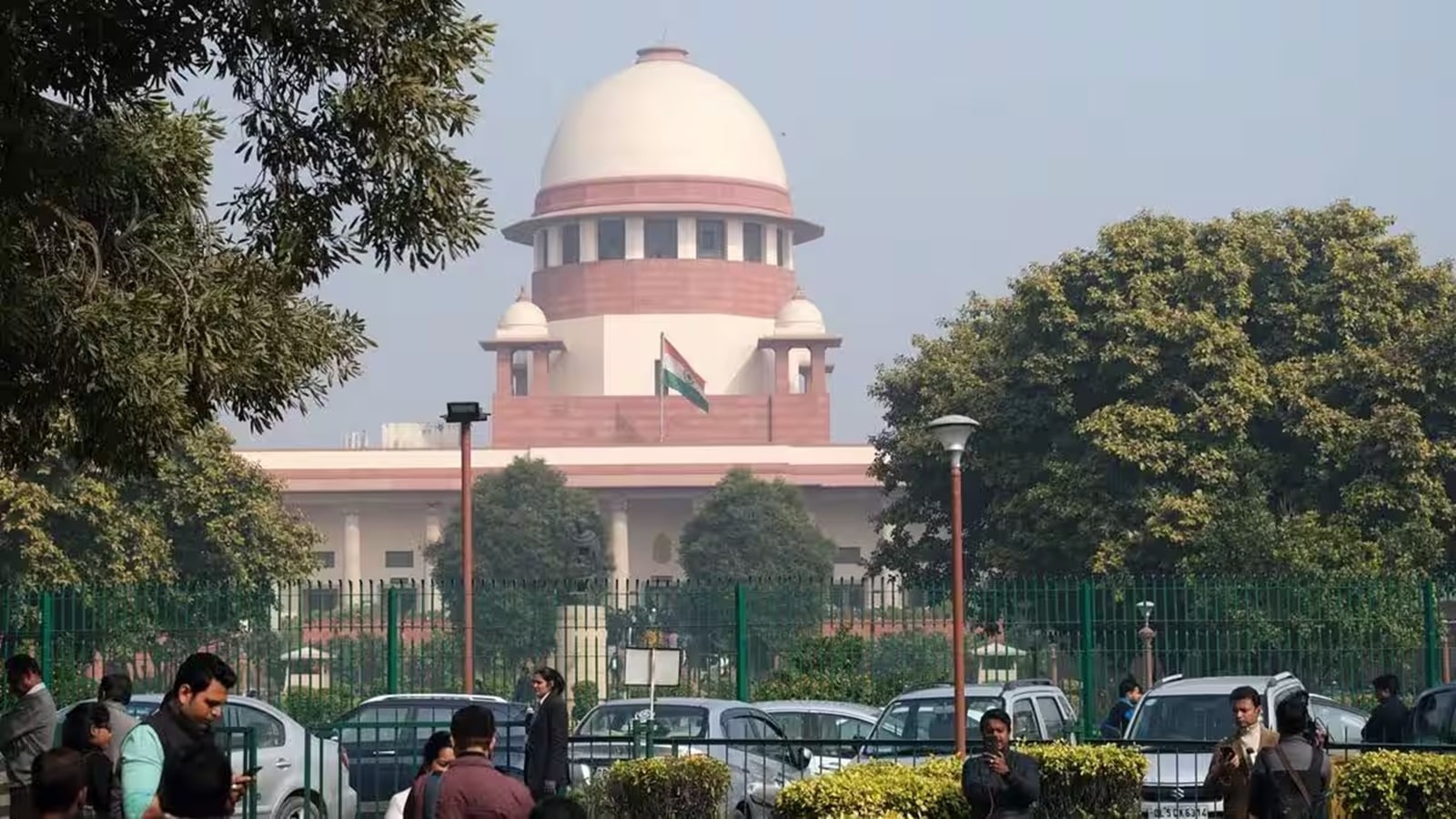
On Wednesday, the Supreme Court of India issued a significant directive to the central government, state governments, Union territories, and universities, instructing them to dissociate from three members of the textbook development team responsible for drafting a controversial chapter on the judiciary in the Class 8 social science textbook. The chapter had been withdrawn by the National Council of Educational Research and Training (NCERT) after it sparked a major controversy regarding its content.
The controversy began when the NCERT withdrew the chapter from the Class 8 social science textbook following widespread criticism. In an affidavit submitted before the Supreme Court, NCERT Director D P Saklani revealed that the chapter on the judiciary was drafted by a Textbook Development Team chaired by Professor Michel Danino. The team included two other key members: Suparna Diwakar and Alok Prasanna Kumar. The affidavit also stated that the chapter was supposed to be reviewed by the 19-member National Syllabus and Teaching Learning Material Committee (NSTC), but it was neither formally placed before the NSTC nor circulated widely. Instead, it was shared digitally with only a few members.
The NSTC, established in 2023 by NCERT, is an overarching committee tasked with overseeing the development of school syllabi and textbooks. Its members are a diverse group of experts and eminent personalities, including Prof. Michel Danino, economist Sanjeev Sanyal (a member of the Prime Minister’s Economic Advisory Council), philanthropist Sudha Murty (founder of the Infosys Foundation), renowned singer Shankar Mahadevan, Chamu Krishna Shastri (chairperson of the Bharatiya Bhasha Samiti, an Education Ministry body promoting Indian languages), and former national badminton coach U Vimal Kumar.
Besides Danino, the withdrawn social science textbook’s development team reportedly included four other NSTC members: Sanjeev Sanyal; M C Pant, then Chancellor of the National Institute of Educational Planning and Administration (NIEPA); mathematician Manjul Bhargava; and Gajanan Londhe, head of the NSTC programme office. However, during the Supreme Court hearing, the names of the NSTC members who reportedly reviewed the chapter did not emerge in the court’s discussions.
The Supreme Court had taken suo motu cognizance of the issue and strongly criticized the chapter on the judiciary, describing it as a “calculated move to undermine and demean the dignity of the judiciary.” The court imposed a “complete blanket ban” on the textbook’s further publication, reprinting, or digital dissemination, highlighting the severity of the matter.
The three members of the textbook development team whom the Supreme Court directed to be disassociated from all future curriculum preparation and textbook finalization are Professor Michel Danino, Alok Prasanna Kumar, and Suparna Diwakar. The court expressed that there was no reason for these individuals to be involved in shaping educational content for the next generation.
### Profiles of the Three Members Directed to be Disassociated
**Michel Danino** is a 69-year-old guest professor at IIT Gandhinagar and serves as the chairperson of the Curricular Area Group for social science, a body constituted by NCERT in 2023. This group handles syllabus and textbook development for social science subjects for Classes 6 to 8. Danino is also a member of the NSTC, which oversees syllabus and textbook creation at a broader level. Born in France, Danino moved to India in the 1970s, motivated by his interest in Indian spirituality and the philosophy of Sri Aurobindo and his disciple Mirra Alfassa (known as the Mother), who founded the spiritual township of Auroville in Puducherry. Initially, Danino worked on texts related to these spiritual figures. He gained public attention in 2010 after delivering lectures at IIT Kanpur about the ‘Indus-Sarasvati Civilisation’ and published a book on the mythical Sarasvati river. By 2011, he was a guest professor at IIT Gandhinagar, where he helped establish the Archaeological Sciences Centre and coordinated courses on Indian Knowledge Systems and Indian civilization. His academic work challenges the Aryan invasion theory and promotes the understanding of the Harappan Civilization as the ‘Sindhu-Sarasvati’ or ‘Indus-Sarasvati’ civilization—a terminology that appeared in the 2024 Class 6 social science textbook.
**Alok Prasanna Kumar** is the co-founder