
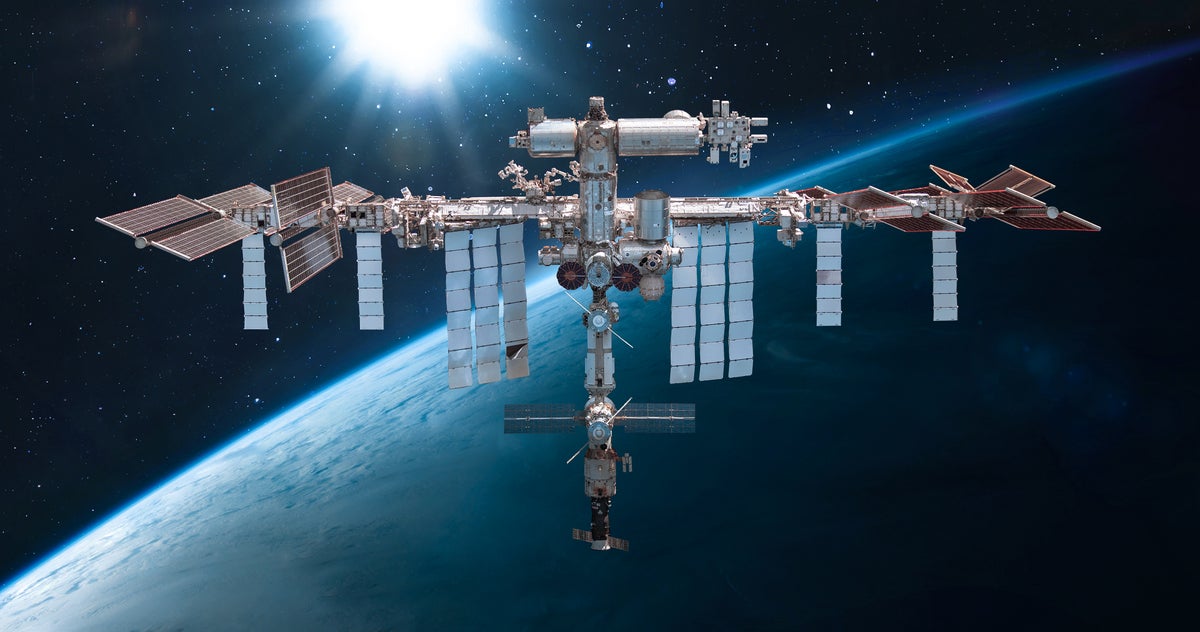
As the International Space Station (ISS) approaches the end of its operational life, NASA is accelerating efforts to establish a new generation of space stations, relying heavily on the burgeoning commercial space industry. On March 24, 2026, NASA announced a pivotal step in this direction: the issuance of a formal request for information (RFI) set to open on March 25, inviting private space companies to propose concepts for future orbital habitats. This move signals NASA's intensified push to transition low-Earth orbit (LEO) operations from government-run platforms to commercially operated stations, ensuring continued human presence in space beyond the ISS’s planned retirement.
The ISS has been a cornerstone of human spaceflight for more than two decades, hosting international crews and scientific experiments in orbit. However, its operational lifespan is nearing its limit, with current plans to retire the station around 2030. NASA has made it clear that it will not build a successor station itself. Instead, the agency aims to support and utilize commercially developed space stations, allowing NASA to focus its resources on more distant exploration goals, such as lunar missions and eventually crewed Mars expeditions. This strategic pivot is intended to catalyze the commercial space sector to mature and deliver orbital habitats that NASA astronauts and other customers can visit or use.
Despite considerable interest from private companies in developing commercial space stations, no such facility has yet been fully realized. The transition has been slower than hoped, leading to increased urgency within NASA’s leadership. At a press conference on March 24, NASA Administrator Jared Isaacman emphasized a pragmatic and “sober view” of the situation. He acknowledged the inevitability of the ISS’s end of life and stressed the necessity of having viable replacements ready in orbit before the station is decommissioned.
To accelerate progress, NASA is expanding its approach to fostering commercial space habitats by proposing a new concept: attaching a “Core Module” to the existing ISS infrastructure. This Core Module would serve as a hub to which individual commercial modules could be connected, effectively creating a hybrid space station environment. These attached commercial modules would then be tested and operated while still docked to the ISS, allowing for thorough validation in a well-understood environment. Following successful testing and operation, these modules could detach and operate independently as standalone commercial space stations.
This innovative modular approach aims to lower the barriers for commercial companies to develop and demonstrate their technologies in orbit. It offers a practical path to proving the viability of commercial space stations before transitioning fully away from the ISS. NASA envisions that once operational, these commercial stations will serve multiple customers, including NASA itself, other governmental agencies, private companies, and international partners. This multi-customer model could foster a competitive marketplace in LEO, driving down costs and expanding access to space.
Several key players in the space industry are already working with NASA on developing commercial station concepts. These include Axiom Space, based in Texas; Blue Origin, the aerospace company founded by Jeff Bezos; Northrop Grumman, a major defense and aerospace contractor; and Nanoracks, a long-time ISS partner specializing in commercial space services. The new RFI and the Core Module concept are expected to attract proposals from these and other innovative companies, potentially accelerating the timeline for commercial station deployment.
Jared Isaacman highlighted the importance of timely action, stating, “Let’s be clear, the International Space Station has an end date. It’s absolutely unavoidable. We have to all arrive at that exact end date with all of our international partners. But it will happen, which means we must work with industry to have a replacement space station.” This underscores the collaborative nature of the ISS program, which involves multiple international partners who must coordinate the station’s retirement and any transition to new platforms.
The urgency surrounding the ISS’s retirement is compounded by its aging infrastructure. The station is operating well beyond its original design lifetime, raising concerns about potential failures that could jeopardize its stability. Experts have warned of the risk that an unexpected anomaly could cause the ISS to lose control and pose a hazard as it deorbits. In response to these concerns, NASA has already taken steps to ensure a safe deorbit of the station when the time comes. In 2024, the agency contracted SpaceX to modify its Dragon capsule into a specialized vehicle capable of carefully controlling the ISS’s descent to ensure it burns up safely in Earth’s atmosphere.
Congress has also weighed in on the future of the ISS. A key congressional committee has advocated for extending ISS operations by