
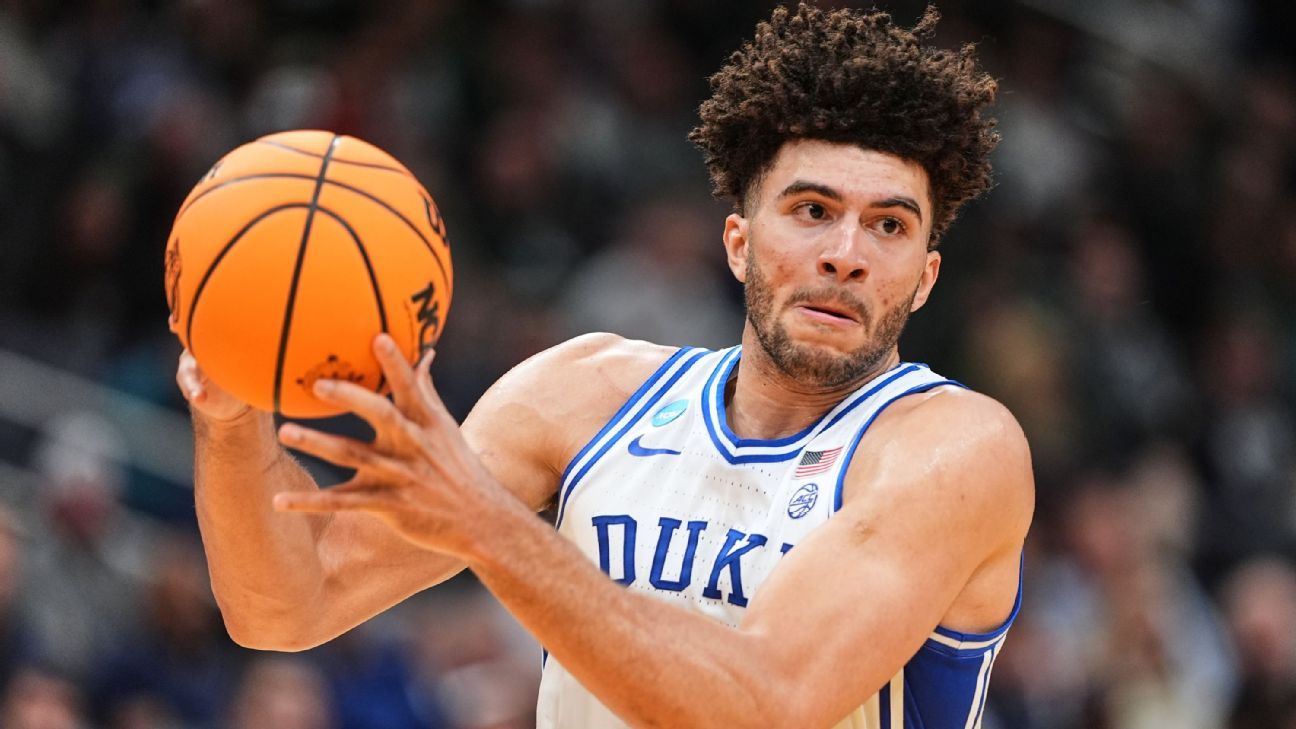
Five months into the 2025-26 college basketball season, the NCAA tournament has reached an exciting stage with only eight teams remaining in contention for the national championship. These teams, each with a chance to advance to the Final Four in Indianapolis, have demonstrated resilience, unique strengths, and, in some cases, surprising paths to get this far. While many expected top programs to make deep runs, the mix of teams in the Elite Eight reflects both the predictability and unpredictability of March Madness.
At the start of the season, most basketball fans and analysts would have predicted that all eight programs still standing had legitimate Final Four aspirations-with one notable exception, the 9-seed Iowa Hawkeyes, who have defied expectations. Each team's journey to the Elite Eight tells a distinct story, shaped by injuries, playing styles, coaching philosophies, and standout performances.
### Arizona Wildcats (No. 1 Seed, West Region)
Arizona has been one of the most dominant and consistent teams all season, and their performance in the tournament has reinforced that status. The Wildcats have beaten every opponent decisively, including a commanding 109-88 victory over Arkansas in the Sweet 16. This win was particularly notable because it handed Kentucky coach John Calipari his worst NCAA tournament loss ever. Arizona's ability to score inside the paint and get to the free-throw line in such volume was unprecedented in recent tournament history.
Throughout the season, Arizona has shown an impressive ability to play a complete game on both ends of the floor. They rank fourth nationally in adjusted offensive efficiency and third in adjusted defensive efficiency, demonstrating balance and depth. Unlike teams that rely heavily on a single star player, Arizona boasts a roster full of selfless contributors who can all lead scoring on any given night. Veteran guard Jaden Bradley and freshmen Brayden Burries and Koa Peat have all stepped up at key moments, with Peat averaging 16.6 points per game in the tournament despite some mid-season struggles.
Arizona's next challenge is against Purdue in the West Regional final, set for Saturday night. The Wildcats' depth and versatility make them a formidable opponent for any team still alive in the tournament.
### Michigan Wolverines (No. 1 Seed, Midwest Region)
Michigan, a Big Ten powerhouse, has advanced to the Elite Eight thanks in large part to its suffocating interior defense and efficient offense. Under head coach Dusty May, who joined Michigan in 2024 after a successful stint at Florida Atlantic, the Wolverines have emphasized protecting the paint and limiting opponents' high-percentage shots.
May's defensive philosophy, which held opponents to just 46.6% shooting in the paint during his tenure at FAU, has translated well to Michigan. The Wolverines allowed Alabama-ranked among the nation's top offenses-to take only 31 shots in their Sweet 16 victory, forcing most of those attempts from outside the paint. Michigan's starting lineup includes three players who are 6-foot-9 or taller, a notable contrast to the small-ball trend in college basketball.
With wins over Howard, Saint Louis, and Alabama, Michigan is poised to make its first Final Four appearance since 2018. They will face Tennessee in the Midwest Regional final on Sunday afternoon.
### Illinois Fighting Illini (No. 3 Seed, South Region)
Illinois has been one of the tournament's most balanced teams, combining potent offense with lockdown defense. Their Sweet 16 win over Houston showcased their ability to go on a decisive run and control the game against one of the nation's best defensive teams. During that game, freshmen David Mirkovic and Keaton Wagler made history by becoming the first freshman teammates to record double-doubles in the NCAA tournament since freshmen became eligible to compete in 1973.
Coach Brad Underwood's squad ranks eighth nationally in adjusted defensive efficiency and seventh in adjusted offensive efficiency since the tournament began-metrics that signal championship potential. Illinois' ability to perform on both ends of the floor is critical, as eight of the last 10 national champions ranked in the top 11 in both categories.
Illinois will meet the surprise contender Iowa Hawkeyes in the South Regional final on Saturday evening.
### Duke Blue Devils (No. 1 Overall Seed, East Region)
Despite facing injuries and tough games throughout the season and tournament, Duke has shown remarkable resilience. Their Sweet 16 victory over St. John's was closer than expected but highlighted the team's depth and ability to respond under pressure. Cameron Boozer, a dominant force who has excelled at every level, continues to lead the team with consistent scoring, rebounding, and playmaking.
Other players have stepped up too, such as Caleb Foster, who scored 11 points after halftime despite recovering from a broken foot, Isaiah Evans with 25 points, and Maliq Brown, whose defensive presence was crucial in disrupting opponents.
Duke's next test is against the UConn Huskies in the East Regional final on Sunday evening. The Blue Devils' experience and ability to handle adversity make them a formidable opponent.
### Purdue Boilermakers (No. 2 Seed, West Region)
Purdue's journey to the Elite Eight is a testament to perseverance through past heartbreaks and current excellence. Head coach Matt Painter has endured several tough losses in previous seasons, including injuries to star players and close defeats to eventual champions. This season's Boilermakers, however, are hotter than ever, riding a seven-game winning streak into the regional final.
During this streak, guard Braden Smith has averaged 9.5 assists per game, while Trey Kaufman-Renn has been a prolific scorer, averaging 17.8 points. Purdue ranks second nationally in adjusted offensive efficiency during this stretch, shooting an efficient 60% inside the arc and 38% from three-point range.
Purdue will face Arizona in a highly anticipated West Regional final on Saturday night, with both teams aiming to punch their ticket to the Final Four.
### UConn Huskies (No. 2 Seed, East Region)
UConn is chasing a historic achievement: winning a third national championship in four years with three different rosters under head coach Dan Hurley. This feat would be unprecedented in modern college basketball history and would place Hurley in an elite coaching category alongside legends like John Wooden.
The current Huskies team is distinct from the championship squads of 2023 and 2024, with Alex Karaban the only returning player from those teams. However, the Huskies maintain a similar style of play-emphasizing free-flowing offense, strong defense, and a fast pace.
Their Sweet 16 win over Michigan State demonstrated their ability to build an early lead and weather a second-half challenge. Despite some recent offensive struggles, UConn's combination of experience and talent makes them a dangerous opponent.
In the East Regional final, UConn will take on Duke in a Sunday evening showdown.
### Tennessee Volunteers (No. 6 Seed, Midwest Region)
Tennessee's run to the Elite Eight marks their third consecutive appearance at this stage of the tournament, reflecting the steady leadership of head coach Rick Barnes. Despite being dismissed by Texas in 2015, Barnes has remained steadfast in his coaching philosophy, emphasizing smart shot selection, tough defense, and physical rebounding.
Barnes has also capitalized on the transfer portal, adding key contributors like Dalton Knecht, Chaz Lanier, and Maryland transfer Ja'Kobi Gillespie. Tennessee currently leads the nation in offensive rebounding, a key factor in their success.
The Volunteers' balanced approach and ability to win tough games earned them victories over Miami (Ohio), Virginia, and Iowa State. Tennessee will face Michigan in the Midwest Regional final on Sunday afternoon.
### Iowa Hawkeyes (No. 9 Seed, South Region)
The Iowa Hawkeyes have been the tournament's surprise team, reaching the Elite Eight for the first time in 39 years despite a rocky finish to their regular season. They entered the NCAA tournament having lost seven of their last ten games but have rediscovered the power of the three-point shot to fuel their success.
Iowa's offense heavily features three-point shooting, with nearly half of their field goal attempts coming from beyond the arc since March 11. Their 37.4% three-point shooting percentage ranks among the top 40 nationally. In their Sweet 16 victory over Nebraska, Iowa hit 13 of 30 three-pointers, using their perimeter shooting and second-half defense to secure the win.
Coach Ben McCollum's Hawkeyes have thus far overcome adversity through resilience and a willingness to embrace the long-range game, setting up a challenging South Regional final against Illinois on Saturday evening.
---
### Looking Ahead
The Elite Eight matchups promise thrilling basketball as each team vies for a spot in the Final Four:
- **West Region Final (Saturday, 8:49 p.m., TBS/truTV):** Arizona vs. Purdue - **South Region Final (Saturday, 6:09 p.m., TBS/truTV):** Illinois vs. Iowa - **East Region Final (Sunday, 5:05 p.m., CBS):** UConn vs. Duke - **Midwest Region Final (Sunday, 2:15 p.m., CBS):** Michigan vs. Tennessee
These games will test the depth, skill, and strategic acumen of each program. Whether it's Arizona's balanced attack, Michigan's interior defense, Illinois' dual-threat offense and defense, Duke's resilience, Purdue's offensive efficiency, UConn's championship pedigree, Tennessee's physicality, or Iowa's three-point shooting, the race to the Final Four is wide open.
As the tournament progresses, fans can expect intense competition and memorable moments as these eight teams battle for a chance to play on college basketball's biggest stage.