
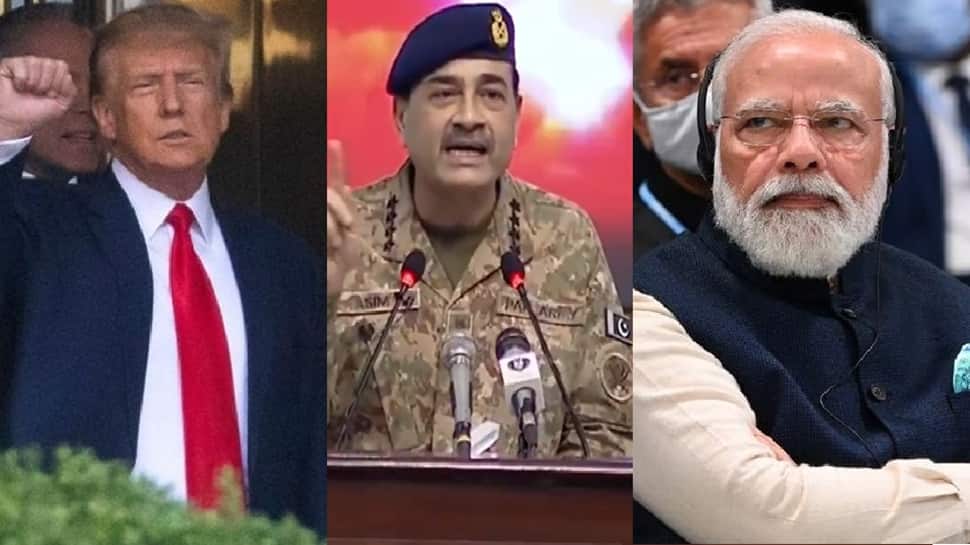
The ongoing conflict involving the United States, Israel, and Iran remains highly volatile, with diplomatic efforts underway to find a resolution. Central to these efforts is a 15-point peace proposal put forth by US President Donald Trump, aimed at halting hostilities and beginning negotiations. However, despite this initiative, the situation on the ground remains tense, with Iran dismissing reports of talks and vowing to continue its resistance.
According to available reports, the Trump administration's 15-point plan proposes a month-long ceasefire to create a conducive environment for dialogue. The plan outlines several demands: stringent restrictions on Iran's nuclear program, dismantling of its missile capabilities, cessation of support to proxy groups, and reopening the strategically critical Strait of Hormuz to international shipping. In exchange, the United States would lift economic sanctions imposed on Iran. President Trump has expressed optimism about the progress, stating that "many calls and meetings are taking place." Nevertheless, Iran has officially rejected claims of ongoing negotiations, labeling them as "fake news" and reaffirming its commitment to continue fighting.
The challenges facing this diplomatic overture are formidable. Deep-seated mistrust between the parties, the intensity of the conflict, and conflicting strategic interests make any breakthrough difficult. Still, the 15-point plan represents a serious attempt by the US to de-escalate tensions through dialogue rather than military confrontation.
In this complex geopolitical environment, Pakistan has emerged as a key player, potentially serving as a mediator between the US and Iran. Historically, Pakistan's relationship with Iran has been multifaceted, complicated by regional rivalries and sectarian differences. Yet Pakistan shares a border with Iran, maintains close diplomatic ties, and since 1979 has hosted the Iranian Interest Section in the United States, acting as a diplomatic bridge between Tehran and Washington. This unique position, combined with Pakistan's recent claims of strong rapport between its military leadership-especially Army Chief Asim Munir-and President Trump, places Islamabad in a pivotal role.
Pakistan has offered to host peace talks in its capital, Islamabad, and is actively facilitating communication between the conflicting parties. Some reports suggest that Iran has reluctantly agreed to engage with Pakistan as a mediator, signaling a willingness to participate in dialogue despite reservations. Analysts note that while mistrust persists-given Pakistan's complex relations with regional powers-Iran may have limited choices among Muslim-majority nations to conduct such sensitive talks. Pakistan's readiness to act as a broker aligns with US interests, making it a default mediator in the current scenario.
However, questions arise about whether Pakistan is the most suitable mediator. India, with its strong and balanced relations with the US, Israel, and Iran, is often considered a more neutral and capable diplomatic actor in the region. India pursues a policy of strategic autonomy, maintaining close energy ties with Iran, including investment and operational involvement in the Chabahar Port, while simultaneously fostering robust partnerships with the US and Israel. Indian diplomatic leadership is recognized for its maturity and dynamism.
Importantly, Iranian President has communicated directly with Indian Prime Minister Narendra Modi, emphasizing that peace depends on the immediate cessation of attacks by the US and Israel. This highlights India's potential role in a broader diplomatic framework aimed at stabilizing the region. However, despite India's capabilities and established connections, current indications are that Pakistan is taking the lead in immediate mediation efforts, particularly in back-channeling the US 15-point proposal.
Pakistan's role as mediator is facilitated by its unique geographical proximity and existing diplomatic infrastructure. Yet, skepticism remains regarding Iran's full trust in Pakistan to handle such critical negotiations impartially. The historical complexities and Pakistan's own regional interests complicate its position. Nonetheless, with limited alternatives, Iran appears to be engaging with Pakistan's mediation efforts, albeit cautiously.
In parallel, Iran has its own demands, encapsulated in a five-point plan. This includes asserting complete sovereignty over the Strait of Hormuz, compensation for damages suffered during the conflict, and the withdrawal of all US military bases from the Middle East. These conditions add layers of complexity to the negotiation process and present obstacles to the acceptance of the US proposal in its current form.
The diplomatic dance involving the US, Iran, Pakistan, and India is taking place amid a backdrop of ongoing military tensions and strategic calculations. Despite official denials and public skepticism, behind-the-scenes communication channels remain active, reflecting the high stakes involved and the global implications of the conflict.
Maj Gen Retd Ashwini Siwach, a veteran with over 36 years of operational military experience and a deep understanding of regional security dynamics, underscores the fluidity of the situation. He observes that Pakistan is uniquely positioned as a mediator due to its geographical and diplomatic ties, even though it faces challenges related to trust and credibility. Meanwhile, India's potential influence is acknowledged, especially given its balanced relationships and strategic autonomy in the region.
As the conflict continues, the international community watches closely, hopeful that sustained diplomatic efforts, including the proposed ceasefire and mediated talks, could pave the way for a peaceful resolution. The outcome will depend heavily on the willingness of the involved parties to compromise, the effectiveness of mediators, and the ability to overcome entrenched mistrust.
In summary, the US-Israel-Iran conflict remains unresolved but is currently subject to active diplomatic engagement. The US 15-point plan offers a framework for ceasefire and negotiation, but acceptance by Iran is uncertain amid denials and ongoing hostilities. Pakistan has positioned itself as a key mediator, leveraging its unique ties and proximity, while India remains a significant regional power with potential to influence outcomes. The delicate balance of these diplomatic efforts will determine whether peace can be restored or if the conflict will escalate further.