
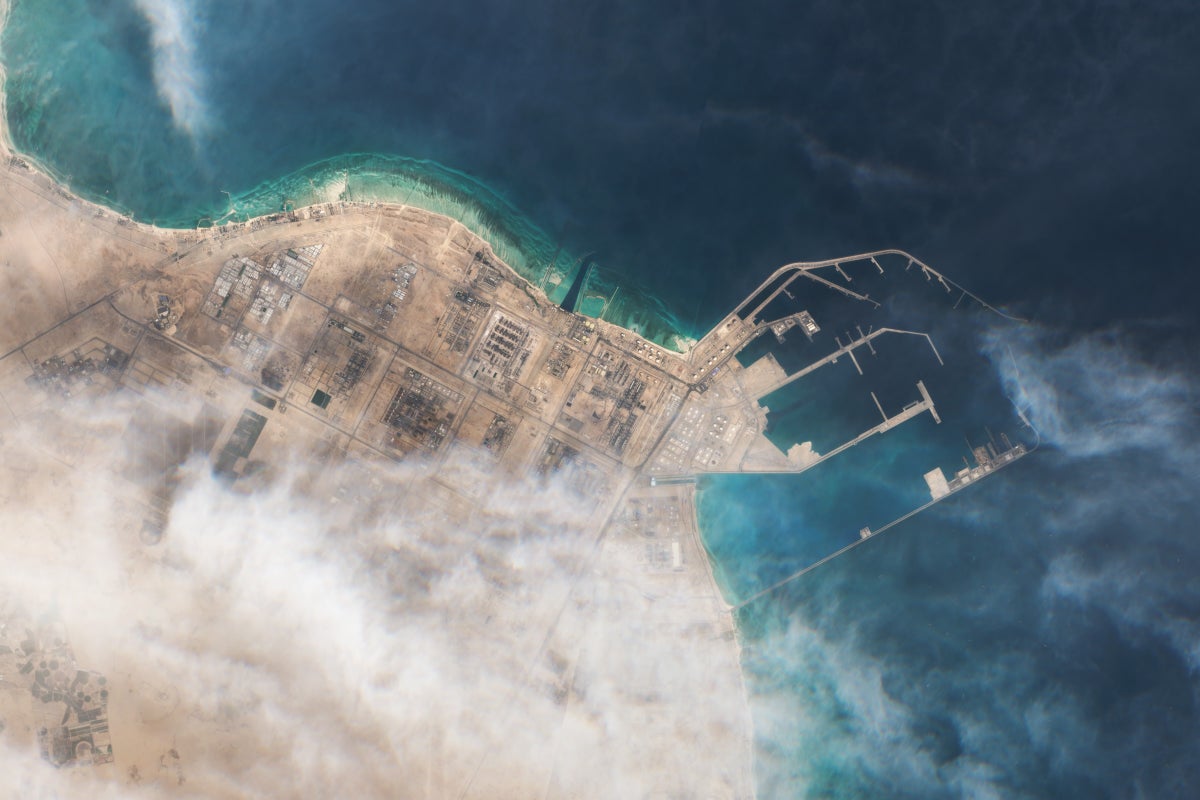
On March 18, 2026, an Iranian attack targeted Qatar’s liquefied natural gas (LNG) production facilities at Ras Laffan Industrial City, causing significant damage that has led to a complete halt in operations at some parts of the site. This assault destroyed two critical LNG processing “trains” — specialized plants where natural gas is purified and cooled to extremely low temperatures to transform it into a liquid form suitable for transport across oceans. The attack has knocked out approximately 17 percent of Qatar’s LNG export capacity, a setback with profound and lasting global implications.
Qatar is one of the world’s leading exporters of LNG, and the damaged trains alone processed about 12.8 million metric tons of LNG annually. To grasp the scale of this loss, that volume equates to nearly 185 million megawatt-hours of electricity—more than the entire annual electricity generation of New York State. This disruption is not just a regional issue; it reverberates worldwide due to the interconnected nature of the global energy market. Natural gas is a vital energy source for electricity generation, heating, and industrial processes in many countries, especially in Europe and Asia, which heavily rely on LNG imports from the Middle East.
LNG production is a complex and capital-intensive process. Natural gas extracted from underground reserves is primarily methane, a gas that takes up a large volume and is difficult to transport efficiently over long distances unless it is converted into a liquid. This conversion is done in LNG trains, where the gas is cooled to about –260 degrees Fahrenheit (–162 degrees Celsius), well below methane’s boiling point, compressing the gas to 1/600th of its original volume. This liquefaction process involves high pressure and a series of refrigerants that progressively chill the gas. Once liquefied, the LNG is stored in insulated tanks and shipped worldwide, where it is regasified at import terminals for use.
The destruction of these two LNG trains at Ras Laffan represents a severe blow to Qatar’s LNG infrastructure, which is not something that can be quickly repaired or replaced. Chuck McConnell, executive director of the Center for Carbon Management in Energy at the University of Houston, emphasized that the damage will have enduring effects, warning that restoring this capacity will likely take years. The repair and reconstruction of LNG trains require specialized, expensive equipment and expertise, making it impossible to resume normal operations in a matter of weeks or months.
This attack occurs amid an already tense geopolitical climate, marked by conflict involving the U.S., Israel, and Iran, which has led to the functional closure of the Strait of Hormuz. This strategic waterway is a critical chokepoint through which about 20 percent of the world’s LNG passed as recently as 2024. Its closure has already pushed oil and gas prices higher globally, exacerbating energy insecurity and economic volatility. While some of these effects might ease if the conflict ends swiftly, the damage to essential infrastructure like Qatar’s LNG trains will continue to ripple through markets and economies for years.
The broader context for LNG demand and supply also shapes the consequences of this attack. LNG has become increasingly important as countries seek to transition away from more polluting energy sources like coal. Natural gas is seen as a cleaner-burning fossil fuel, making it a favored choice for electricity generation during this transition period. This growing demand has fueled expansion plans for LNG production and export capacity worldwide, including major investments in the U.S. and Qatar. However, the destruction of key infrastructure in Qatar threatens to disrupt these plans and tighten global supply.
Economist Michael Orlando from the University of Colorado Denver notes that while LNG demand is growing, the damage to Qatar’s capacity could cause short-term price shocks. However, he suggests that natural gas prices might experience downward pressure over the next few years due to the expansion of LNG liquefaction and shipping capacity, particularly in the U.S. For instance, the International Energy Agency projects that the U.S. will add an additional 19 billion cubic meters of LNG capacity in 2026 alone. Additionally, if countries in Asia and Europe respond to geopolitical uncertainties by increasing coal use or accelerating renewable energy deployment, demand for LNG could moderate, further influencing prices.
Nevertheless, the impact on energy prices will not be uniform across all fossil fuels. While natural gas might see price fluctuations, oil is likely to remain expensive for the foreseeable future. The oil industry faces a steady state of demand, and investors are cautious about committing to long-term projects amid