
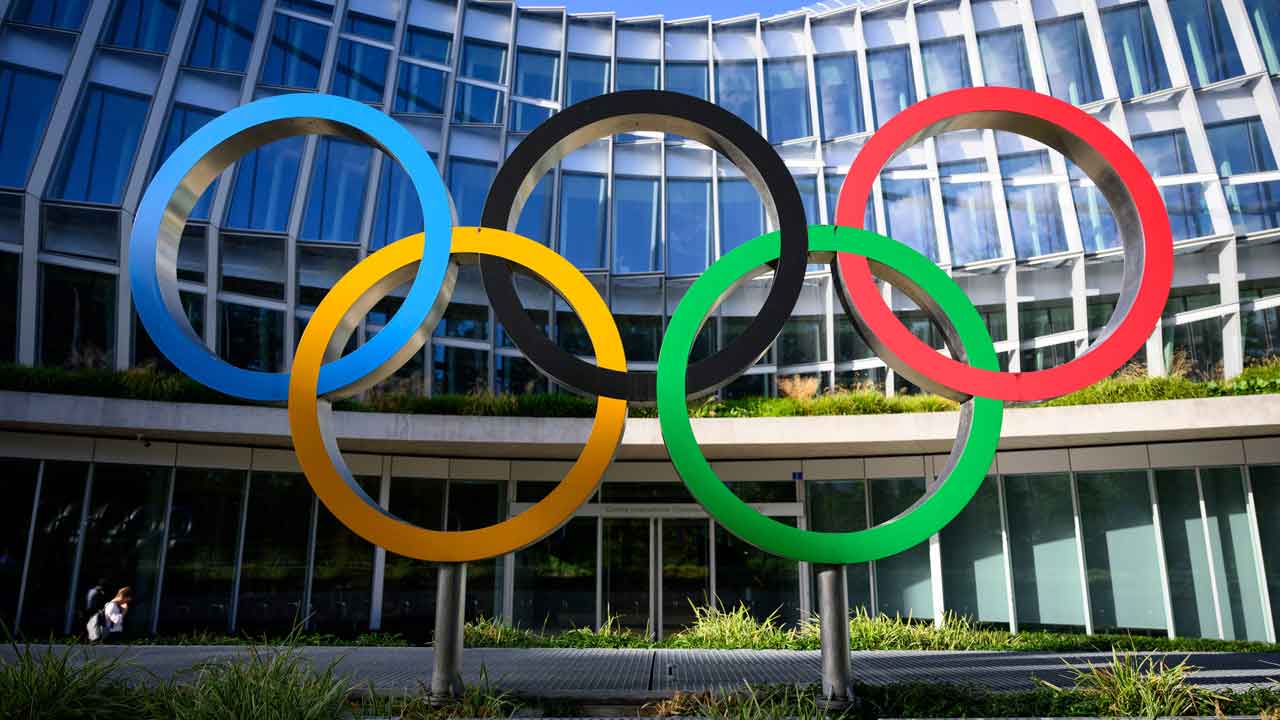
The International Olympic Committee (IOC) has announced a significant new policy aimed at ensuring fairness and safety in women's sports by limiting participation in female categories exclusively to biological females. This decision, set to take effect starting with the 2028 Los Angeles Olympic Games, introduces genetic testing as a requirement to verify biological sex for all female competitors.
According to the IOC's statement released on Thursday, eligibility for any female category event at the Olympic Games and other IOC-sanctioned competitions will now be determined based on a one-time screening for the SRY gene, a key genetic marker typically found on the Y chromosome that is associated with male biological sex. The tests can be conducted using saliva, cheek swabs, or blood samples.
The policy was developed after consultations with medical experts and reflects the IOC's commitment to preserving fairness, safety, and integrity in women's sports. The organization emphasized that providing a female category is universally accepted as essential to offer equal opportunities for men and women to compete at elite levels. The policy aligns with the IOC's modern goals, which include promoting equality by ensuring women have fair access to finals, podiums, and championships; enhancing the Olympic value by featuring both women's and men's finals in every sport; and increasing visibility and inspiration by celebrating female athletes worldwide.
IOC President Kristy Coventry, a former Olympic athlete herself, stressed the importance of the new measures. She highlighted that even the smallest margins can determine victory or defeat in Olympic competition, making it unfair and unsafe for biological males to compete in female categories. "It is absolutely clear that it would not be fair for biological males to compete in the female category," Coventry said. "In addition, in some sports it would simply not be safe."
This move by the IOC comes amid ongoing debates and controversies surrounding transgender athletes' participation in women's sports. A World Athletics panel presentation in Tokyo last September reported that between 50 and 60 athletes with male biological advantages have reached finals in female categories at global and continental championships since 2000. Dr. Stéphane Bermon, head of the World Athletics Health and Science Department, led the panel and argued that sex testing remains necessary due to an over-representation of athletes with differences of sex development (DSD) among female finalists.
The issue has also attracted international attention. In October, the United Nations published a report revealing that nearly 900 biological female athletes have missed out on podium finishes because they were beaten by transgender competitors. The report, authored by Reem Alsalem, the U.N.'s rapporteur on violence against women, was titled "Violence against women and girls in sports." It found that over 600 athletes failed to medal in more than 400 competitions across 29 sports, resulting in over 890 medals being won by trans athletes as of March 30.
The IOC's announcement has elicited responses from political figures, including White House Press Secretary Karoline Leavitt, who credited former President Donald Trump's executive order protecting women's sports as instrumental in pushing this policy forward. Leavitt stated, "You cannot change your sex. President Trump's Executive Order protecting women's sports made this happen!"
Adding to the public discourse, U.S. Olympic bobsledding star Kaillie Humphries recently voiced her support for President Trump, citing his efforts to protect women's sports among other policies. Humphries, who immigrated to the U.S. from Canada, also praised Trump for his stance on immigration enforcement and his public celebration of the men's hockey team.
The new IOC policy emphasizes fairness and safety as its core tenets and reflects a broader global conversation about the balance between inclusion and competitive equity in sports. By instituting a scientific, genetic verification process, the IOC aims to maintain a level playing field for female athletes while respecting the integrity of women's competitions.
As this policy takes effect in the coming years, it will likely influence how national and international sports organizations approach eligibility rules for female athletes. The decision marks a significant moment in the evolving landscape of sports governance and gender policy, spotlighting the complex challenges faced when reconciling human rights, scientific evidence, and athletic competition.
Sports reporters, including Jackson Thompson of Fox News Digital, continue to cover the political and cultural implications of these developments, noting their impact on enforcement of laws such as Title IX and broader conversations about gender identity in athletics. The debate over transgender participation in women's sports remains a contentious and evolving issue, with the IOC's new policy representing a decisive stance on the matter.
For ongoing updates and comprehensive coverage of this story and related topics, readers can follow Fox News Digital's sports section and subscribe to their newsletters. The intersection of sports, politics, and gender continues to be a critical area of public interest and policy debate worldwide.