
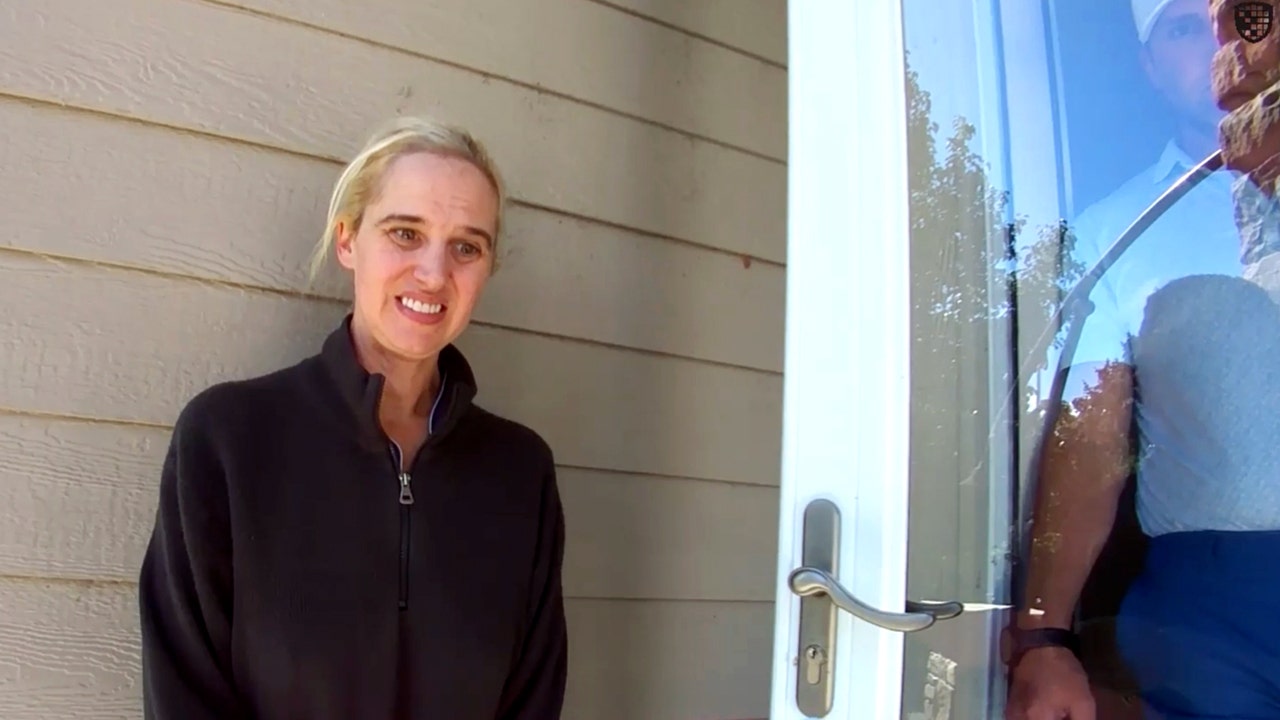
In a startling incident near the small Colorado towns of Bow Mar and Columbine Valley, a woman named Chrisanna Elser found her life unexpectedly upended after being wrongfully accused of stealing a $25 package from a neighbor’s porch. The accusation stemmed from modern surveillance technology, including license plate reader data, which initially implicated her forest green Rivian R1T electric pickup truck as being at the scene of the alleged theft. However, as new evidence came to light—most notably showing that her vehicle was not present at the crime scene—the charges against her were dropped.
Chrisanna’s ordeal began when Sergeant Jamie Milliman of the Columbine Valley Police Department arrived at her home with the startling news. The officer accused her of theft based largely on data captured by Flock Safety cameras—automated license plate readers installed throughout the area, designed to monitor vehicles entering and exiting neighborhoods. According to the officer, these cameras recorded Chrisanna’s truck passing through Bow Mar between 11:52 a.m. and 12:09 p.m. on the day the package went missing. The officer’s confidence was clear; he described the town’s surveillance network as so thorough that “you can’t get a breath of fresh air in or out of that place without us knowing.”
Despite Chrisanna’s insistence that she had nothing to do with the theft and her efforts to present counter-evidence, the officer refused to consider it, insisting she was lying. He subsequently issued a summons for her to appear in court on the matter. This marked the beginning of a frustrating and eye-opening journey for Chrisanna as she grappled with the implications of a surveillance-driven accusation and the challenge of proving her innocence.
The initial evidence against Chrisanna came in part from footage shared by neighbors on the community app Nextdoor, showing a suspect taking the package. At first glance, Chrisanna understood why police might have thought the suspect resembled her—they saw a figure with similar coloring and build. However, upon closer inspection, Chrisanna noticed key differences: the suspect appeared significantly younger and had a distinctive haircut with a shaved underside, unlike her own appearance. More importantly, the suspect was seen fleeing the scene on foot and never entering a vehicle, conflicting with the police theory that her truck was involved.
This discrepancy prompted Chrisanna to dig deeper. She began investigating the case herself—something few accused individuals might consider doing—and soon uncovered critical evidence that undermined the official narrative. One major discovery was that her truck had been parked in front of another Flock camera in her own neighborhood during the entire time the theft supposedly took place. This camera footage clearly showed that her vehicle was stationary and nowhere near the site of the crime.
In addition to the Flock camera data, Chrisanna turned to her smartphone’s Google Location Timeline, a feature many people are unaware tracks and records their movements if enabled. This timeline showed that she was actually at a tailor appointment just outside Bow Mar at noon—more than a quarter-mile away from the porch theft location. Alongside this, she collected supporting evidence such as photos from other stops she made that day and videos from her vehicle’s onboard cameras and GPS system. Together, these pieces allowed her to build a detailed timeline proving her whereabouts.
Chrisanna compiled all this evidence and submitted it to the Columbine Valley Police Department. After reviewing the information, Police Chief Bret Cottrell responded by officially voiding the summons and confirming that no court record existed for the case. This effectively ended the wrongful accusation. Internal police documents later revealed that the officer who had accused Chrisanna received a formal reprimand and was mandated to undertake additional training.
The case underscores the growing role and limitations of surveillance technologies such as license plate readers and neighborhood cameras in modern policing. Flock cameras, widely used across the United States, automatically capture license plates and timestamps, helping law enforcement track vehicles in investigations involving stolen cars, kidnappings, or hit-and-runs. However, these systems are designed to generate leads, not serve as conclusive proof. Chrisanna’s experience highlights the dangers of treating such data as definitive evidence without adequate human verification.
Moreover, the case raises important questions about transparency and public access to surveillance data. In Colorado, residents can request government records—including surveillance footage—under the Colorado Open Records Act (CORA), a public-records law similar to the federal Freedom of Information Act (FOIA). Chrisanna’s husband suggested using this law to obtain the footage, demonstrating how citizens might hold authorities