
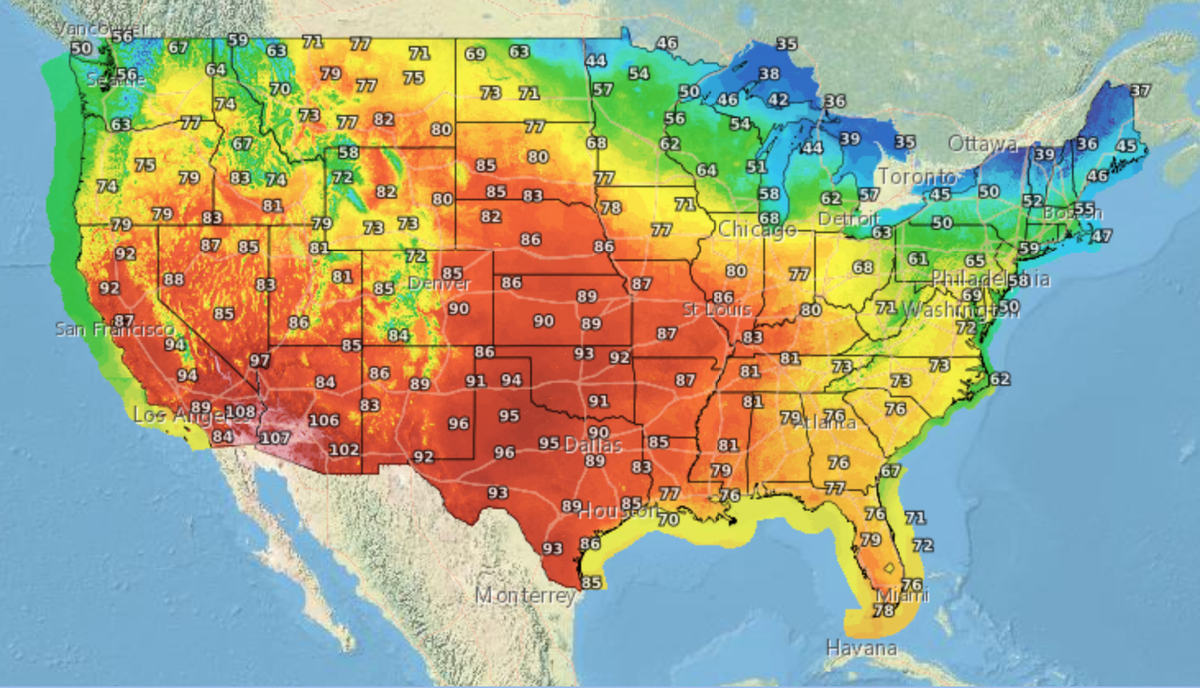
In March 2026, the western United States experienced an unprecedented and record-breaking heat wave that shattered temperature records across multiple states and challenged the limits of climatological norms for this time of year. This extraordinary weather event saw temperatures soaring 20 to 30 degrees Fahrenheit (11 to 17 degrees Celsius) above normal, with some areas reaching temperatures more typical of mid-summer rather than early spring. The intensity, scope, and timing of this heat wave have left climate scientists and meteorologists alarmed, as it defies historical patterns and highlights the growing influence of climate change on extreme weather events.
One of the most striking features of this heat wave was the rapid succession and magnitude of temperature records it set. On March 20, 2026, four weather stations—two in Arizona and two in California—recorded temperatures of 112 degrees Fahrenheit (44.4 degrees Celsius), surpassing the all-time March heat record for the United States that had been set just the previous day. This temperature was only one degree Fahrenheit shy of the all-time U.S. April heat record, an extraordinary feat given that it occurred in March. Over the course of the heat wave, eight states set new all-time high temperature records for the month of March, underscoring the widespread nature of the extreme heat.
The heat wave’s intensity was evident early on. On March 18, North Shore, California, reached 108 degrees Fahrenheit (42 degrees Celsius), tying the state’s highest recorded temperature for March. The following day, Phoenix, Arizona, experienced a temperature of 105 degrees Fahrenheit (41 degrees Celsius), marking the earliest such extreme heat reading by more than a month. That same day, just outside Martinez Lake, Arizona, the mercury climbed to 110 degrees Fahrenheit (43 degrees Celsius), setting a new record for the highest March temperature ever observed in the United States. These astonishing figures reflect not only the magnitude of the heat wave but also its early arrival in the year, when such temperatures are typically unheard of.
The meteorological cause of this heat wave centers on a powerful high-pressure system, known as a ridge, that established itself over the Southwest United States. This ridge, described by experts as the strongest ever observed in March for the region, contributed to the unseasonably scorching conditions by creating stable, clear skies and compressing descending air masses, which warmed as they sank toward the surface. This phenomenon inhibits cloud formation and precipitation, allowing sunlight to heat the ground more intensely and pushing temperatures far above average levels. The ridge extended over a vast area of the western U.S. and persisted for several days, maintaining the extreme heat.
In addition to the ridge, an unusual weather pattern known as a “Kona low” played a role in amplifying the heat. The Kona low had recently brought record-breaking rainfall to Hawaii, releasing a significant amount of latent heat into the atmosphere as water vapor condensed into precipitation. This moisture and heat were then transported northward by an atmospheric river—a narrow band of concentrated moisture in the atmosphere—toward the Pacific Northwest. Some of this heat and moisture energy was diverted into the high-pressure ridge over the Southwest, further intensifying surface temperatures in the western states.
While the meteorological setup explains the mechanics of the heat wave, climate change has been identified as a critical factor in its occurrence and severity. The World Weather Attribution group, which conducts rapid analyses of extreme weather events to determine the influence of human-induced climate change, concluded that this heat wave would have been virtually impossible without the warming effects of greenhouse gases. Over the past decade, such an event has become approximately four times more likely due to the increased heat trapped by these gases in the atmosphere. Moreover, the heat wave was estimated to be up to 1.4 degrees Fahrenheit (0.8 degrees Celsius) hotter than it would have been in a pre-industrial climate.
The unprecedented early-season heat has prompted widespread heat advisories and extreme heat alerts across many western states. Although summer temperatures in the region often soar even higher, the rapid onset and timing of this heat wave pose unique health risks. Typically, people gradually acclimate to rising temperatures as spring progresses into summer, but this sudden and intense heat spike leaves vulnerable populations—such as young children, the elderly, and outdoor workers—particularly exposed to heat-related illnesses. Public health officials have urged residents to take precautions, emphasizing hydration, avoiding strenuous outdoor activities during peak heat hours, and ensuring access to cooling environments.
Beyond immediate health