
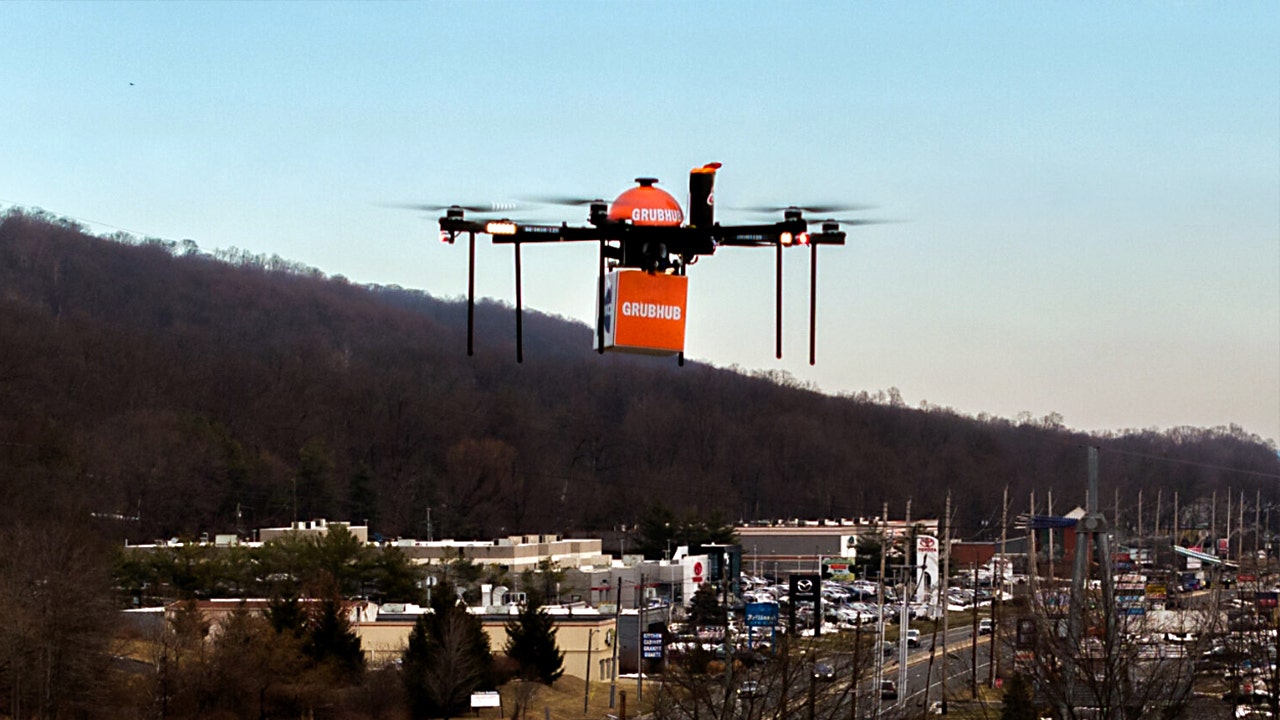
Grubhub has recently launched New Jersey's first drone-powered food delivery pilot program, marking a significant step forward in the evolving landscape of food delivery technology. This three-month test began on March 18 in Green Brook, a town located near Middlesex, and offers residents within approximately 2.5 miles the opportunity to experience food deliveries arriving via drone. Importantly, this innovative delivery option comes at no additional cost to customers, highlighting the company's commitment to accessible and efficient service.
The drone delivery pilot operates out of Wonder's Green Brook location, a multi-restaurant kitchen hub that prepares meals from 15 different food concepts all within a single facility. This centralization allows the program to offer a wide variety of cuisines and options, all delivered through the same streamlined drone process.
Here's how the new drone delivery system works: after placing an order through the Grubhub app, customers can track their delivery in real time, similar to traditional food delivery services. The key difference comes at the final stage, where instead of a driver pulling up in a car, a drone arrives overhead and lowers the food package directly to the customer's front yard via a tethered delivery system. This method not only adds a futuristic flair to mealtime but also promises potential advantages in speed and efficiency.
Timing is a critical factor in food delivery, and drone technology could provide a meaningful edge. Unlike drivers, drones are not affected by traffic jams, stoplights, or the challenges of parking. They use optimized flight paths to travel directly to the delivery location, which theoretically reduces wait times. Grubhub's goal with this pilot is to verify whether drone deliveries can consistently beat traditional methods in real neighborhood conditions, improving the overall customer experience by cutting down on delays.
The drones used in this program are the DE-2020 models built by Dexa, a company specializing in autonomous delivery systems. These are not hobbyist drones but fully automated commercial aircraft designed for safety and reliability. Before each flight, crews ensure that food is packaged and secured properly to prevent spills or damage during transit. The system incorporates advanced safety checks and monitoring, illustrating the complexity involved in what might appear to be a simple takeoff and landing.
Grubhub representatives emphasize the significance of this partnership with Dexa and Wonder. Abhishek "PJ" Poykayil, Senior Vice President of customer delivery operations at Wonder and Grubhub, described the collaboration as a major leap forward in delivery innovation. By combining Grubhub's marketplace expertise, Wonder's innovative kitchen platform, and Dexa's autonomous drone technology, the companies aim to provide New Jersey diners with a faster, more efficient delivery method that maintains the highest standards of safety and reliability.
From the technology provider's perspective, Dexa's CEO and founder Beth Flippo highlighted the broader implications of the program. She explained that their autonomy platform is designed to navigate complex environments safely, optimize real-time routing, and operate without the need for continuous human intervention. This pilot represents a meaningful step toward integrating autonomous systems into everyday life, not only for food delivery but potentially for a wide range of services including transportation, infrastructure support, and critical supply logistics. As consumer expectations evolve toward faster, more efficient, and sustainable options, autonomous delivery technologies like this are poised to play a central role in meeting those demands on a large scale.
The Grubhub drone delivery test in New Jersey is part of a larger trend in the delivery industry. Companies are increasingly exploring new methods to improve speed, convenience, and reliability, while also reducing costs and scaling operations more effectively. Drone delivery offers a unique solution, particularly in suburban areas where distances are manageable and traffic congestion can slow traditional drivers. This pilot echoes similar efforts by other companies such as Wing, backed by Alphabet (Google's parent company), which has been testing and expanding drone deliveries for food, retail, and small packages in select markets across the United States.
For consumers, the implications of this pilot extend beyond the immediate geographic area. If successful, drone delivery could become a standard offering, potentially transforming expectations around delivery times and service options. Food delivery apps may soon present customers with multiple choices, such as driver-based, robot-based, or drone-based delivery, depending on location and demand. While currently there is no added fee for drone deliveries, future pricing models may evolve to reflect speed, convenience, or peak demand periods.
However, the expansion of drone delivery also raises important community considerations, including concerns about noise, safety, and privacy. As drones become more common in residential areas, local regulations and public acceptance will play crucial roles in shaping how these services develop.
Moreover, the technology's potential extends well beyond food. Autonomous drone delivery could be applied to groceries, retail items, and even urgent medical supplies, offering a flexible and rapid means of transportation that bypasses many of the limitations faced by ground-based vehicles.
This new approach to delivery signals a fundamental shift in how goods move from vendors to consumers, integrating the skies into everyday logistics. While drone delivery might currently seem like a novel experiment, it is quickly becoming a practical and scalable solution. As the technology improves and becomes more widely accepted, the way people receive everything from takeout meals to essential goods could change dramatically and sooner than many expect.
For those curious about the future of delivery, this New Jersey pilot offers a glimpse into what's coming. The next time you hear a faint buzzing sound overhead, it might not be a plane but your dinner arriving via drone. The real question is not if drones will become part of daily life, but how soon consumers will be tracking a drone's journey from kitchen to doorstep.
Grubhub's drone delivery pilot program in New Jersey is a pioneering effort that highlights the intersection of technology, convenience, and consumer demand. By testing autonomous drone deliveries in a real-world suburban setting, the companies involved are helping to shape the future of how meals and other essentials will be delivered - faster, smarter, and more efficiently than ever before.