
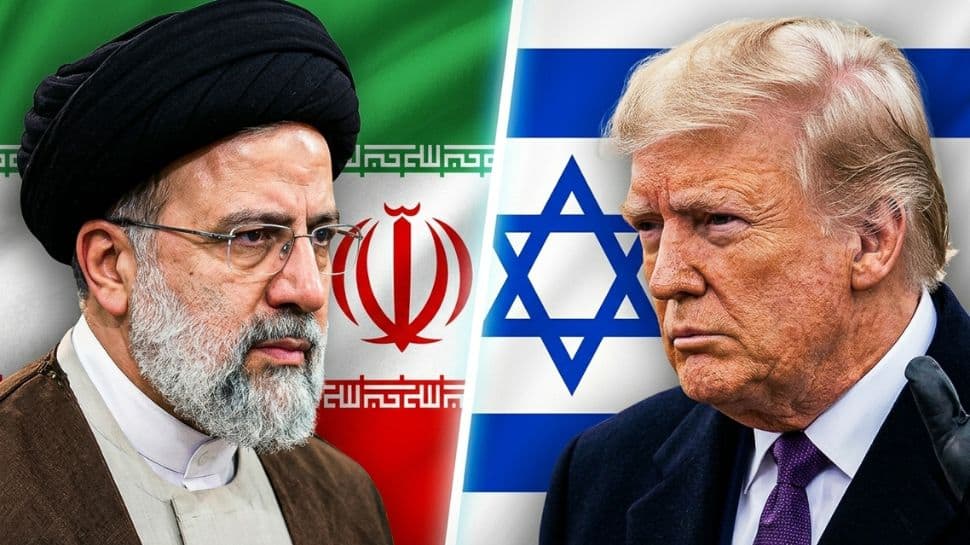
Tensions in West Asia have escalated significantly over the past weeks, with the conflict between Iran and a coalition including the United States and Israel entering its fourth week. Despite public statements by US President Donald Trump suggesting that negotiations with Iran are ongoing and that a de-escalation of the conflict may be imminent, military and strategic developments on the ground paint a more complex and precarious picture.
The Islamic Revolutionary Guard Corps (IRGC) of Iran has issued a stern warning to the United States and Israel against any potential ground invasion of Iranian territory. In a strongly worded statement, the IRGC cautioned, "Do not send your children to hell," emphasizing that any invading forces "will be drowned and disappear in the million-strong sea of the Iranian nation." The statement also accused Israeli Prime Minister Benjamin Netanyahu and President Trump of deceit, reinforcing Iran's resolve to defend itself against foreign military intervention.
In parallel with these warnings, the United States has deployed between 2,000 and 3,000 troops from the 82nd Airborne Division to the region, including command and logistical units from the 1st Combat Brigade. Analysts interpret this deployment as a sign that the US is preparing for multiple contingencies, balancing military readiness with ongoing diplomatic efforts. The presence of these troops suggests Washington is keeping its options open amid the volatile situation.
One particularly sensitive strategic point is Kharg Island, which is critical to Iran's oil export infrastructure. The island handles approximately 90% of Iran's crude oil exports. Reports indicate that the US is considering a ground operation to seize Kharg Island as part of its military strategy. In response, Iran has taken significant defensive measures, reinforcing the island's defenses and deploying mines, including anti-personnel and anti-armor devices, to deter any amphibious landing by hostile forces.
The current conflict traces back to a series of strikes reportedly carried out by the United States and Israel against Iran, which resulted in the deaths of several senior Iranian officials. Following these attacks, Iran launched missile and drone strikes targeting Israeli cities as well as US military bases and other strategic sites across the Gulf region. Iran's forces have also attempted to disrupt maritime traffic through the Strait of Hormuz, a crucial chokepoint for global oil shipments.
As the conflict continues into its fourth week, the toll on human life and infrastructure has been severe. According to available reports, more than 2,300 people have been killed in Iran since the outbreak of hostilities, including over 1,300 civilians. Among the civilian casualties are nearly 200 children under the age of 12. The humanitarian impact has been devastating, with widespread destruction of residential areas and critical infrastructure.
One of the most notable recent attacks occurred on March 22, when ballistic missiles fired by Iran struck the southern Israeli towns of Arad and Dimona. These attacks injured over 100 people, including children, and caused extensive damage to residential neighborhoods. The scale of the assault overwhelmed local emergency services, highlighting the intensity and reach of Iran's retaliatory capabilities.
The conflict has also had significant repercussions for international energy markets and shipping routes. The Strait of Hormuz, through which a substantial portion of the world's oil supply transits, has been a focal point of tension. Tehran has imposed restrictions on vessel movements through the strait but continues to allow non-hostile ships to pass after prior notification. However, Iranian authorities have warned that a complete blockade could be enacted if hostilities escalate further, threatening to disrupt global oil supplies and increase energy prices worldwide.
Iran has laid out several key demands as conditions for de-escalation, which include the closure of US military bases in the Gulf region, the lifting of international sanctions imposed on Tehran, and the removal of tolls or fees applied to vessels transiting the Strait of Hormuz. To date, Iran has rejected ceasefire proposals put forward by the United States, signaling a firm stance in negotiations and an unwillingness to compromise without significant concessions.
On the diplomatic front, while President Trump has publicly stated that talks with Iran are ongoing and that a peaceful resolution may be achievable, the simultaneous military deployments and strategic considerations suggest a state of high alert and preparedness for further escalation. The US administration has also issued warnings to Iran, underscoring its resolve and indicating that it "does not bluff" when it comes to defending its interests and allies in the region.
The combination of military actions, strategic threats, and diplomatic rhetoric underscores the fragile and volatile nature of the situation in West Asia. The potential for further escalation remains high, with both sides entrenched in their positions and the risk of wider regional conflict looming.
In summary, the ongoing conflict between Iran and the US-Israel coalition has resulted in significant casualties and widespread damage. Iran's IRGC has issued strong warnings against foreign invasion, while the US has reinforced its military presence in the region. Strategic locations such as Kharg Island are being heavily defended by Iran against potential US operations. Meanwhile, the conflict has disrupted global energy markets due to threats against the Strait of Hormuz. Despite diplomatic overtures, including US claims of ongoing negotiations, the situation remains tense and unstable, with both sides preparing for possible further confrontations. The humanitarian toll, particularly among civilians and children, continues to mount, highlighting the urgent need for a peaceful resolution to prevent further loss of life and regional destabilization.