
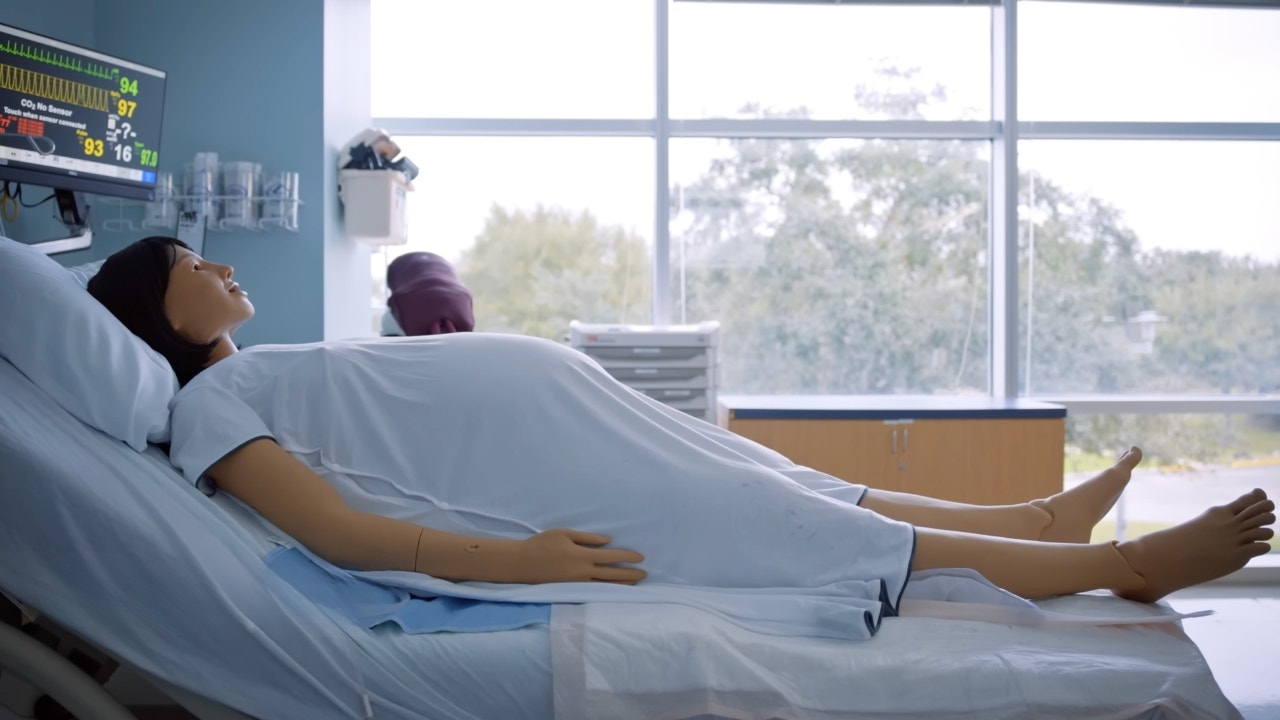
Artificial intelligence and robotics are increasingly playing a pivotal role in addressing critical shortages in healthcare, particularly in nursing and midwifery. One remarkable example of this technological advancement is the introduction of a sophisticated childbirth simulator named Mama Anne, which is revolutionizing how midwifery students train for real-life delivery scenarios. Unlike traditional training methods that rely on basic mannequins or dummies, Mama Anne offers an unprecedented level of realism and interactivity, helping students gain practical experience in a safe, controlled environment before they ever encounter a live patient.
At York St. John University in York, England, educators have embraced this cutting-edge technology as part of a broader initiative to enhance hands-on medical training. Mama Anne, developed by Laerdal Medical, is a high-fidelity robotic patient designed to simulate the complexities of childbirth with startling accuracy. This lifelike robot blinks, breathes, talks, and even responds to touch, providing students with immersive and dynamic learning experiences that traditional mannequins cannot offer. The simulator can mimic vital signs, deliver a baby mannequin, and exhibit various labor positions, such as lying on the back or on all fours, thereby replicating real hospital conditions.
For decades, midwifery education relied heavily on textbooks, observation, and limited practical exercises. This approach often left students unprepared for the unpredictable and sometimes life-threatening complications that can arise during labor. Many students faced their first true emergencies only after beginning clinical placements, which posed risks to both the learners and their patients. Mama Anne addresses this gap by enabling repetitive practice of complex childbirth scenarios, including dangerous complications such as postpartum hemorrhage and shoulder dystocia, in a risk-free setting. Instructors can pause simulations to explain mistakes and repeat procedures, turning errors into valuable teaching moments rather than medical emergencies.
Beyond technical skills, effective healthcare requires strong communication and patient interaction capabilities. Mama Anne is equipped with recorded responses and real-time dialogue features through concealed speakers, allowing students to practice obtaining consent, explaining procedures, and providing reassurance—critical components of respectful and empathetic patient care. The simulator even reacts vocally if touched without permission, reinforcing the importance of patient consent and dignity, which are foundational to modern medical ethics.
Rebecca Beggan, the midwifery program lead at York St. John University, highlights the transformative impact of simulation training on student competence and confidence. By experiencing the entire labor process—from antenatal care through delivery to postnatal care—in a single immersive session, students develop a comprehensive understanding of childbirth management. This preparatory experience helps shield them from the emotional shock often associated with encountering medical emergencies for the first time in real clinical environments. Instead, they arrive at clinical placements better equipped and more assured, having already navigated similar scenarios in simulation.
The emergence of hyper-realistic simulators like Mama Anne signals a new era in medical education. Where once observation and real-world experience served as the primary teaching tools, today’s future healthcare professionals can train extensively through simulations that closely mimic the pressures and complexities of hospital settings. This shift has profound implications beyond midwifery, influencing how nurses, surgeons, and other medical practitioners prepare for high-stakes situations. For example, many hospitals and universities across the United States are adopting similar high-fidelity simulators for training in surgery, emergency care, trauma response, and more.
While technology will never replace the essential human element in caregiving, it can significantly enhance the preparation of healthcare providers. Simulation-based training helps medical teams react faster and make fewer errors during real emergencies, ultimately leading to better patient outcomes. For expectant parents, this means safer deliveries supported by confident, well-prepared professionals. It also reflects a broader trend in healthcare education, emphasizing proactive learning and experiential practice over passive observation.
The idea of a robot giving birth might initially seem unsettling or even eerie. However, tools like Mama Anne are likely to become commonplace in medical training programs worldwide. They offer a unique blend of realism and safety, enabling students to develop practical skills and emotional resilience without risking patient well-being. As medical simulators continue to evolve in sophistication and accessibility, they raise intriguing questions about the future of healthcare training: If childbirth can be practiced on a robot today, what other medical procedures and emergencies might soon be mastered first in simulation labs rather than hospitals?
In conclusion, the integration of artificial intelligence and robotics into healthcare education represents a significant advance in addressing the nursing and midwifery shortages that many countries face. By providing realistic, interactive, and safe training environments