
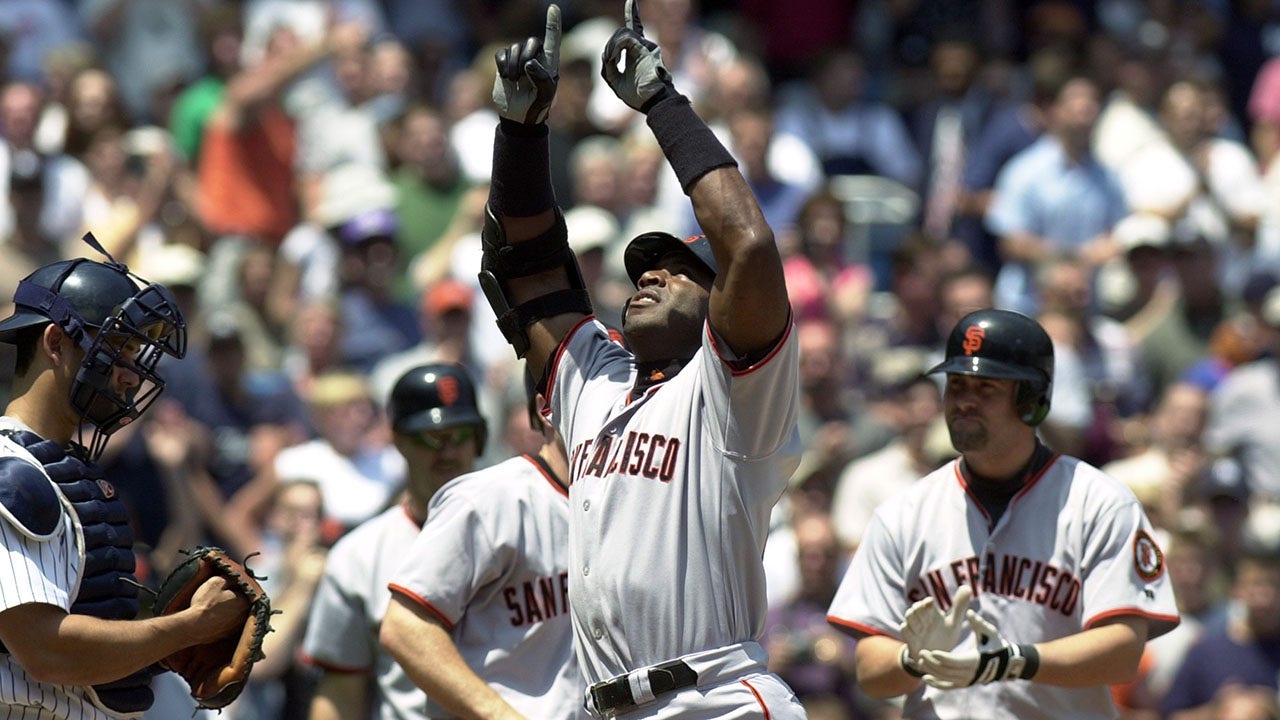
During the 1990s, the New York Yankees enjoyed considerable success, establishing themselves as one of Major League Baseball's premier teams. However, a remarkable "what if" moment from that era has recently come to light, shedding new perspective on the team's trajectory and the players who might have been part of its storied history. Barry Bonds, MLB's all-time home run leader, revealed that he nearly signed with the Yankees in the late 1990s, a move that could have dramatically altered baseball history.
Barry Bonds, who spent most of his illustrious career with the San Francisco Giants, spoke candidly about the near-deal with the Yankees during a Netflix broadcast. Bonds explained that George Steinbrenner, the then-owner of the Yankees, personally called him with an offer. Steinbrenner proposed making Bonds the highest-paid player in baseball at that time, but with a catch: Bonds had to sign the contract by 2 p.m. that same day. The ultimatum was off-putting to Bonds, who immediately hung up the phone in disbelief.
Bonds recounted the moment with a mixture of surprise and frustration: "George isn't here anymore, so I can tell the truth, right? I would've been with the Yankees, but Steinbrenner got on the phone and called us and told me, 'Barry, we're going to give you the money - the highest-paid player at that time - but you got to sign the contract by 2 o'clock this afternoon.' And I said, 'Excuse me?!' And I just hung the phone up." He went on to describe how, after the call, he went out to get lunch, during which his agent Dennis Gilbert and others tried to make him realize the gravity of the situation.
Bonds, however, was steadfast in his reaction: "I just said, 'Forget it.' By the time I walked down the street to go get lunch, I said, 'Let me just think about this.' The Giants called me, and I said, 'I'm going home.'"
Instead of heading to the Bronx and joining the Yankees, Bonds signed with the San Francisco Giants. At the time, this made him the highest-paid player in Major League Baseball history, reflecting his stature as one of the game's best. Bonds was coming off a stellar period, having just won his second Most Valuable Player (MVP) award in three years. His dominance on the field was unquestioned, and he was widely regarded as the best player in the sport.
Interestingly, this episode unfolded during a turbulent time for the Yankees' ownership. George Steinbrenner was suspended from Major League Baseball for his involvement in paying a gambler to dig up dirt on a player. Although Steinbrenner was suspended from day-to-day operations, he still maintained financial control over the team. His suspension was lifted the following March, but during this period, the Yankees' management was somewhat in flux.
Despite missing out on signing Bonds, the Yankees went on to build a dynasty through a combination of savvy drafting, player development, and smart acquisitions. Gene Michael, the team's general manager at the time, was instrumental in assembling the now-legendary "Core Four": Derek Jeter, Jorge Posada, Mariano Rivera, and Andy Pettitte. This group became the backbone of the Yankees' success in the late 1990s and early 2000s. The team also benefited from the presence of established stars like Bernie Williams and Paul O'Neill, along with key moves made by later executives such as Bob Watson and Brian Cashman.
The Yankees' efforts paid off handsomely. Between 1996 and 2000, New York won four World Series titles in five years, a dominant run that cemented their place in baseball history. Bonds, meanwhile, continued to excel with the Giants, hitting towering home runs and setting records, but the Yankees' dynasty was built without him.
The story of Bonds' near-Yankees signing invites reflection on how different the baseball landscape might have been. Bonds went on to win four consecutive National League MVP awards from 2001 to 2004, a feat unmatched in the modern era. During this stretch, the Yankees were unable to secure another World Series title, not winning again until 2009. Had Bonds joined New York after the turn of the millennium, it's tempting to speculate that the team's championship drought might have been shorter or that their dominance might have extended even further.
Photographs from Bonds' career capture some symbolic moments of his rivalry with the Yankees. One iconic image shows Bonds pointing skyward after hitting a three-run homer against the Yankees at Yankee Stadium. On another occasion, Bonds is seen chatting with Derek Jeter on base during a game at AT&T Park in San Francisco. These snapshots underscore the intertwined narratives of Bonds and the Yankees - two baseball powerhouses whose paths nearly converged.
The episode also highlights George Steinbrenner's well-known reputation for making impulsive decisions, which sometimes cost the Yankees opportunities. His approach to the Bonds contract - demanding a same-day signing - ultimately backfired, leading to the Giants securing one of baseball's greatest talents instead. While Steinbrenner's leadership brought the Yankees tremendous success, moments like this reveal the complexities of his tenure.
Today, Bonds' revelation serves as a fascinating footnote in baseball history, reminding fans and analysts alike that even the most successful teams experience near-misses and what-ifs that could have reshaped their fortunes. It also illustrates Bonds' unique perspective on his career and the business of baseball, now that the pressures of past dealings are behind him.
In conclusion, Barry Bonds' near-signing with the New York Yankees in the late 1990s stands as a compelling "what might have been" story. Steinbrenner's ultimatum, demanding a quick contract signing, turned Bonds away and sent him to the San Francisco Giants, where he continued to build his legendary career. Meanwhile, the Yankees forged a dynasty without Bonds, thanks to the Core Four and other key players. This episode underscores the unpredictable nature of sports history and the fine margins that can influence the legacies of players and franchises alike.