
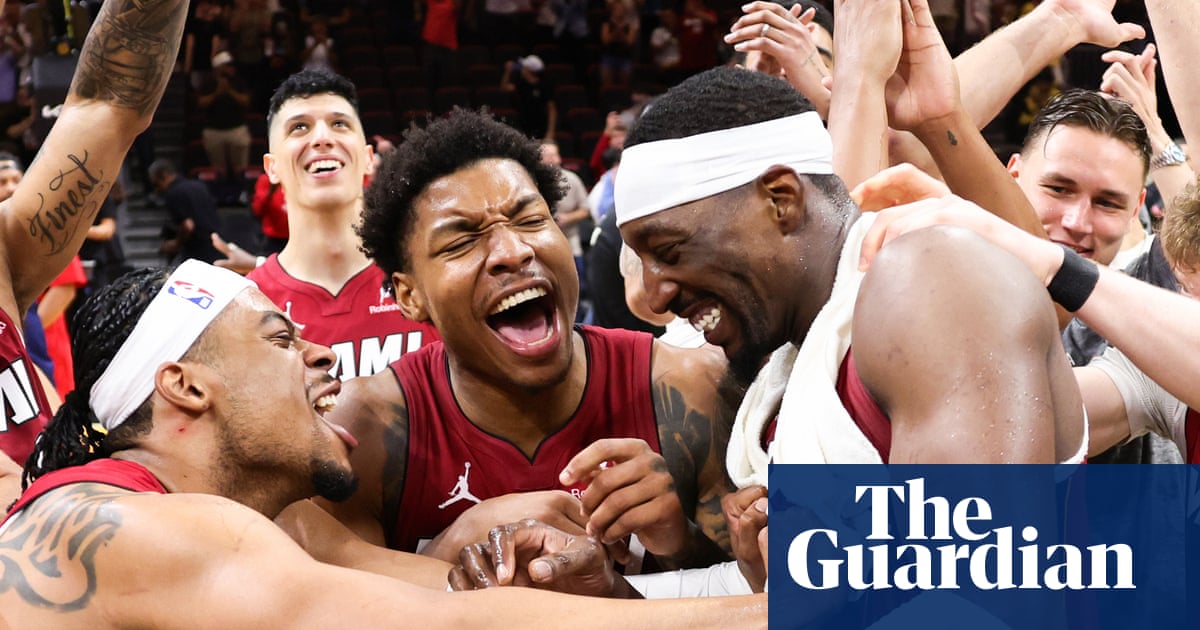
On Tuesday night, Miami Heat’s Bam Adebayo delivered a performance for the ages, scoring an astonishing 83 points against the Washington Wizards. This feat catapulted him to second place on the NBA’s all-time single-game scoring list, surpassing Kobe Bryant’s legendary 81-point game in 2006. Only Wilt Chamberlain’s unparalleled 100-point game from 1962 remains ahead of Adebayo’s achievement. The Heat triumphed 150-129, but while the scoreboard reflected a historic night, the context of how those points were accumulated has sparked a wave of skepticism and debate across the basketball community.
From a purely statistical standpoint, Adebayo’s 83-point explosion is undeniably remarkable. The NBA regular season features thousands of games each year, yet only two players in its storied history have scored more points in a single game. Achieving such a rare milestone places Adebayo in an elite echelon of scorers. His 43 field goal attempts, for instance, are not unprecedented—Wilt Chamberlain took 63 shots during his 100-point game, and Kobe Bryant attempted 46 during his 81-point night. Adebayo’s contributions were not limited to scoring; he also secured nine rebounds, including eight on the defensive end, while logging 42 minutes on the court, the most of any player in the game. This demonstrates that he was actively involved beyond just racking up points.
However, the manner in which Miami orchestrated Adebayo’s scoring spree has drawn criticism and skepticism. Many have questioned the integrity of the performance, suggesting that the Heat effectively engineered a scenario to inflate his point total, especially in a game that was decisively out of reach well before the final buzzer. The most glaring aspect fueling this controversy lies in the free-throw attempts. Adebayo set a new NBA record by attempting 43 free throws in a single game, surpassing the previous high of 39 attempts, a mark reached twice by Dwight Howard during the “Hack-a-Howard” era when opposing teams intentionally fouled him due to his poor free-throw shooting.
Unlike Howard, who struggled at the line, Adebayo converted 36 of his 43 free throws, showcasing impressive accuracy and capitalizing on his opportunities. Yet, the strategic context undermines the purity of those numbers. In the fourth quarter, with Miami comfortably ahead by nearly 30 points, the Heat repeatedly fouled the Wizards intentionally to send Adebayo to the free-throw line. This tactic, often viewed as unsportsmanlike when used to pad statistics or run up scores, became a prominent feature of the game’s closing minutes. Adebayo’s shooting from the field cooled off during this period—he was just 3-for-8 and struggled from beyond the arc, making only one of six three-point attempts. Nevertheless, the Heat’s relentless feeding of the ball to their star and their deliberate fouling strategy allowed him to pile on points from the charity stripe.
The final five minutes epitomized this stat-padding approach. Adebayo took five shots but made only one, while going a perfect 7-for-7 from the free-throw line. The Heat’s offense looked more like a scripted effort to boost Adebayo’s numbers than a genuine competitive push. Video footage from the closing moments reveals a team more focused on channeling possessions toward a single player than engaging in balanced, team-oriented basketball. Head coach Erik Spoelstra eventually substituted Adebayo out with over a minute left, just after he surpassed Kobe on the scoring list, signaling the end of an orchestrated scoring marathon. For some observers, this approach resembled a video game scenario where a player tries to maximize their stats against a passive opponent, rather than a traditional basketball contest.
Despite these criticisms, the magnitude of Adebayo’s performance cannot be denied. Scoring 83 points in the NBA’s three-point era, which began in 1979, is unprecedented for a frontcourt player. Only two other big men—Joel Embiid in 2024 and David Robinson in 1994—have come close by reaching the 70-point mark, but neither eclipsed 71. Adebayo, often regarded as an excellent but not all-time great player, delivered a game that will forever be etched in NBA history. His achievement broadens the narrative about what is possible for players in his position and era.
Nevertheless, the manner