
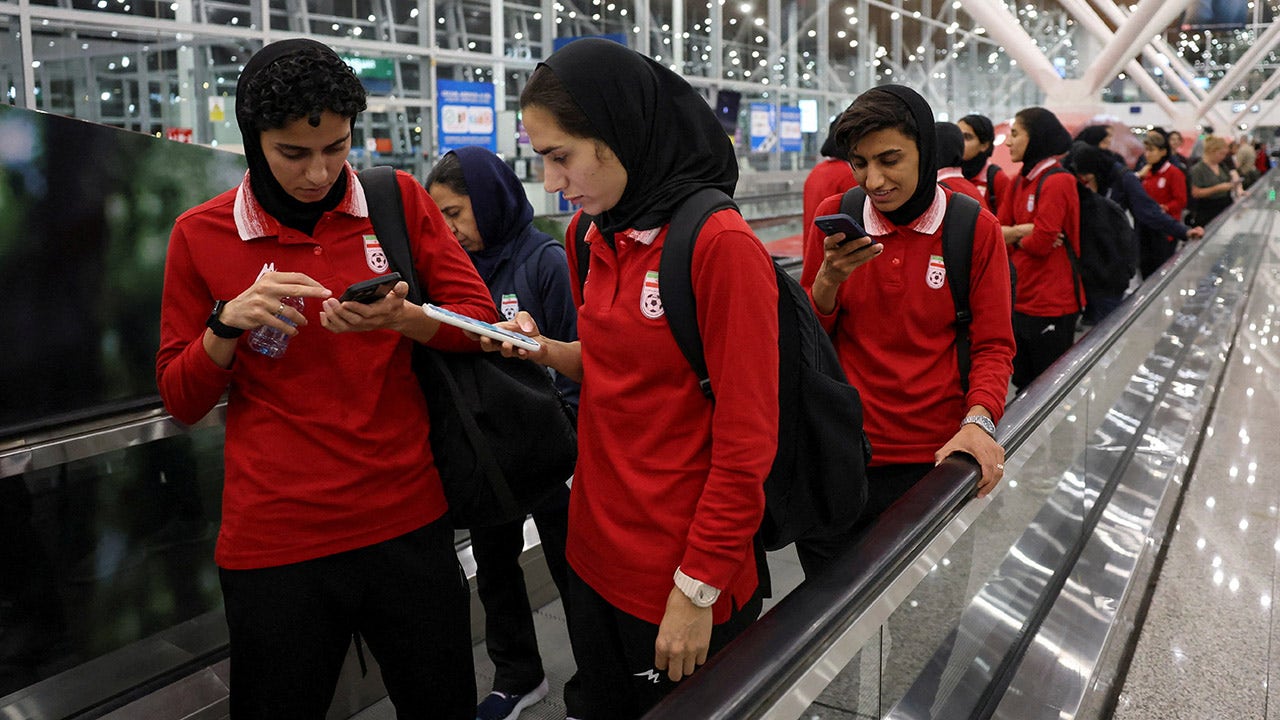
In a significant development unfolding amidst international tensions, several members of the Iranian women’s national soccer team have chosen to seek asylum in Australia rather than return to their homeland, where they face not only the dangers of ongoing conflict but also severe political and social repression. At least six players from the team, which had traveled to Australia to compete in the Women’s Asian Cup, have decided to remain in the country, with five having been officially granted asylum as of March 2026. This decision comes against the backdrop of escalating conflict following a joint offensive by Israel and the United States against Iran, which resulted in the death of Iran’s Supreme Leader, Ali Khamenei.
The Iranian women’s soccer team arrived in Australia before the offensive began on February 28, but the situation back home quickly deteriorated, drastically altering the players’ circumstances and choices. More than 20 members of the squad originally traveled to Australia for the tournament. However, as the crisis intensified, the harsh realities of life in Iran — particularly for women and public figures — became even more pronounced. The team’s refusal to sing the Iranian national anthem before their opening match against South Korea, an act interpreted by some as a subtle form of protest, drew sharp criticism from Iranian commentators, though the players later sang the anthem in subsequent matches. This incident highlighted the complex and dangerous position these athletes occupy as public figures under a regime known for its stringent controls over personal freedoms and expression.
Tina Kordrostami, a councilor for the city of Ryde in Australia and an outspoken advocate for refugee rights, spoke with Fox News Channel’s Bryan Llenas to provide insight into why most of the players ultimately chose to return to Iran despite the risks, and why a smaller group opted to stay. Kordrostami emphasized that family ties remain the primary reason many team members decided to go back. “Their family is the No. 1 reason that the girls want to go back home and the No. 1 thing they’re worried and scared about,” she said. For many players, the fear of severing ties with loved ones and losing everything they have built over the years in Iran presents a difficult emotional dilemma.
Despite this, Kordrostami stressed that these women are passionate athletes and individuals who deeply wish to live freely and express their identities — something they are largely denied in Iran. “No logical person would want to remain in that country, especially if they have the option to stay,” she said, noting that the players had the chance to seek asylum and build new lives but chose family concerns over their personal futures. The players face intense restrictions back home, especially because they are in the public eye, making them vulnerable to heightened scrutiny, coercion, and punishment.
As the tournament progressed and the team’s participation wound down, discussions around humanitarian visas and asylum became more urgent. Kordrostami criticized the Australian government for what she saw as a lack of proactive engagement with the players during the competition. She suggested that officials should have immediately reached out to the team after their first game, offering them clear information about asylum options and facilitating open communication with their families. “Within a day, they should have put together a plan for these girls to seek safety for their families,” she said. She expressed sadness and frustration that bureaucratic rules and regulations may have prevented Australia from providing more comprehensive support to the entire team.
Australian Home Affairs Minister Tony Burke responded to the situation by affirming that the government made every effort to offer the Iranian players the option to stay in Australia safely. He described how, at Sydney Airport, the players were separated from their minders and were given the opportunity to make private calls to their families, enabling them to make informed decisions free of immediate external pressures. “Everything was about ensuring the dignity for those individuals to make a choice,” Burke stated, acknowledging the complex context and the pressures the players faced both at home and abroad.
The asylum granted to these players is not just a matter of sports or immigration policy; it sheds light on the broader human rights crisis in Iran, particularly the oppression of women and public figures who challenge or are perceived to challenge the regime. Kordrostami underscored the symbolic importance of these athletes, describing them as a “window into Iran” that reveals the daily realities of control, coercion, and repression experienced by approximately 90 million people in the country. The courage shown by the players who have chosen to stay in Australia reflects the deep desire among many Iranians