
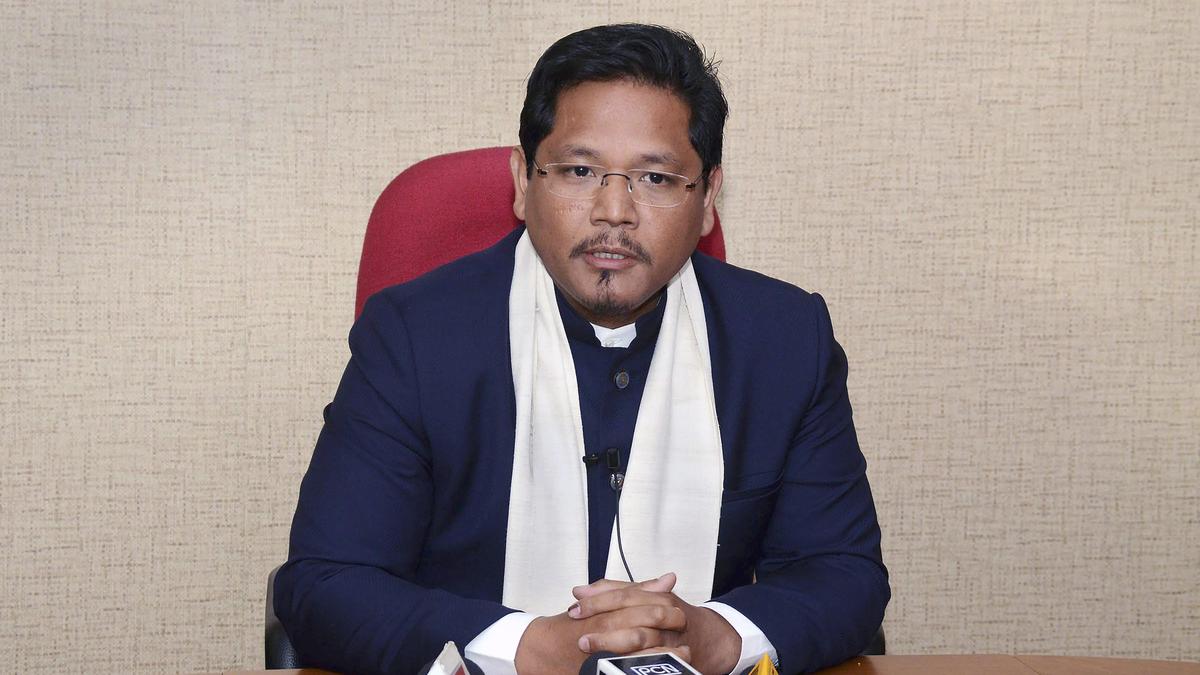
In the run-up to the Assam Assembly elections scheduled for April 9, 2026, political dynamics in the northeastern region of India are witnessing intriguing developments, particularly involving the National People's Party (NPP), a key player in the region's politics. The NPP, led by Meghalaya Chief Minister Conrad K. Sangma, is contesting in Assam for the third consecutive time, but this year it faces a complex electoral landscape marked by both cooperation and competition within the National Democratic Alliance (NDA).
The NPP has fielded candidates in three constituencies this election, a reduction from the 11 seats it contested in 2021. The sitting members of the legislative assembly (MLAs) representing these constituencies are Mohammed Aminul Islam in Mankachar, Ganseng B. Sangma in Boko-Chaygaon, and Daniel Langthasa in Haflong. These three constituencies are strategically important for the party as they represent areas along Assam's border with Meghalaya and Bangladesh, highlighting the NPP's focus on expanding its influence in border regions where it maintains long-standing local connections.
Mohammed Aminul Islam, who recently left the All India United Democratic Front (AIUDF) to join the NPP, is set to face Jabed Islam of the Asom Gana Parishad (AGP) in Mankachar. This constituency is particularly notable because it borders Meghalaya and Bangladesh, making it a key area for regional influence. Meanwhile, Ganseng B. Sangma and Daniel Langthasa will face competition from the BJP candidates Raju Mech and Rupali Langthasa, respectively, underscoring the multi-faceted contest within the NDA alliance.
The current political contest reveals an unusual scenario where the NPP, an NDA ally, is not aligned in a pre-poll alliance with the BJP in Assam, leading to a "not-so-friendly" rivalry between the two parties. This contrasts with the "friendly fight" between the AGP and the BJP in constituencies like Sibsagar, where the two parties have traditionally cooperated. The NPP's decision to contest independently reflects its ambition to establish a distinct political identity beyond its home base in Meghalaya.
Conrad K. Sangma, the NPP national president and Meghalaya Chief Minister, has articulated the party's strategy behind this move. He emphasized that the NPP's objective in Assam is not immediate electoral success but rather a long-term expansion aimed at securing a foothold in the state. Sangma explained that the party chose to contest only in select constituencies where it has established local relationships and historical ties, indicating a measured approach rather than an aggressive electoral push. "We identified select constituencies based on long-term connections with the locals. We want to expand to Assam, but our goal is not immediate electoral gains," he said.
This strategic vision aligns with the NPP's broader regional ambitions. Founded over a decade ago by the late Purno A. Sangma, a former Lok Sabha Speaker, the NPP holds the distinction of being the only national party to have emerged from India's northeast. Under Conrad Sangma's leadership, the party has transformed from a Meghalaya-centric outfit into a political force with a presence across multiple northeastern states.
The NPP's political footprint has steadily expanded over recent years. In Meghalaya, the party retained power in 2023 by winning 26 of the state's 60 assembly seats, continuing its alliance with the BJP and other partners in the National Democratic Alliance. Beyond Meghalaya, the NPP has made electoral inroads in other northeastern states: securing five assembly seats each in Arunachal Pradesh in the 2024 polls, Manipur in 2022, and Nagaland in 2023. These electoral successes demonstrate the party's growing influence and its ability to resonate with voters across the region.
An interesting dimension to the NPP's approach is its collaboration with other northeastern regional leaders who seek to establish a "viable political alternative" to national parties. Last year, Daniel Langthasa joined forces with Conrad K. Sangma, Tripura's Tipra Motha Party founder Pradyot Bikram Manikya Debbarma, and former Nagaland BJP leader Mmhonlumo Kikon. This coalition of northeastern leaders aims to create a political front that better represents regional interests and identities, distinct from the dominant national parties.
Despite being part of the NDA, the NPP has not engaged in pre-poll alliances with its fellow NDA constituents in Assam, highlighting the nuanced and sometimes competitive relationships within the coalition. The party's "little foray" into Assam is thus part of a long-term strategy to build its presence and political capital in the state, rather than a short-term electoral gambit.
Conrad Sangma remains optimistic about the NPP's prospects in Assam, expressing hope that the party will "open our account" in this election. Success in Assam would mark a significant milestone for the NPP's regional expansion and reinforce its status as a growing political force in northeast India.
Meanwhile, the Assam elections are drawing attention for various reasons, including the dynamics between alliance partners and the presence of lone rangers and smaller parties flexing their muscles against established coalitions. The contest in Assam's diverse constituencies reflects the complex interplay of regional identities, party loyalties, and strategic calculations.
In summary, the 2026 Assam Assembly elections are witnessing a distinctive political contest where the National People's Party, led by Meghalaya Chief Minister Conrad K. Sangma, is attempting to carve out a niche in Assam by fielding candidates in select constituencies. This move underscores the party's long-term vision of regional expansion and its desire to establish itself as a significant regional player beyond Meghalaya. Although the NPP remains part of the National Democratic Alliance, its independent contesting in Assam highlights the evolving and sometimes competitive nature of alliances in the northeast. The outcome of this election will provide valuable insights into the shifting political landscape of Assam and the broader northeastern region, where regional parties like the NPP are increasingly asserting their influence.