
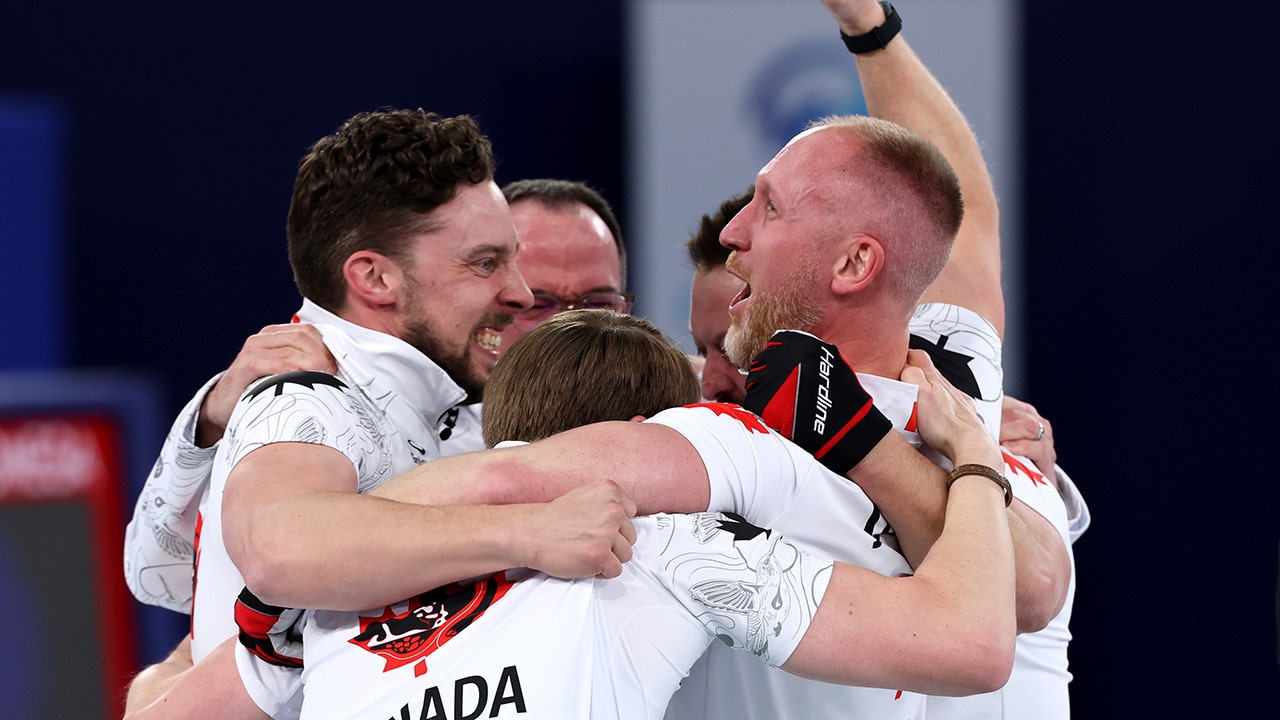
At the 2026 Winter Olympic Games in Milan Cortina, the Canadian men’s curling team triumphed over Great Britain with a 9-6 victory to secure the gold medal. This win marked Canada’s fourth Olympic gold in men’s curling and their first since 2014, when they also defeated Great Britain. For the British team, it was another close but heartbreaking finish, echoing their silver medal performance from the previous Olympics.
However, the path to gold was not without controversy. The curling competition at the Games became marred by several accusations of cheating, primarily centered around the Canadian team during the round-robin phase. The tension first surfaced on February 13, during a match between Canada and Sweden. The dispute arose between Canadian third Marc Kennedy and Sweden’s Oskar Eriksson, who accused Kennedy of "double-touching" stones, an illegal move where a player touches a stone twice during delivery after releasing it past the hog line—the designated line players must release stones behind. Kennedy vehemently denied the accusation and responded with expletives, escalating the confrontation.
Both teams officially appealed to the game officials to review the situation, but the result of the match—a Canadian 8-6 win—remained unchanged. The incident, however, set off further scrutiny and tension between the teams.
The controversy continued the following day when the Canadian team accused Sweden of illegally filming Kennedy’s stone delivery. Team Sweden rejected these allegations, stating that the footage in question was obtained from the Swedish public broadcaster and not through inappropriate means. The dispute drew attention from other teams as well; members of the Swiss team also accused the Canadians of double-touching stones, while similar cheating claims emerged in the women’s curling competition. Despite the swirling accusations, the Canadian women’s team went on to win the bronze medal by defeating the United States.
World Curling, the sport’s governing body, conducted thorough observations following these claims. Their investigations concluded that no violations were recorded during the games. They noted that game umpires are positioned at the end of each sheet and do not have a vantage point to observe every delivery infraction fully. When alerted to potential issues, umpires are tasked with closely monitoring deliveries for a set number of ends—in this case, three ends during the Friday evening game between Canada and Sweden—but no illegal actions were found.
Importantly, World Curling clarified that video replay technology is not utilized during games, and the decisions made by umpires on the ice are final. This policy underscores the challenges officials face in policing such a fast-paced and technical sport, where some infractions can be difficult to detect in real time.
The controversy extended beyond Canada and Sweden. Great Britain, who ultimately played Canada for the gold medal, also faced accusations of cheating during round-robin play against Germany. In that match, Scottish curler Bobby Lammie was ruled to have double-touched a stone after releasing it, resulting in the removal of that stone from play. Despite this penalty, Britain won the match 9-4.
In response to the multiple cheating allegations, World Curling announced steps to improve officiating during the remainder of the Olympic competition. They decided to assign two officials to rotate between the four simultaneous curling matches in each round to enhance oversight. However, World Curling acknowledged the practical limitations of their refereeing system, stating it was "not possible" to station umpires at each hog line to monitor stone releases directly.
Despite the controversies, the Canadian men’s team—comprising Brad Jacobs, Marc Kennedy, Brett Gallant, and Ben Hebert—celebrated a historic and hard-fought victory. Their gold medal win was a crowning achievement that capped off a tense and dramatic curling tournament at the Milan Cortina Games.
This victory added to Canada’s impressive legacy in men’s Olympic curling. The country had previously won three consecutive gold medals, culminating in the 2014 Sochi Games, also against Great Britain. The 2026 win reaffirmed their dominance and skill in the sport on the world stage.
Meanwhile, Great Britain’s curling team experienced the disappointment of finishing second yet again, continuing a pattern of near-misses at the Winter Olympics. Their silver medal finish was a testament to their strength and competitiveness, though the elusive gold remained just out of reach.
Throughout the curling events at the 2026 Winter Olympics, the sport demonstrated not only the high stakes and intense competition but also the challenges of officiating and maintaining fair play. The multiple