
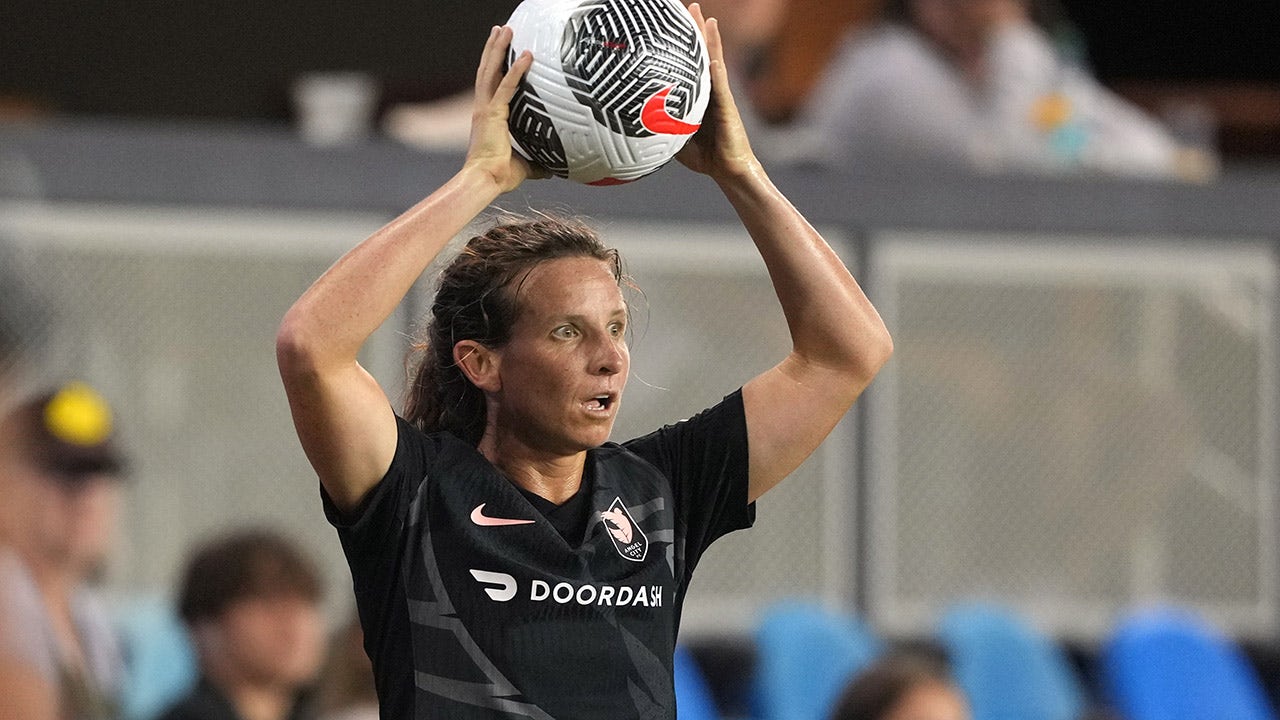
A controversy has emerged within the National Women’s Soccer League (NWSL) following a column written by Angel City FC defender Elizabeth Eddy, which has sparked sharp divisions within her own team and drawn widespread attention to the ongoing debate over gender policies in women’s professional sports.
In a recent opinion piece published in the New York Post, Eddy called on the NWSL to establish clear “gender standards” to protect the integrity of the league and promote the growth of women’s soccer. With more than a decade of professional experience in the sport, Eddy raised concerns about the lack of defined policies regarding the participation of intersex and transgender athletes in women’s soccer. She argued that the league must find a way to balance fairness and inclusion, asking pointedly: “How do we preserve women’s rights and competitive fairness while fostering meaningful inclusion?”
Eddy highlighted controversies in other sports such as swimming and track and field, where governing bodies have started to implement regulations addressing eligibility criteria based on biological sex markers. She suggested that the NWSL adopt similar measures, either limiting eligibility to players born with ovaries—as seen in the Women’s Super League in the United Kingdom—or using genetic testing tools such as the SRY gene test, which is utilized by organizations like World Athletics and World Boxing to determine eligibility. Eddy emphasized that fairness and inclusion are both core American values, and she called for open, respectful dialogue on the issue rather than avoidance or censorship of differing viewpoints. She underscored the responsibility to current and future female athletes to resolve these complex questions.
However, Eddy’s column was met with strong backlash from some of her Angel City FC teammates who publicly denounced her views. Defender Sarah Gorden spoke out forcefully, stating that the article “does not speak for this team in this locker room.” She revealed that many players had been hurt and “disgusted” by the content of the column, which they found to carry transphobic and racist undertones. Gorden specifically criticized the call for genetic testing, noting that the article was accompanied by a photo of an African player, which she described as “very harmful” and “inherently racist.” As a mixed-race woman with a Black family background, she expressed feeling devastated by what she perceived as the article’s discriminatory implications. Gorden’s response highlighted the sensitive intersection of race and gender identity issues within the broader conversation about fairness in women’s sports.
Another Angel City FC player, goalkeeper Angelina Anderson, echoed the team’s commitment to inclusivity. She described the club as being founded on principles of love and acceptance for all people, underscoring that the team represents a place of belonging for everyone, regardless of background or identity. Anderson acknowledged the difficulty posed by the controversy, especially given the challenges the team had already faced during the season. She expressed hope that the team could move past the division and end the season on a positive note, emphasizing the importance of mutual respect and unity in the locker room.
The NWSL itself responded cautiously to the debate sparked by Eddy’s column. In a statement to The Athletic, the league affirmed its commitment to collaborate with the NWSL Players Association on any potential changes to league policies regarding gender eligibility. This indicates that the conversation about how to address participation standards for transgender and intersex athletes in women’s soccer is ongoing and may lead to formal policy considerations in the near future.
This incident at Angel City FC reflects a broader, highly sensitive debate that is unfolding not only in women’s soccer but across many sports worldwide. The challenge lies in reconciling the goals of maintaining competitive fairness for female athletes while ensuring that inclusivity and respect for transgender and intersex individuals are upheld. The discourse is complicated by differing scientific opinions, ethical considerations, and the lived experiences of athletes themselves.
Elizabeth Eddy’s call for clear standards and genetic testing echoes similar discussions in other sports organizations, some of which have implemented strict eligibility rules. However, her teammates’ responses highlight that such proposals can be perceived as exclusionary and discriminatory, raising concerns about the impact on marginalized communities, particularly when race and identity intersect. The controversy at Angel City FC thus exemplifies the difficult balance sports leagues must navigate as they seek to create policies that are both fair and inclusive.
As the NWSL and its players continue to engage in dialogue, this episode underscores the need for open, empathetic conversations that consider the perspectives and rights of all athletes. The league’s willingness to work with the players’ association suggests that any future policy changes