
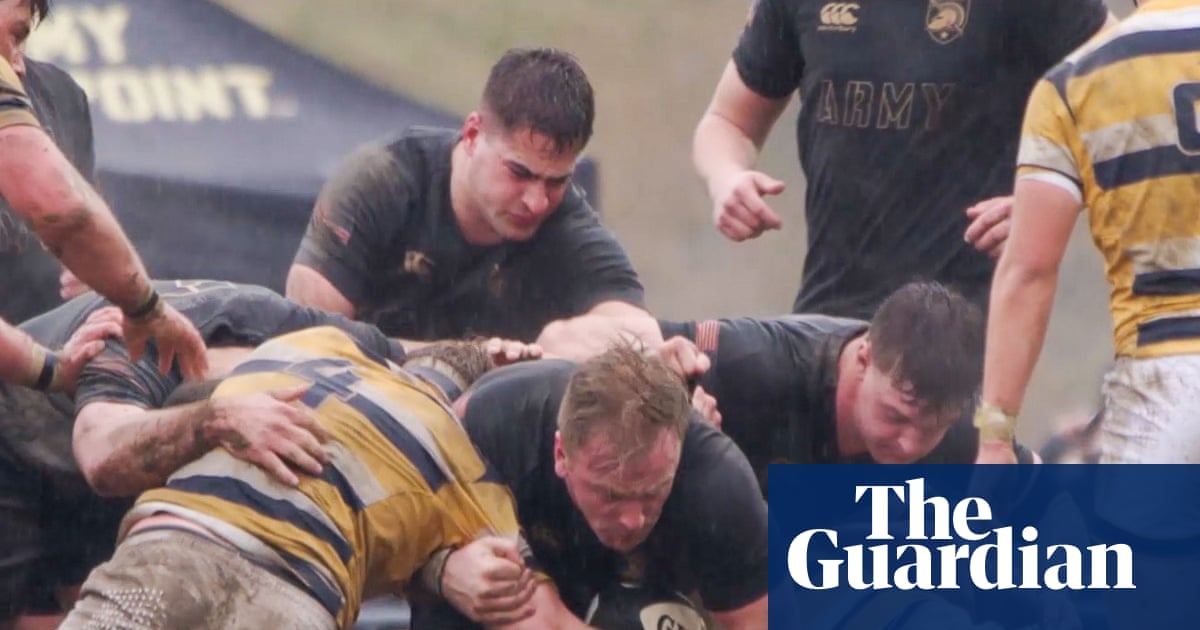
“Brothers on Three,” a new documentary directed by Sean Mullin, offers an unprecedented and intimate look into the United States Military Academy’s rugby program at West Point, one of the most successful men’s sports teams in the country. While the film begins with exhilarating scenes of triumph—capturing the Black Knights’ 2022 national championship win over St. Mary’s in Houston, Texas—it delves much deeper, exploring themes of leadership, loss, camaraderie, and resilience that extend far beyond the rugby pitch.
Mullin, himself a West Point graduate and former rugby player, along with writer-producer Brian Anthony, also a West Point alum, set out to chronicle the 2022-23 season as the Army rugby team attempted to defend their title. Led by their captain Larry Williams, the 2022 U.S. player of the year and a formidable prop, the team began the season with a promising seven-game winning streak. However, the tide turned during their historic rivalry game against Navy, a long-standing and deeply symbolic contest, where the Black Knights suffered a crushing 27-14 defeat.
What follows in the film is a candid and raw portrayal of the team’s struggle to cope with the setback. The cameras capture moments of vulnerability rarely seen in sports documentaries, especially those tied to elite military institutions. In one particularly poignant scene, Williams is asked to address the team after a demoralizing loss to Lindenwood University in Missouri. Surrounded by the battered and mud-streaked players in the locker room, Williams finds himself at a loss for words, admitting, “I got nothing.” This moment of raw honesty highlights the immense pressures of leadership, especially within the unique crucible of West Point, where the demands of military discipline and academic rigor impose extraordinary burdens on young men and women.
Williams reflects on this experience, sharing a profound insight with the audience: “I thought I knew why West Point rugby players get promoted to general at a much higher rate than their classmates. After winning that national championship, I realized that being a good leader isn’t about how much you win, it’s how you handle loss.” This realization becomes a central theme of the film, underscoring that leadership is forged not just in victory but in adversity.
The documentary does not shy away from the physical toll the sport exacts. The brutality and intensity of rugby are laid bare through visceral footage of injuries and pain. One player, Conor Fay, the team’s blindside flanker and unofficial poet, is shown with his ear bloodied and ripped, later suffering a knee injury during a punishing defeat by Navy. Coach Matt Sherman’s off-camera exclamation—“Another fuckin’ knee, Jesus”—emphasizes the harsh realities the players endure, reinforcing the film’s unfiltered portrayal of both the sport and military life.
“Brothers on Three” also captures the unique culture of West Point rugby, in which fierce bonds of brotherhood and tradition are forged through shared hardship. The film depicts the team’s convivial moments—such as the exuberant branch night, when senior cadets learn their military assignments—contrasted with the grim realities of competition and loss. Mullin and Anthony use these vignettes to present a vivid portrait of a team that embodies toughness, loyalty, and a sometimes irreverent camaraderie, complete with off-key singing on the bus and the ritualistic pre-match huddle shouting “Brothers on Three!”
Yet, the film’s scope extends well beyond the rugby field. It tells a poignant story about service, sacrifice, and the human cost of war, intertwined with the sport’s narrative. Mullin and Anthony incorporate archival footage and personal stories to honor players who have died in military service. One particularly moving segment focuses on the life and death of Ian Weikel, a West Point graduate from the class of 1997 who served in Iraq. The film includes haunting home videos showing Weikel with his infant son, juxtaposed with footage from his deployment and the devastating moment when an improvised explosive device (IED) claimed his life in 2006 at age 31. His widow, Wendy Green, shares tender memories of how rugby was central to their relationship, recounting how she first came to love the game through Weikel’s infectious passion.
This thread of remembrance recurs throughout the documentary. The film opens with a scene from the 2022 championship celebration, where a veteran player from the class of 2002 acknowledges the