
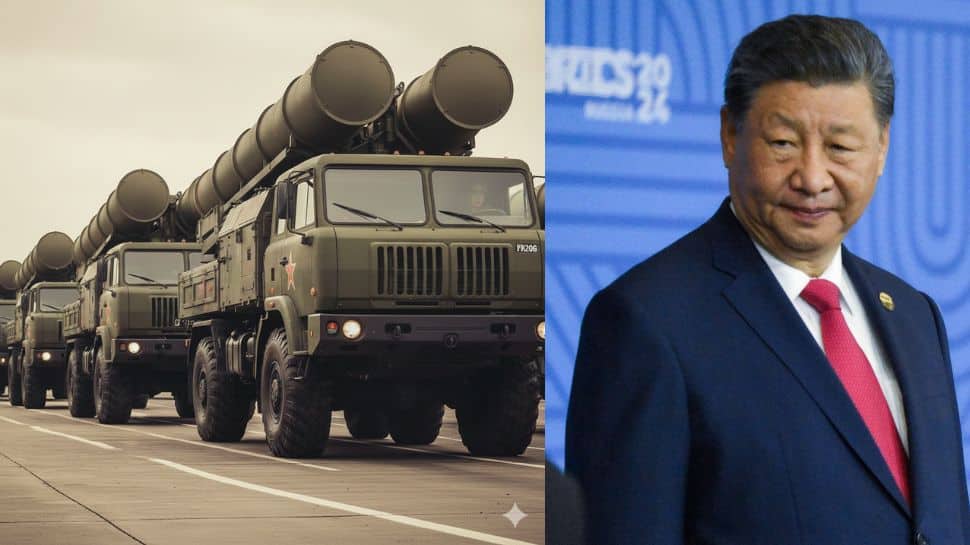
A bipartisan U.S. commission has revealed that China opportunistically exploited the India-Pakistan conflict in May to showcase and test its defense capabilities, effectively turning the military confrontation into a live demonstration for its weapons systems. According to the report by the U.S.-China Economic and Security Review Commission, Beijing leveraged the brief four-day clash to not only test its modern weaponry but also to advertise the sophistication of its defense technology. This effort aligned with China’s ongoing border tensions with India and its broader ambitions to expand its defense industry on the global stage.
The report highlights that the conflict marked the first time China’s advanced weapons, including the HQ-9 air defense system, PL-15 air-to-air missiles, and J-10 fighter aircraft, were deployed in active combat. Beijing intended this as a real-world field experiment to prove the efficacy of these systems. However, contrary to China’s expectations, the results were disastrous for Beijing’s defense export ambitions.
Adding to the revelations, Australia’s National Security College released an extensive 87-page classified report titled “Air and Missile Warfare in the 2025 Subcontinental Conflict: Observations and Consequences.” This report exposes the catastrophic failures of Chinese military technology during the conflict, particularly focusing on the performance of Chinese-supplied systems used by Pakistan. The Australian analysis states that China’s YL-8E counter-stealth radar, HQ-16FE, and HQ-9BE missile systems—marketed internationally as some of the most capable air defense technologies—failed to intercept the majority of Indian missiles during the operation known as Operation Sindoor.
In essence, China sold Pakistan highly expensive weapons systems that did not perform effectively when put to the test in actual combat. This failure not only undermines the credibility of China’s defense industry but also reveals significant gaps in the technological capabilities of its military hardware.
Faced with the stark battlefield failures, China did not respond by improving its technology or acknowledging its shortcomings. Instead, Beijing launched a widespread disinformation campaign aimed at discrediting rival defense systems, particularly targeting France’s Rafale fighter jet. The U.S. commission report cites French intelligence as confirming that China sought to hinder Rafale sales in favor of promoting its own J-35 fighter jets. This campaign involved the use of fake social media accounts and the dissemination of artificially generated images—using AI and video game graphics—depicting supposed debris from Rafale aircraft allegedly destroyed by Chinese weaponry.
Despite the humiliating performance of its weapons during the conflict, China reportedly continued its efforts to sell advanced military equipment to Pakistan. In June, following the clashes, China offered to supply Pakistan with 40 J-35 fifth-generation fighter jets, KJ-500 early warning aircraft, and ballistic missile defense systems. Chinese embassies also actively promoted the “successes” of their systems observed in the India-Pakistan skirmish, making unsubstantiated claims intended to boost weapons sales in the global market.
However, the U.S. commission’s report systematically dismantled these propaganda efforts by relying on committee hearings, research, and publicly available information. The findings clearly showed that Chinese claims about their weapons’ performance were exaggerated and misleading, with the reality being that India’s missiles and aircraft demonstrated clear superiority in actual combat scenarios.
In response to the report, Chinese foreign ministry spokesperson Mao Ning dismissed the findings as “false,” arguing that accepting the truth would severely damage China’s entire defense export industry overnight. This predictable denial underscores Beijing’s unwillingness to confront the factual shortcomings of its military technology and reflects a broader pattern of obfuscation and disinformation.
The verdict of the U.S. commission and Australian report is unequivocal: Chinese weapons, while costly, have proven to be ineffective on the battlefield, especially when compared to Indian defense capabilities. India’s missile systems and aircraft outperformed their Chinese counterparts decisively during the conflict, undermining China’s claims of military technological superiority.
This episode highlights several critical issues. First, it exposes the risks associated with relying on Chinese defense exports, especially for countries like Pakistan that depend heavily on Chinese military hardware. The failure of these systems during a real conflict could have dire consequences for national security.
Second, the incident reveals China’s strategic approach to using international conflicts as opportunities to test and promote its defense products. While this tactic might offer China valuable data and marketing opportunities, it also carries substantial risks, as demonstrated by the poor performance of its systems in this instance.
Third, China’s subsequent reliance on disinformation