
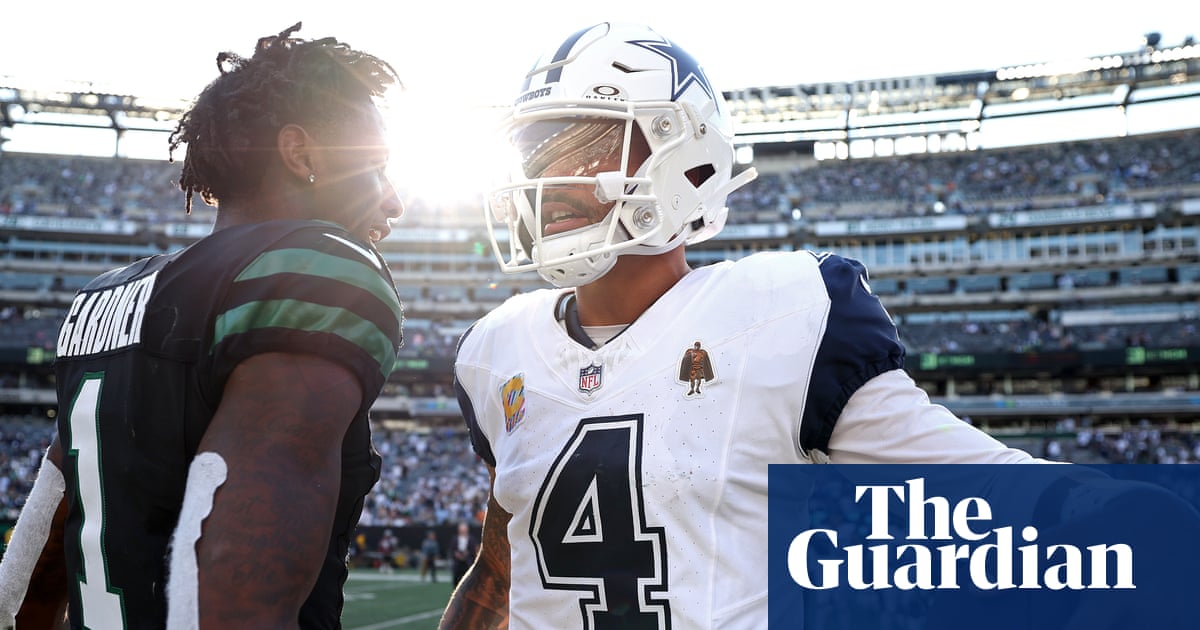
In a whirlwind of activity at the NFL trade deadline, the New York Jets executed a dramatic and unprecedented roster overhaul, trading away two of their best players—cornerback Sauce Gardner and defensive lineman Quinnen Williams—in a move that signals a rare moment of candid self-assessment and strategic rebuilding. Over just a few hours, the Jets sent Gardner to the Indianapolis Colts and Williams to the Dallas Cowboys, securing a haul of future draft picks that could reshape the franchise’s trajectory for years to come.
This kind of bold midseason dismantling is almost unheard of in the NFL, especially involving two All-Pro caliber players. The Jets’ decision to unload such key contributors reflects an acceptance that their current roster configuration isn’t yielding results. Despite Gardner’s lockdown coverage and Williams’ disruptive presence on the defensive line, New York’s record stood at a disappointing 1–7. While their defense was not the sole issue, it has notably declined under defensive coordinator Aaron Glenn. Rather than make minor adjustments, the Jets opted to tear down and rebuild, acquiring three future first-round picks and a second-round pick spread over the 2026 and 2027 drafts. In total, this gives them five first-round selections across these two years—a treasure trove of assets that could be used to pivot the team’s focus toward offense.
The Jets already have a promising young offensive line and retained star wide receiver Garrett Wilson. With this influx of draft capital, they can search for the next elite quarterback prospect and build a supporting cast to surround him. This long-term vision marks a shift from the team’s previous attempt to fast-track success, notably through the ill-fated acquisition of Aaron Rodgers at quarterback. Now, the Jets acknowledge they may need to endure a couple of tough seasons to lay a foundation for future playoff contention.
Skeptics may question trading away a young star like Gardner, who is just 25 years old and has All-Pro credentials. After all, draft picks are uncertain commodities—there is no guarantee they will yield players of Gardner’s caliber. But for a franchise not poised to compete immediately, stockpiling picks is a rational move. The dilemma lies in whether such a pragmatic approach is sustainable under the ownership of Woody Johnson, who has a reputation for instability and poor decision-making. However, these moves suggest a commitment to head coach Aaron Glenn, granting him the authority to shape the roster to his vision.
Tanking—the deliberate strategy of trading away talent to secure high draft picks and rebuild—is uncommon and historically unsuccessful in the NFL. Unlike the NBA, where a single superstar can transform a franchise and the top draft pick is immensely valuable, football’s complexity and the number of key positions make such strategies riskier. Past attempts by teams like the Cleveland Browns, Miami Dolphins, and Houston Texans have had mixed results, with Houston being relatively more successful. Nonetheless, the Jets’ ability to maximize the value received in return for Gardner and Williams, while resetting their timeline, deserves recognition. Though they will lose two impact players for the remainder of the season, their future outlook has been significantly bolstered. Some analysts even argue the Jets could have gone further, moving other young talents like Jermaine Johnson or Breece Hall before the deadline.
On the receiving end, the Indianapolis Colts made a substantial commitment by giving up two first-round picks and absorbing Gardner’s hefty $30 million per-year contract to address a glaring weakness at cornerback. After years of patchwork solutions, GM Chris Ballard chose to go all-in, acquiring the youngest multiple All-Pro cornerback ever traded midseason. Gardner’s availability in his prime is a rare opportunity, and the Colts hope he can be a cornerstone in their push for a Super Bowl.
Yet, Gardner’s performance has been uneven since his extraordinary rookie year. While he remains elite in press coverage, his tackling—vital in the run-heavy NFL—has been lackluster, and he has been involved in numerous coverage breakdowns. His production in terms of interceptions has also diminished, with only one in over two seasons. The Colts’ gamble rests on the hope that Gardner will rediscover his rookie form in their system. This bet is high-risk, considering the hefty price paid and the two first-round picks surrendered.
This blockbuster trade also signals the Colts’ belief that quarterback Daniel Jones is their long-term answer under center. Without first-round picks to chase a new passer, they are likely to offer Jones a lucrative extension, potentially around three years and $120 million.