
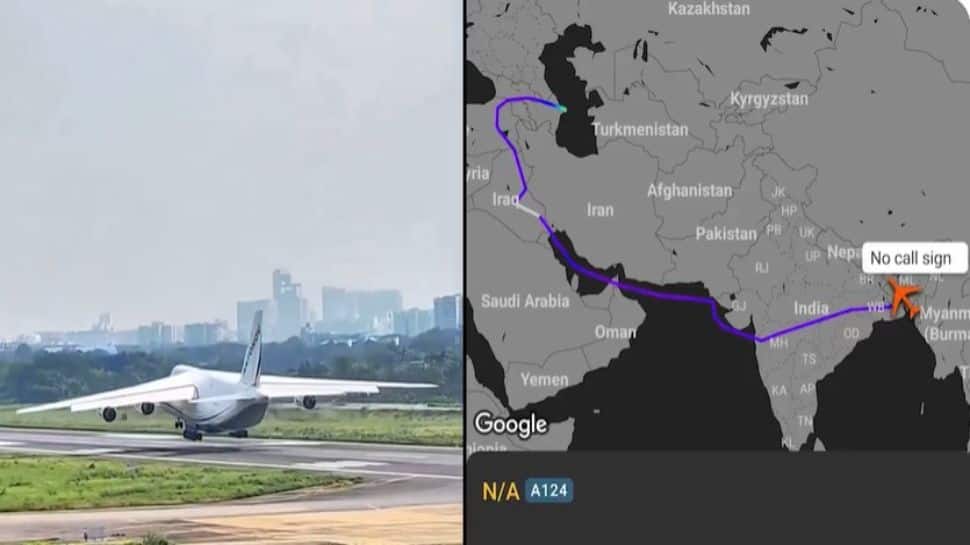
Recent unusual military activities and foreign troop movements near India’s strategic Siliguri Corridor—also known as the “Chicken’s Neck”—have sparked fresh security concerns in New Delhi. This narrow stretch of land in northeastern India is a critical vulnerability, as it connects the country’s mainland to its northeastern states. Any foreign military presence close to this corridor is closely monitored, given its importance to India’s territorial integrity and defense.
In recent weeks, several notable developments have been observed in Bangladesh, a country that borders this sensitive region. Among these, a massive Antonov AN-124 cargo plane originating from Azerbaijan landed in Dhaka’s airport under a veil of secrecy. The plane reportedly avoided Iranian airspace, a common route for sensitive cargo transfers, though no official explanation has been provided regarding the nature of its cargo or the reasons for the discreet flight path. This has fueled speculation about possible military equipment or other strategic supplies being transported.
Simultaneously, Bangladesh’s naval chief, Admiral Mustaq Ahmed, made a visit to the Karachi Shipyard in Pakistan during the Pakistan International Maritime Exhibition and Conference (PIMEC) in 2025. His meetings with Pakistani defense officials focused on enhancing naval cooperation and maritime industrial partnerships. While these interactions have been described as routine by officials, analysts see this as a significant step in deepening defense ties between Dhaka and Islamabad. Such collaboration between Bangladesh and Pakistan is noteworthy given the historical political dynamics of the region and India’s watchful stance.
Further adding to the intrigue, a U.S. military C-130 Hercules aircraft touched down at Shah Amanat International Airport in Chattogram, Bangladesh’s key port city, located less than 100 kilometers from the Siliguri Corridor. Following this, over a hundred American soldiers reportedly checked into a luxury hotel in the city. Neither the U.S. nor Bangladeshi authorities have offered any official clarification for this deployment, raising eyebrows in New Delhi and beyond. The proximity of these troops to India’s vulnerable corridor has intensified concerns about shifting security dynamics in the region.
Security experts interpret these developments as part of a broader strategic reorientation by Bangladesh. It appears the country is simultaneously cultivating military and defense links with multiple external powers. Pakistan is emerging as a partner for shipbuilding and defense technology collaboration, as evidenced by the naval chief’s visit to Karachi. The United States seems to be involved in providing training and logistical support, indicated by the deployment of its troops near Chattogram. Additionally, Azerbaijan’s involvement, suggested by the cargo plane’s arrival, points to possible military equipment supplies or technology transfers.
For India, these developments come at a particularly sensitive moment. The Bay of Bengal region is increasingly becoming a theater of competition among major powers seeking to expand their influence. Bangladesh’s expanding military engagements with Pakistan, the U.S., and possibly Azerbaijan add layers of complexity and uncertainty to the security environment along India’s eastern frontier. While there is no explicit sign of hostile intent from Bangladesh or its foreign partners, the accumulation of foreign military presence and equipment transfers near the Siliguri Corridor is causing discomfort in Indian strategic circles.
The “Chicken’s Neck” corridor is uniquely vulnerable due to its narrowness—just about 20 to 22 kilometers wide—and its critical role in connecting the northeastern states to the rest of India. Any disruption or threat in this corridor could have severe implications for India’s internal security and defense logistics. Historically, this corridor has been a focal point in India’s military planning, especially in light of tensions with neighboring countries. Therefore, the presence of foreign troops and military equipment in nearby Bangladesh is perceived as a potential strategic challenge.
Moreover, the public atmosphere in Bangladesh has seen a rise in radical voices openly claiming influence over the Chicken’s Neck area, as observed in social media videos and posts. Although these claims have not materialized into any direct threat, they contribute to the overall sense of unease in New Delhi and add to the complex security equation.
While official statements from Bangladesh, Pakistan, and the United States maintain that their actions and engagements are routine or aimed at regional cooperation, the timing and proximity of these military activities near India’s critical corridor are unlikely to be viewed lightly. Indian security analysts emphasize the need to closely monitor Bangladesh’s defense partnerships and foreign military presence, as these could signal a shift in Dhaka’s strategic posture in the future.
In summary, a combination of secretive cargo flights from Azerbaijan, enhanced naval cooperation between Bangladesh and Pakistan, and the unexpected arrival of U.S. troops near