
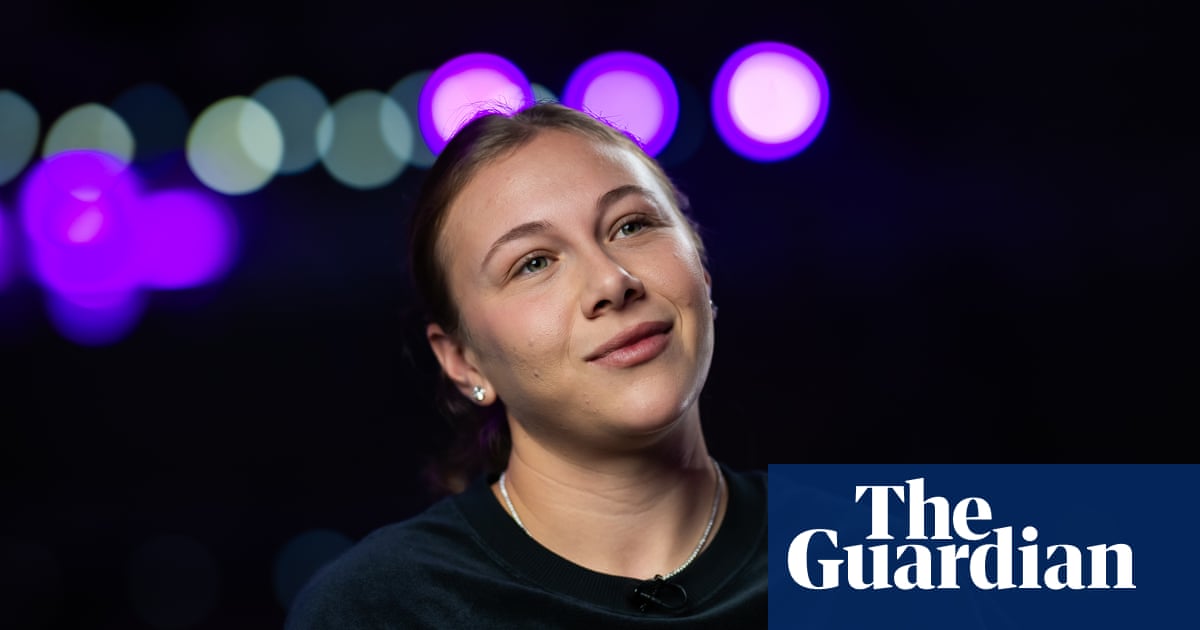
Amanda Anisimova’s 2025 tennis season has been nothing short of remarkable, marking a triumphant return to the sport after a challenging period focused on her mental health. The 24-year-old American, once hailed as a teenage prodigy, has emerged this year with renewed strength and maturity, reaching two Grand Slam finals and climbing to a career-high world No. 4 ranking. Her journey is not only a testament to her athletic prowess but also to her resilience, self-awareness, and commitment to mental well-being in the high-pressure world of professional tennis.
Anisimova’s story is one of early promise, adversity, and ultimately, growth. Turning professional at just 15, she quickly captured attention by reaching the French Open semi-finals at 17, showcasing a powerful and aggressive style of play highlighted by a devastating backhand. However, the relentless demands of the tour soon took their toll. In 2023, at the height of her career, she made the bold decision to step away from professional tennis for eight months to address burnout and prioritize her mental health—a move that defied the typical athlete’s mindset of pushing through pain and struggle at all costs.
This hiatus proved to be a pivotal point in Anisimova’s career. Upon her return, she displayed not only improved physical form but, more importantly, a transformed mental approach to the game. Speaking candidly at the WTA Finals in Riyadh, she emphasized the significance of mindset in her recent success. “The mindset that I go into tournaments and matches with has been the most important thing for me this year,” she told the Guardian. For Anisimova, success is not solely measured by wins and losses but by the ability to compete with pride and self-respect, knowing she has given her best effort on the court.
Her 2025 campaign was highlighted by deep runs at the sport’s biggest events. Although she endured a devastating 6-0, 6-0 defeat to Iga Swiatek in the Wimbledon final—a loss that could have shattered many players—Anisimova’s response was emblematic of her character. Immediately following the match, she composed herself and delivered a heartfelt speech to the crowd, expressing gratitude toward Swiatek, the fans, and her mother, Olga, who had flown in to witness her first Grand Slam final. This moment of vulnerability and grace resonated deeply within the tennis community, earning praise from peers like world No. 7 Madison Keys, who admired Anisimova’s poise in such a heartbreaking situation.
Remarkably, Anisimova did not let that loss define her season. Just 53 days later, she faced Swiatek again at the US Open quarter-finals, this time emerging victorious on her path to the final. Although she fell short against Aryna Sabalenka in the championship match, Anisimova quickly rebounded by capturing a prestigious WTA 1000 title in Beijing shortly thereafter. Reflecting on this turnaround, she acknowledged the mental work required to overcome the previous disappointment. “I had to really work on myself mentally and just put things in perspective,” she said, describing how she approached each new tournament as a fresh opportunity rather than dwelling on past setbacks.
Anisimova’s journey has been shaped not only by the pressures of professional sport but also by personal hardship. She lost her father, Konstantin, just a week shy of her 18th birthday—a profound loss that tested her strength and maturity at a young age. Drawing on these experiences, along with the support of strong women in her life, she has cultivated a resilient mentality that fuels her drive. “Everything I’ve experienced in my life... having healed myself in a way and really worked on myself—that’s where I get that mentality,” she explained.
Beyond technical skill and mental toughness, Anisimova places great importance on balance and self-care. Recognizing the signs of burnout, she is proactive about taking breaks and managing her schedule to maintain both physical and emotional well-being. This holistic approach to her career has helped her sustain high performance levels throughout a demanding season. She also values the camaraderie and positive atmosphere within her team, which includes moments of fun and relaxation, such as dune-bashing in the Saudi desert prior to the WTA Finals. While she opted out of a camel ride due to ethical concerns for the animals, choosing an ATV instead, the experience symbolizes the importance she places on personal values alongside her professional commitments.
Anisimova is also