
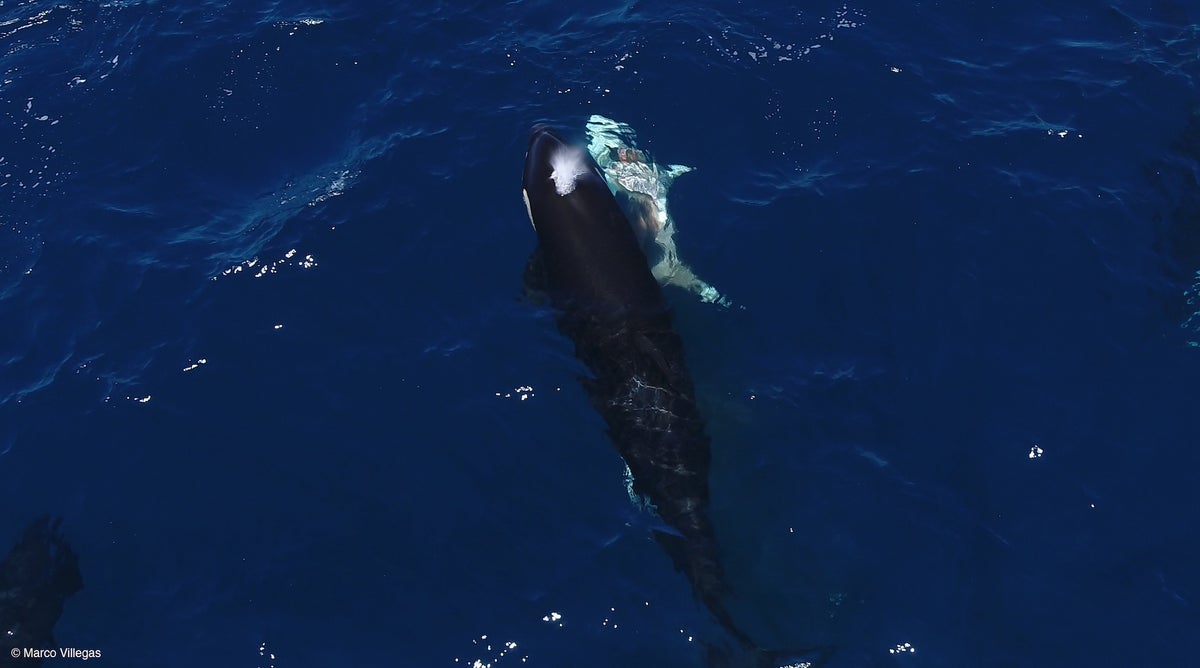
In a groundbreaking new discovery, researchers have captured the first-ever footage of orcas, commonly known as killer whales, actively hunting and flipping young great white sharks in a shark nursery. This remarkable behavior, documented in a recent study published in Frontiers in Marine Science, provides unprecedented insight into the strategic and intelligent hunting tactics employed by orcas, shedding new light on predator-prey dynamics in marine ecosystems.
Orcas have long been recognized for their imposing presence and complex social behaviors. Often described as apex predators with few natural enemies, these marine mammals are known for their strength, intelligence, and sometimes aggressive interactions with other species, including humans and marine animals. However, until now, direct evidence of orcas targeting juvenile great white sharks in their nurseries has been unavailable.
The study’s observations were made in the Gulf of California, a region known for its rich biodiversity and as a critical nursery habitat for young great white sharks. Using drone technology, researchers monitored orca activity over several years and documented two distinct hunting events that took place in August 2020. During these encounters, a pod of five orcas, later identified as the Moctezuma pod, was observed employing a highly specialized hunting technique known as "shark tipping." This involved the orcas herding young great white sharks to the surface and then flipping them onto their backs.
Flipping a shark upside down is a highly effective way to incapacitate it. This action induces a state called tonic immobility—a temporary paralysis that disrupts the shark’s spatial awareness and disconnects its mind from its body, akin to what gymnasts experience as “the twisties.” Once immobilized, the sharks become vulnerable and unable to defend themselves. The orcas capitalized on this state to dismember their prey safely.
Interestingly, the orcas’ primary target during these hunts was not the shark’s flesh but its liver, which is rich in nutrients and a dense source of energy. After flipping the sharks and rendering them immobile, the orcas consumed the livers, leaving the rest of the carcass behind. This selective feeding behavior highlights the orcas’ sophisticated understanding of their prey’s anatomy and nutritional value.
The researchers confirmed the consistency of this behavior when, two years later in August 2022, the Moctezuma pod was again observed flipping a young great white shark and feeding on its liver. The repeated use of this hunting strategy by the same orca group underscores the role of social learning and cultural transmission within orca pods. Such complex behaviors are passed down through generations, demonstrating the orcas’ advanced intelligence and strategic thinking.
Prior to these observations, documented orca attacks on great white sharks typically involved adult sharks and were thought to serve dual purposes: securing a large meal and eliminating competition for shared prey species. The targeting of juvenile sharks in nurseries represents a novel predatory behavior, revealing a new dimension to orca feeding ecology.
The researchers speculate that this shift in orca hunting tactics may be linked to environmental changes driven by climate change. Warming ocean waters are believed to be pushing shark nurseries closer to orca hunting grounds, increasing the likelihood of encounters between young sharks and orca pods. This shift raises important questions about the impacts of climate change on marine predator-prey interactions and the broader ecosystem.
Shark nurseries are vital habitats where juvenile sharks spend their early life stages growing and learning to forage independently. Because young sharks are solitary from birth and lack adult protection, these nurseries effectively function as safe zones. Historically, the absence of significant predators in these areas has enabled juvenile sharks to mature with minimal threat. However, with orcas now venturing into these nurseries, the safety of these habitats is compromised.
Marine biologist Alison Towner, an expert in orca predation of sharks, commented on the potential consequences of this new predation pressure. She noted that if orca attacks on juvenile sharks in nurseries are occasional, the impact on shark populations and nursery habitats may be limited. However, if such predation becomes frequent, it could force young sharks to relocate to less suitable or riskier environments, potentially disrupting their growth and survival. This displacement could have cascading effects throughout the marine ecosystem, altering predator-prey relationships and habitat use patterns.
The discovery of orcas targeting young great white sharks in their nurseries not only expands our understanding of orca predatory behavior but also highlights the dynamic and interconnected nature of ocean ecosystems. It underscores the importance of continued monitoring and