
Pakistan’s Defence Minister Khawaja Muhammad Asif recently asserted that there is a “complete consensus” within Pakistan’s political and military leadership regarding the country’s policy towards Afghanistan. Speaking amid rising tensions and criticism over Islamabad’s handling of its relationship with Kabul, Asif emphasized that Pakistan maintains a unified stance on its security and diplomatic approach towards its neighbor. He stated, “There exists complete unanimity of views among all Pakistanis, including the country’s political and military leadership, regarding Pakistan’s security policies and its comprehensive approach toward Afghanistan.”
This statement came in response to accusations from Zabihullah Mujahid, spokesperson for the Islamic Emirate of Afghanistan, who challenged Pakistan’s military establishment for allegedly undermining peace efforts between the two countries. Mujahid claimed that while Pakistan’s civilian government is keen on fostering constructive relations with Kabul, the Pakistani army continues to dominate foreign policy decisions, often to the detriment of peace initiatives. He even appeared to mock Defence Minister Asif’s role, suggesting that Asif’s authority might be limited to social media statements, specifically tweets.
The contrasting narratives from Islamabad and Kabul highlight a growing rift not only between the two countries but also within Pakistan itself. Observers point to a widening disconnect between Pakistan’s civilian leadership and its powerful military, which has historically played a significant role in shaping the country’s foreign policy, especially concerning Afghanistan. This internal discord has raised concerns among analysts that such inconsistencies could jeopardize the fragile ceasefire and peace talks that have been painstakingly negotiated in recent months.
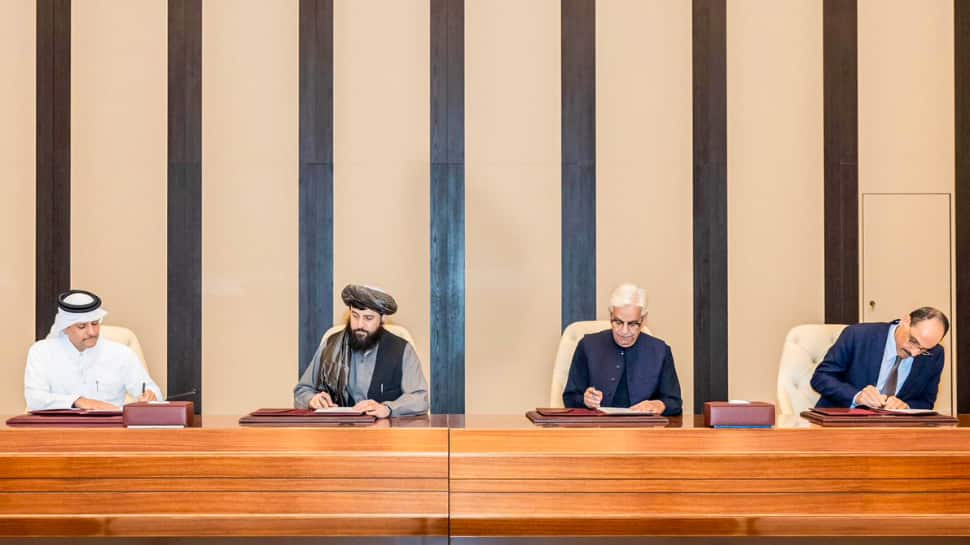
The ceasefire in question was initially agreed upon during talks held in Doha, Qatar, followed by a subsequent round of negotiations in Istanbul, Turkey, where both Afghan and Pakistani delegations reaffirmed their commitment to maintaining peace along their shared border. Despite these diplomatic efforts, Pakistan has been repeatedly accused by Kabul of violating the ceasefire through incursions into Afghan airspace and cross-border strikes, particularly in Afghanistan’s Paktika province. These actions have fueled deep mistrust in Kabul towards Islamabad’s intentions and sincerity in pursuing peace.
The ongoing tensions and mutual accusations have cast a shadow over upcoming diplomatic engagements. A high-level meeting between delegations from both countries is scheduled for November 6 in Istanbul, intended to further discuss and solidify peace commitments. However, with the rhetoric between the two sides becoming increasingly hostile and contradictory, the prospects of meaningful progress in these talks appear uncertain.
From Pakistan’s perspective, Defence Minister Khawaja Asif’s insistence on a unified policy aims to project stability and resolve within Islamabad’s ranks. Yet, the skepticism expressed by Afghan officials, particularly Mujahid’s comments, suggest that Pakistan’s military may be pursuing a more aggressive posture independently of the civilian government’s stated intentions. This duality complicates peace efforts and casts doubt on Pakistan’s ability to control all elements within its security apparatus.
Moreover, the accusations of Pakistani cross-border violations have not only strained relations between the two governments but have also heightened security concerns in the volatile border regions. The Paktika province, in particular, has witnessed repeated Pakistani military actions that Kabul views as breaches of sovereignty and violations of international agreements. Such incidents undermine the trust necessary for any lasting peace agreement and fuel fears of renewed conflict.
The broader geopolitical context also plays a role in this complex dynamic. Pakistan’s strategic interests in Afghanistan, its historical ties with various Afghan factions, and its concerns about border security and militant groups operating in the region contribute to the cautious and sometimes contradictory approach Islamabad has taken. Meanwhile, Afghanistan, under the Islamic Emirate, seeks to assert its sovereignty and resist external interference, viewing Pakistan’s military activities as hostile and counterproductive.
This backdrop of suspicion and conflicting agendas makes diplomatic reconciliation challenging. The scheduled Istanbul meeting represents a critical opportunity for both sides to bridge differences and reaffirm their commitment to peace. However, for the talks to succeed, there must be genuine coordination and coherence within Pakistan’s leadership, ensuring that military actions align with diplomatic objectives. Without such alignment, the risk remains that peace agreements will be undermined by unilateral military operations and political discord.
In summary, the situation between Pakistan and Afghanistan remains tense and fragile. Defence Minister Khawaja Asif’s assertions of a unified Pakistani policy contrast sharply with Afghan accusations of military sabotage and cross-border violations. These conflicting narratives expose internal divisions within Pakistan’s leadership and threaten to derail ongoing peace efforts, despite previously agreed ceasefires. With a pivotal meeting on the horizon, the coming weeks will be crucial in determining whether both countries can overcome distrust