
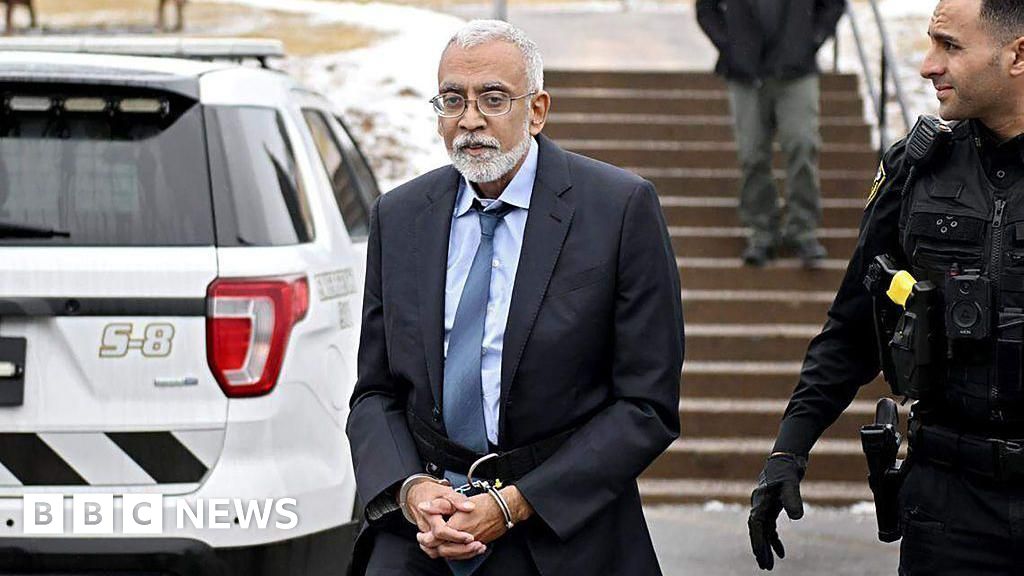
After spending 43 years in prison for a crime he did not commit, Subramanyam "Subu" Vedam has finally been exonerated. But instead of finding freedom with his family, Vedam now faces a new challenge: the threat of deportation to India, a country he left as an infant and where he has no meaningful ties.
Vedam’s ordeal began over four decades ago, in a case that would upend his life and test his resilience. In the late 1970s, Vedam was convicted of murdering his former roommate, Tom Kinser, a 19-year-old college student. Kinser had gone missing, and nine months later his body was found in a wooded area, with a fatal bullet wound to the skull. On the day Kinser disappeared, Vedam had asked him for a ride. Later, Kinser’s car was discovered back in its usual parking spot, but there were no witnesses to confirm who returned it.
Authorities focused on Vedam, who at the time was a legal permanent resident of the United States. He was denied bail and labeled a flight risk because of his foreign citizenship; his passport and green card were seized. In 1981, after two years in custody, Vedam was convicted of murder and sentenced to life in prison. In 1984, he was also convicted on a separate drug charge, receiving a sentence of two and a half to five years, to be served concurrently with his life term.
Throughout the years, Vedam maintained his innocence. His family and supporters argued that there was no physical evidence tying him to the crime. Despite numerous appeals and failed attempts at retrial, it was only recently that new evidence surfaced, which exonerated him of the murder.
Earlier this month, Centre County District Attorney Bernie Cantorna announced that he would not seek a new trial against Vedam, effectively clearing him of the murder. Vedam’s name was finally cleared, and after more than four decades, he was no longer considered a murderer in the eyes of the law.
However, freedom proved elusive. Before Vedam could even embrace his family, agents from US Immigration and Customs Enforcement (ICE) took him into custody, citing a 1988 deportation order. This order was originally based on his murder and drug convictions. While the murder charge has now been overturned, the drug conviction still technically stands. ICE quickly moved Vedam to a different facility in Pennsylvania, where he now awaits the outcome of his immigration case.
The abrupt transfer has been difficult for Vedam, his family says. During his long incarceration, Vedam had become a positive force in prison, mentoring fellow inmates and earning the respect of guards. He had his own cell and a measure of stability within the system he had come to know. Now, he shares a crowded room with 60 men, none of whom know his story or character. The environment is harsher and less supportive, and Vedam’s good conduct and contributions are unknown to those around him.
Despite the new uncertainties, Vedam remains focused on the progress that has been made. In conversations with his sister, Saraswathi Vedam, and other family members, he emphasizes the importance of recognizing his exoneration. “My name has been cleared, I’m no longer a prisoner, I’m a detainee,” he tells them, urging his loved ones to “focus on the win.”
Still, the fight is far from over. Vedam’s family is now navigating a complex legal landscape, seeking to have his immigration case reopened in light of the new facts. According to his sister, the situation is “very different” now that he has been cleared of the murder, and they are hopeful that the courts will recognize this. However, ICE has so far insisted that the original deportation order remains valid, since the drug conviction is still on his record.
ICE has not responded directly to the BBC’s requests for comment, but has stated to other news outlets that Vedam will remain in custody while his deportation is processed. The agency maintains that it is acting on a lawfully issued order.
For Vedam’s family, the situation is deeply frustrating. After enduring more than four decades of wrongful imprisonment, they were deprived of even a moment to reunite with him before he was taken by ICE. “What was deeply disappointing was that we didn’t even have a moment to hold him in our arms,” said Saraswathi Vedam. She emphasized