
**Nationwide "No Kings" Protests Draw Millions in Peaceful Demonstrations Against Trump Administration**
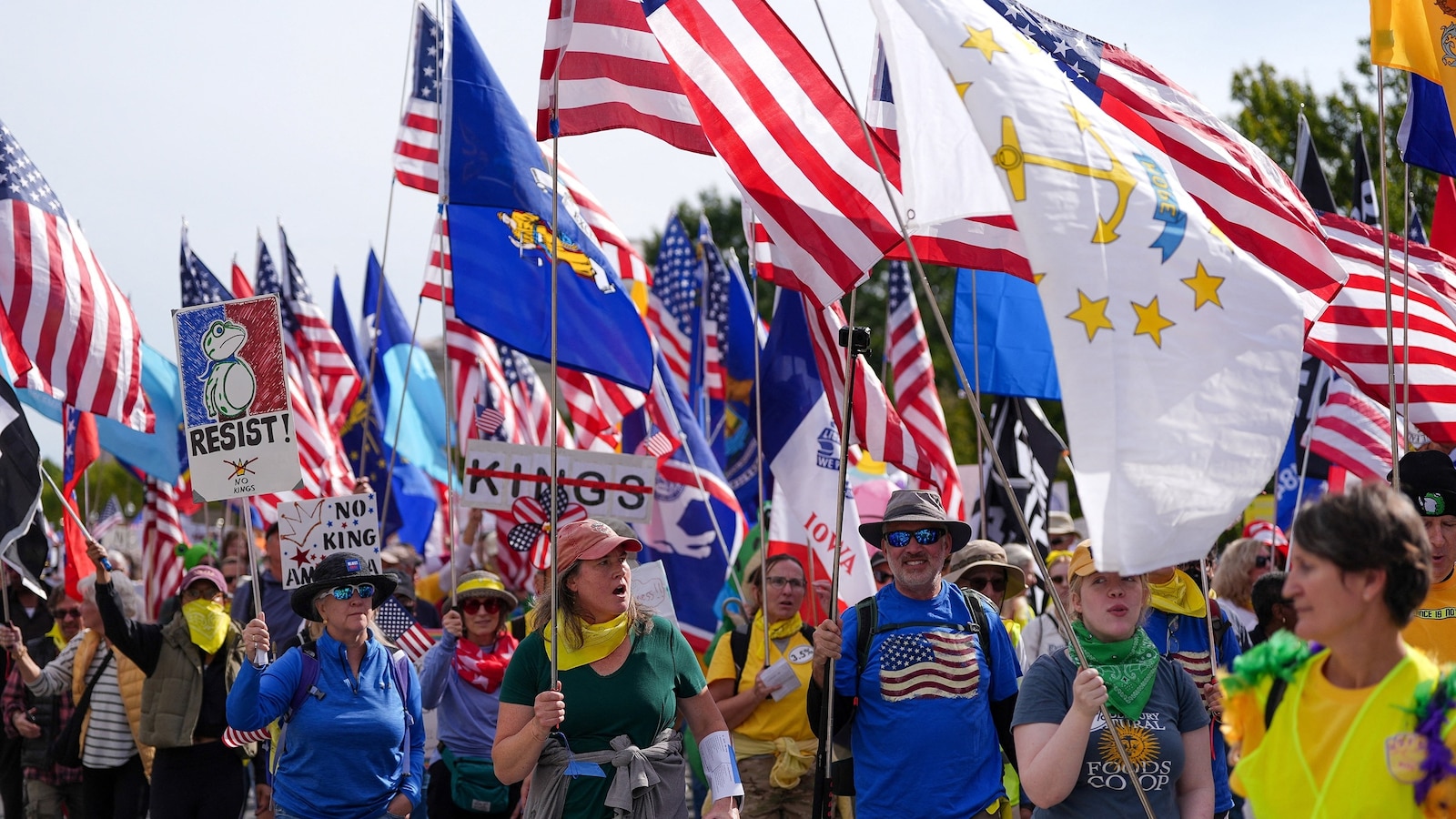
On Saturday, millions of Americans across the country participated in a second wave of "No Kings" protests, voicing opposition to what they described as abuses of power by President Donald Trump and his administration. The protests, which took place in cities from Boston to Los Angeles, were notable for their size, peacefulness, and the broad coalition of organizations and individuals who turned out to make their voices heard.
### Background and Organization
The "No Kings" protests were organized by a coalition of advocacy groups that includes the American Civil Liberties Union (ACLU), Indivisible, 50501, and several others. These groups came together to respond to a range of Trump administration policies, most notably the crackdown on immigration, the deployment of federal troops to American cities, and what they see as an erosion of democratic norms.
Deirdre Schifeling, the ACLU's chief political and advocacy officer, emphasized that these events were largely grassroots efforts, organized by volunteers and regular citizens rather than professional activists. The coalition planned more than 2,600 events nationwide, aiming to provide mass opportunities for Americans to express their concerns and demands to political leaders.
Although the exact fundraising details were not made public, some groups involved reported significant investments in promoting the rallies. For instance, the political group Home of the Brave announced a $1 million advertising campaign to boost turnout, placing ads in both local and national newspapers. To further increase visibility and energy around the protests, a number of celebrities—including Jane Fonda, Kerry Washington, John Legend, Alan Cumming, and John Leguizamo—were expected to attend and participate in various locations.
### The Day of Protest: Peaceful, Passionate, and Widespread
Despite predictions by organizers that millions would take to the streets, the actual turnout did not disappoint. Organizers reported approximately 200,000 demonstrators in Washington, D.C. alone—one of the largest single gatherings of the day. In New York City, over 100,000 people participated in rallies spread across the city’s five boroughs, according to the New York Police Department (NYPD).
Law enforcement agencies in major cities reported no arrests or incidents of violence—an outcome that both organizers and authorities found encouraging. The NYPD confirmed that the protests were peaceful and that all related traffic closures had been lifted by the end of the day.
This widespread peacefulness was mirrored in other cities. Photos and videos circulated on social media showed vast crowds holding signs and chanting slogans denouncing mass deportations, militarized policing, and the undermining of scientific and democratic institutions. The visual impact of these demonstrations was significant, providing a powerful image of unity and resolve among the participants.
### Voices from the Protests
The rallies drew not only ordinary citizens but also prominent public figures and elected officials. In Washington, D.C., scientist and television personality Bill Nye addressed the crowd, drawing parallels between the current protests and those that took place during the Vietnam War era. Nye argued that the stakes today are even higher, as demonstrators confront what he described as the potential end of the American republic due to unchecked executive power.
“We are here to tell our lawmakers that what’s going on in our government is wrong. They must stop the abuses of this petulant president and his circle of sycophants. No thrones, no crowns, no kings,” Nye declared to an enthusiastic audience.
Senator Adam Schiff, a Democrat from California, also attended the Washington protest. He highlighted the importance of public engagement, referencing a protest sign that read, “Silence is compliance.” Schiff voiced concern about the increased militarization of American cities, abuse of the Justice Department, and attacks on science, asserting that vocal, collective action is necessary to counter authoritarian trends.
The messaging from organizers and participants alike was clear: the protests were intended not just as critiques of specific policies but as a broader defense of democracy and constitutional norms. As one fundraising email from the Progressive Change Campaign Committee put it, the rallies were “for immigrant families under attack and for voters who are being silenced. For communities being terrorized by militarized policing. For families who are about to lose their health insurance. And for every single person whose rights are threatened by this administration’s cruelty.”
### Political Backlash and Republican Criticism
Unsurprisingly, the "No Kings" protests drew sharp criticism from Republican leaders