
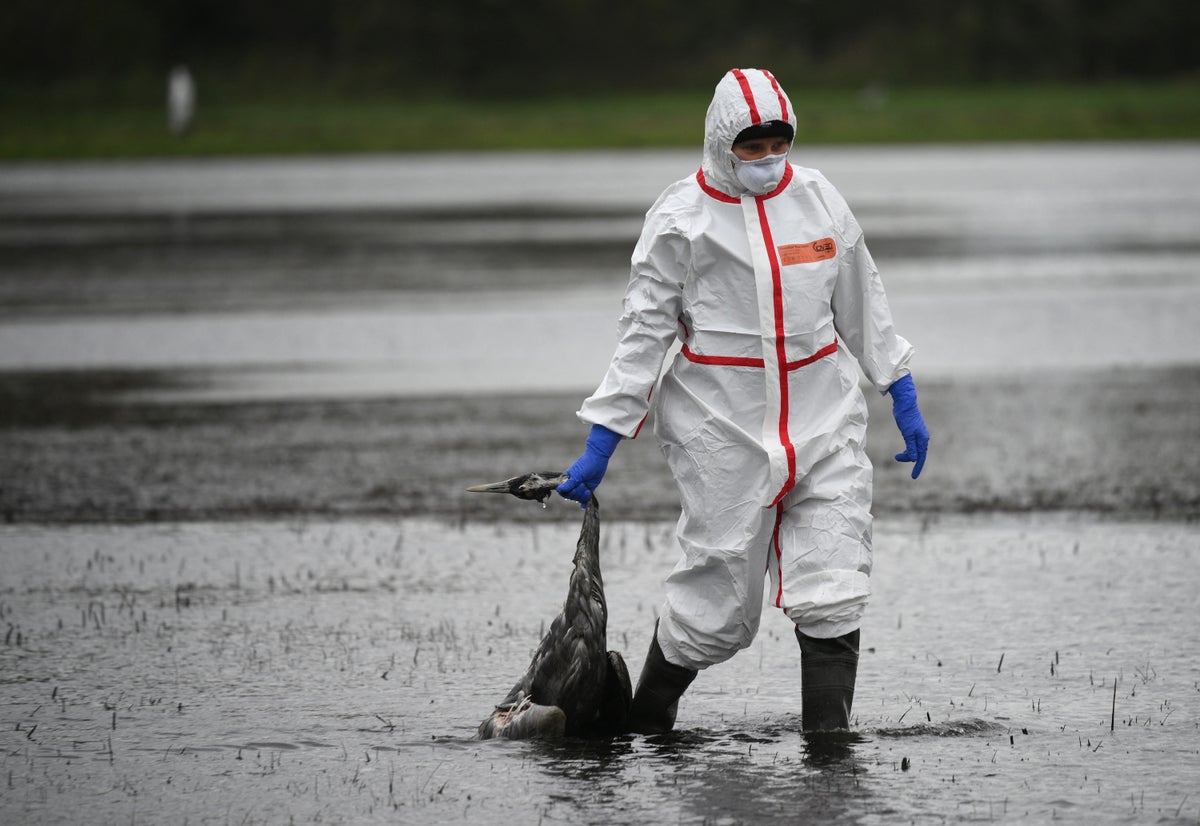
A bird flu virus strain called H9N2, often overlooked because it usually causes only mild illness in birds, could pose a significant risk of causing a future human pandemic, according to recent research presented by a team of scientists. Although much of the global attention and surveillance efforts have focused on the avian influenza virus H5N1—which is known for causing severe disease and fatalities in humans—experts warn that the H9N2 strain deserves closer monitoring due to its increasing adaptation to infect human cells.
Since 2020, the H5N1 virus has been responsible for approximately 21 human deaths, and it has also spread among dairy cows in North America. Its severity and impact on both animals and humans have made it a priority for surveillance and response. However, H9N2 has quietly been the second most common bird flu strain infecting people, with at least 173 confirmed human infections reported since 1998, mostly in China. This disparity in attention is concerning to researchers like Kelvin To, a clinical microbiologist at the University of Hong Kong, who presented findings at the Pandemic Research Alliance International Symposium held in Melbourne, Australia, on October 27, 2025.
One reason H9N2 infections might be underreported or underestimated is that the virus typically causes mild symptoms in humans, often not severe enough to result in hospitalization or prompt testing. Michelle Wille, a bird flu expert at the Peter Doherty Institute for Infection and Immunity in Melbourne, explains that many H9N2 cases likely go undetected because people are more often tested for other, more notorious strains like H5N1. This means the true prevalence of H9N2 infections in humans is probably higher than currently known.
A critical concern with any influenza virus is its potential to spread efficiently from person to person, a necessary condition for triggering a pandemic. So far, there is no confirmed evidence that H9N2 can transmit directly between humans. However, To and his colleagues have uncovered genetic changes in the virus starting around 2015 that have enhanced its ability to infect human cells. Their experiments demonstrated that a 2024 isolate of H9N2 infected more human cells in laboratory tests compared to a strain collected in 1999. Moreover, the modern version showed improved binding to a variety of receptors found on human cells, indicating that the virus is evolving to better infect people.
Despite these adaptations, experts caution that H9N2 still requires additional changes before it can sustain transmission among humans. For instance, the virus must evolve to preferentially attach to receptors that are prevalent in human respiratory tracts rather than those found in birds. It also needs to adapt to grow efficiently at the temperature and pH conditions found within the human body, which differ from those in avian hosts. Wille emphasizes that while the observed changes are significant, the virus is not yet fully equipped for widespread human-to-human spread.
Given the evolving risk, scientists advocate for increased surveillance and open communication regarding avian influenza viruses, including strains like H9N2 that are currently considered low pathogenicity in birds. One challenge is that many countries are not required to report infections caused by such low pathogenic strains, which limits global awareness and preparedness. Enhanced monitoring of the virus in both birds and mammals that live in close contact with poultry and wild birds could provide valuable insights. Kelvin To highlights the importance of tracking the virus in animals beyond birds, as this could reveal whether H9N2 has adapted to infect mammals, potentially bringing it closer to human pandemic potential.
Another critical factor in pandemic risk involves the mixing of genetic material between different influenza viruses, a process known as reassortment. When animals or humans are infected simultaneously with multiple flu strains, the viruses can exchange genetic segments, potentially creating new variants with enhanced capacity to infect humans. To points out that H9N2 genetic material has been detected in viruses responsible for previous bird flu outbreaks in people, underscoring its role as a genetic “donor” in the emergence of novel strains. This highlights the ongoing threat that H9N2 could contribute to the genesis of a new virus capable of causing widespread disease.
In summary, while H9N2 has not yet caused severe disease or widespread human transmission, its increasing adaptation to human cells represents a clear warning sign. The virus’s ability to infect human cells more efficiently than in the past, combined with its presence in multiple animal hosts and potential for genetic reassortment, makes it a candidate for