
**U.S. Government Shutdown Deepens Crisis for Science and Public Health**
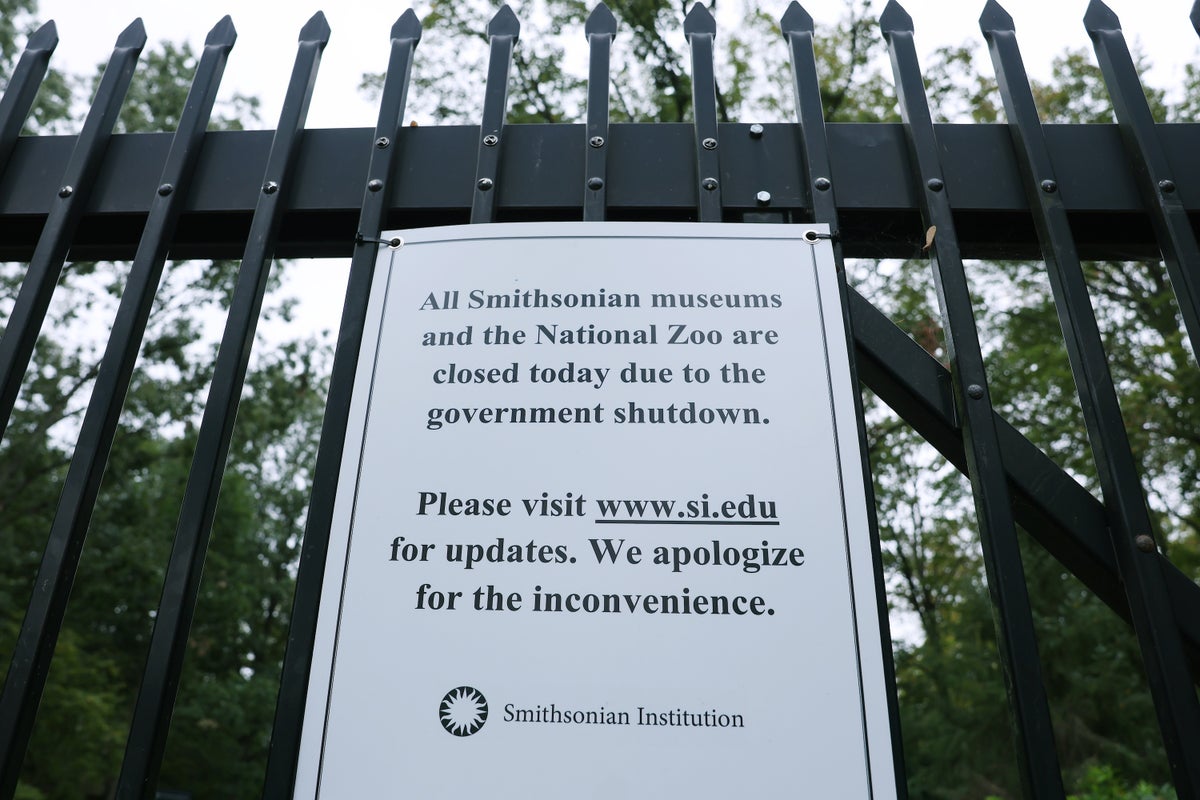
As the U.S. government shutdown approaches its third week, its devastating impact on the country’s scientific research and public health infrastructure is becoming painfully clear. The impasse, triggered by Congress’s failure to pass a spending bill by October 1, 2025, has led to the suspension of vital federal research programs, mass layoffs among government scientists, and the abrupt cessation of critical public services. The effects are rippling through federal agencies, universities, and non-governmental research organizations, threatening not only ongoing projects but also the nation’s ability to respond to future emergencies.
**Political Stalemate and Its Consequences**
At the heart of the shutdown is a bitter standoff between Congressional Republicans and Democrats. Democrats are demanding an extension of popular healthcare subsidies as a condition for passing the spending bill, a provision Republicans refuse to consider. With negotiations stalled, the government has been forced to operate without funding for weeks, bringing many activities to a grinding halt. Vice President JD Vance warned that the longer the shutdown continues, the more severe the cuts to government programs and services will become.
The Trump administration has taken unprecedented steps to address the lack of a budget, including issuing reduction-in-force (RIF) notices to thousands of federal employees—a move that goes beyond previous shutdown protocols. On October 11, the administration announced plans to lay off between 4,100 and 4,200 federal workers, citing the lack of a spending bill as justification. Federal employee unions have responded by filing lawsuits to challenge these layoffs, emphasizing both their abruptness and their potential illegality.
**Devastation at the Centers for Disease Control and Prevention**
One of the hardest-hit agencies is the Centers for Disease Control and Prevention (CDC), the country’s leading public health authority. On the evening of October 11, approximately 1,300 CDC employees received layoff notices, although about 700 were later rescinded. Even so, hundreds remain in limbo, facing uncertain futures. Union representatives and affected workers warn that these cuts severely undermine the agency’s capacity to address public health emergencies.
Of particular concern is the fate of the National Health and Nutrition Examination Survey (NHANES), a longstanding CDC initiative that has collected crucial health data from Americans since the 1960s. NHANES data has been instrumental in identifying health threats, such as the dangers of lead in gasoline, and in shaping public health policies. Former CDC staff member Asher Rosinger, now an epidemiologist at Pennsylvania State University, reported that layoffs have decimated the NHANES planning team, raising fears about the program’s ability to continue. “This gold standard survey may no longer be able to operate in the future,” Rosinger lamented.
The shutdown has also compounded previous layoffs at the CDC. Isaac Michael, a mathematical statistician formerly involved in tracking the experiences of new mothers, noted that his entire team was laid off in April as part of earlier cuts, and some have now received a second layoff notice. The loss of such surveillance would leave public health officials blind to emerging maternal and infant health crises. “We won’t even know there’s a problem, because we’re not collecting any reliable data,” Michael explained.
Officials at the Department of Health and Human Services (HHS), which oversees the CDC, defend the layoffs by saying they are focusing on “wasteful and duplicative entities.” But public health experts contend that these are vital programs, not redundancies.
**Cuts Ripple Across Federal Science Agencies**
The CDC is far from alone. The Environmental Protection Agency (EPA) expects to lose 20 to 30 staff members, and the Department of Energy (DoE) has begun issuing RIF notices to employees overseeing renewable energy and energy efficiency programs. According to a DoE spokesperson, these changes reflect the Trump administration’s priorities, including a shift away from clean energy in favor of “affordable, reliable, and secure energy” from traditional sources.
The shutdown has also been accompanied by sweeping cuts to federal research funding. On the second day of the shutdown, the DoE announced the termination of nearly $7.6 billion in grants supporting 223 energy projects, many focused on renewable energy technologies and infrastructure. A Nature magazine analysis showed that 33 academic institutions will lose a combined $620 million in grants. For example, Colorado State University stands to lose funding for seven projects, including a $300 million grant to reduce methane emissions