
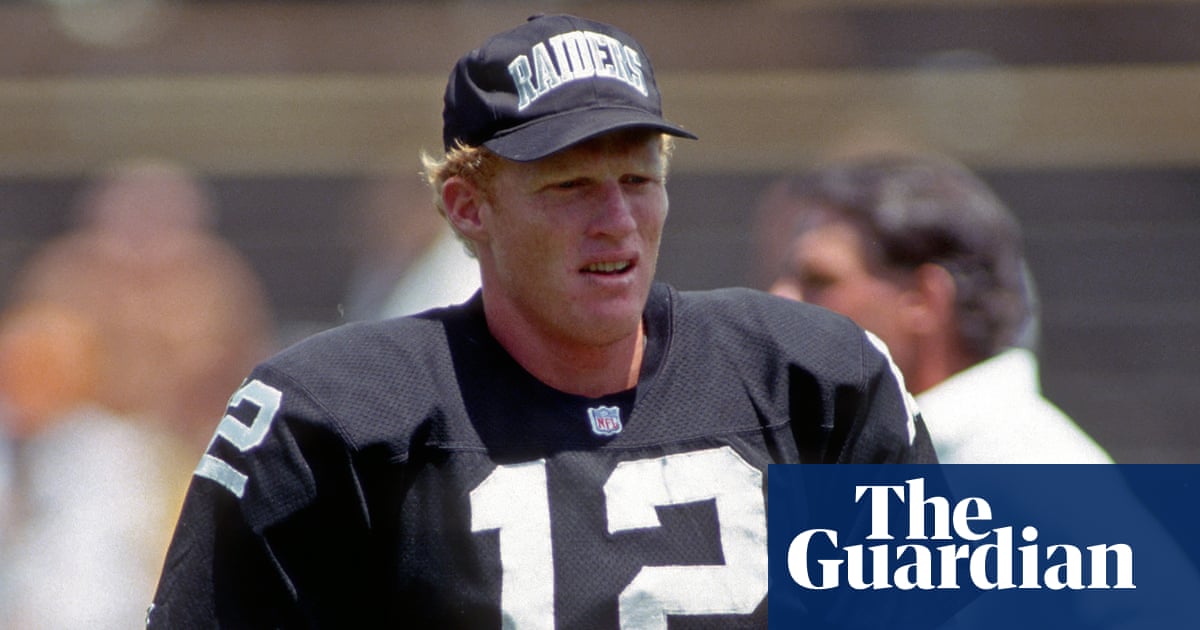
Todd Marinovich’s life and career embody a complex and cautionary tale of extraordinary talent, intense pressure, and a long battle with addiction. Once hailed as one of football’s brightest prospects, Marinovich’s promising journey was derailed by drug abuse and personal struggles. In his new memoir, Marinovich: Outside the Lines in Football, Art, and Addiction, he offers a candid and deeply personal look back at his turbulent life, revealing the highs and lows behind the headlines.
From the beginning, Marinovich’s path was shaped by a relentless drive for athletic excellence. Raised by his father, Marv Marinovich—a former Raiders player and assistant coach—Todd was subjected to an extreme, scientifically engineered training regimen designed to create the perfect athlete. This upbringing earned him the nickname “Robo Quarterback,” a moniker reflecting the robotic discipline his father instilled. Yet, from an early age, Marinovich also battled a darker side, evidenced by another nickname, “Marijuana-vich,” mocking his early use of marijuana and suggesting a hidden struggle with substance abuse.
Marinovich burst onto the national stage as a star quarterback at USC, leading the Trojans to a Rose Bowl victory as a freshman and becoming the first sophomore ever to declare for the NFL draft. His talent was undeniable, and he entered the professional ranks with great expectations as the Los Angeles Raiders’ quarterback in the early 1990s. But behind the scenes, Marinovich’s life was unraveling. While some teammates like Marcus Allen and Howie Long were aware of his struggles and tried to support him, many others remained oblivious to the extent of his drug use.
In his memoir, Marinovich recounts mornings when the weight of his addiction was crushing. On one occasion, after a weekend binge involving ecstasy, cocaine, and alcohol, he describes feeling like the Tin Man from The Wizard of Oz, unable to lift his head. It was Marcus Allen who got him up in time for practice that day, demonstrating a rare moment of camaraderie amid Marinovich’s downward spiral. Despite the growing problem, the full scope of his addiction remained a secret for a time, until a failed drug test in 1992 led to his dismissal from the Raiders.
The loss of his NFL career marked the beginning of a decade-spanning struggle with addiction and legal troubles. Marinovich’s substance abuse escalated to include a wide range of drugs—ecstasy, acid, cocaine, heroin, crack, and methamphetamine—used in deadly doses as a way to escape his inner pain. His memoir does not shy away from the harsh realities of this period, including incidents like faking drug tests by using teammates’ urine samples and other reckless behavior that alienated him from the sport he once dominated.
Yet, the book is about more than football and addiction. Co-written with author Lizzy Wright, who was recommended to Marinovich by her husband Steve Wright—a former NFL lineman who once protected him on the Raiders—the memoir explores Marinovich’s emotional depth and his passion for art. This artistic outlet became a crucial source of solace and healing for him. Marinovich’s paintings now hang in the Raiders’ art gallery in Las Vegas, a testament to his creative rebirth and ongoing connection to the team that once gave him a chance.
Art also played a pivotal role in healing a difficult personal relationship—with his father. Marv Marinovich, once a strict coach and demanding parent, later suffered from Alzheimer’s disease. In his father’s final years, the two found a new bond through collaborative artistic projects. Despite the disease’s effects, their shared creativity allowed them to connect on a level that transcended words and past conflicts, revealing a tender side of a relationship previously defined by discipline and competition.
Throughout the memoir, Marinovich remains brutally honest about his mistakes and shortcomings. He openly discusses multiple arrests, including a sexual assault allegation in 2000 that did not result in charges and a bizarre 2016 incident where he was arrested for drug possession while naked—explained in the book as a misunderstanding involving skinny-dipping in what he thought was a family pool. Marinovich acknowledges the embarrassment and pain these episodes caused his family but refuses to gloss over them, emphasizing the importance of honesty in telling his story.
Despite the many setbacks, Marinovich’s story is also one of resilience and ongoing recovery. After a brief resurgence playing in the Arena Football League and later in semi-pro games, he continues to fight his addiction battles. In