
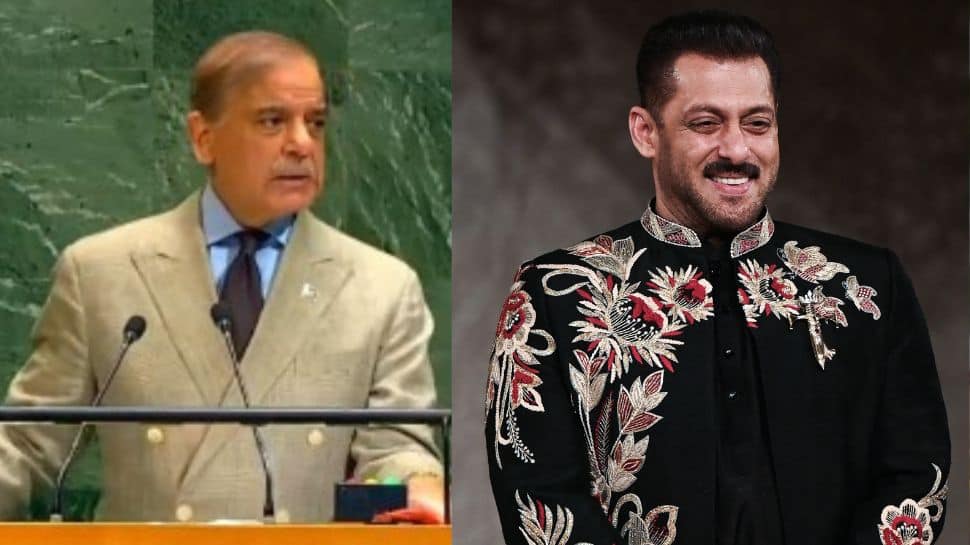
Bollywood superstar Salman Khan, typically known for his film releases during Eid, unexpectedly became the center of a heated controversy in Pakistan this Diwali, not for a movie, but due to a statement he made at an international event. Alongside fellow Bollywood icons Shah Rukh Khan and Aamir Khan, Salman appeared at the Joy Forum 2025 in Riyadh, Saudi Arabia — an event that surprised fans and triggered a significant uproar in Islamabad. The controversy arose from Salman Khan’s remarks about Balochistan, a region within Pakistan, which ignited a fierce debate and polarized opinions across Pakistani social media.
During the discussion on the success of Indian films in Saudi Arabia, Salman Khan noted that not only Hindi films but also Tamil, Telugu, and Malayalam movies have been performing exceptionally well in the Kingdom. He attributed this popularity to the diverse expatriate community working in Saudi Arabia, specifically mentioning people from “our country” including “people from Balochistan, people from Afghanistan, people from Pakistan.” While seemingly a casual observation, this particular mention of Balochistan as separate from Pakistan was seen by many Pakistanis as a direct affront, implying recognition of Balochistan as an independent entity rather than a province of Pakistan.
This subtle yet politically charged statement struck a sensitive nerve in Pakistan, where the issue of Balochistan is highly contentious. The region has been a flashpoint of separatist movements and armed conflict for years, with Baloch insurgents demanding independence from Pakistan. These ongoing tensions have resulted in hundreds of attacks against Pakistani military forces, with over 150 soldiers killed since the beginning of the year. The conflict over Balochistan is deeply rooted in grievances about the exploitation of the province’s abundant mineral wealth—such as barite, zinc, chromite, copper, and gold—by the Pakistani military and political establishment, alongside allegations of systemic suppression of the local Baloch population.
Salman Khan’s statement ignited a sharp backlash from many Pakistanis, particularly on social media platforms. Frustrated by continuous militant attacks and the sensitive nature of Balochistan’s status, numerous Pakistani users accused Salman of ignorance and disrespect toward Pakistan’s sovereignty. They argued that Salman lacked understanding of the complex political and social realities of Balochistan and urged him to avoid commenting on such sensitive matters. The intensity of the criticism even crossed usual boundaries, revealing just how volatile and emotional the subject is within Pakistan.
Conversely, the reaction from many Baloch citizens was notably different. Far from condemning Salman Khan, a significant portion of the Baloch community expressed strong support for his remarks. They viewed Salman’s mention of Balochistan as a form of acknowledgment by a prominent international figure that the Baloch identity is distinct and separate from Pakistan. Social media posts from Baloch citizens conveyed gratitude toward Salman, with many expressing hope that their region would eventually gain independence from what they describe as “Munir’s army” — a reference to Pakistan’s military — and the broader political establishment. This support highlighted the deep-rooted aspirations among many Baloch people for autonomy and recognition.
This division in public opinion on social media — with one side predominantly Pakistani critics and the other Baloch supporters — underscores the ongoing and unresolved nature of the Balochistan conflict. The region, comprising approximately 46% of Pakistan’s land area but housing only about 6% of its population, remains Pakistan’s largest province by area and an area of strategic and economic importance due to its mineral resources. Yet, the local population alleges that the wealth extracted from the province overwhelmingly benefits the central government and military, leaving Baloch communities impoverished and politically marginalized.
The conflict has been marked by a sustained insurgency from Baloch nationalist groups who accuse the Pakistani military of oppressive actions, including enforced disappearances, extrajudicial killings, and suppression of political freedoms. The situation remains volatile, with frequent attacks on military targets and ongoing counterinsurgency operations. This fraught environment explains why Salman Khan’s seemingly offhand comment resonated so strongly and elicited such divergent responses.
Salman Khan’s reputation for delivering impactful dialogues in his films adds an ironic layer to the controversy. His famous line, “I come in the heart, not in understanding,” reflects the complexity of interpreting his words in this context. While his statement may have been a simple acknowledgment of the diversity of expatriates in Saudi Arabia, the political implications in