
**Summary of the Article: Renewed Tensions Between Israel and Hamas Threaten Fragile Ceasefire and Humanitarian Access**
The situation in Gaza and southern Israel has reached a boiling point once again, as the already fragile ceasefire between Israel and Hamas appears to be on the verge of total collapse. Both sides accuse each other of violating the truce, and civilians continue to pay the price as violence and political brinkmanship escalate.
**Ceasefire Violations and Mounting Casualties**
Since the ceasefire was put in place in early October, its success has been heavily disputed. According to Palestinian officials and reports by Al Jazeera, the Israeli military has carried out at least 47 violations of the ceasefire, resulting in the deaths of 38 Palestinians and injuries to another 143. Israel, meanwhile, accuses Hamas of breaking the truce, using this as justification for renewed military actions.
The overall humanitarian cost of the conflict since October 2023 is staggering. Israeli military operations in Gaza have killed at least 68,116 people and wounded over 170,200, according to Palestinian health authorities. In Israel, the initial attacks by Hamas on October 7th resulted in 1,139 deaths, with around 200 individuals taken captive—a central issue fueling the current crisis.
**Netanyahu Convenes War Council, Vows “Strong Action”**
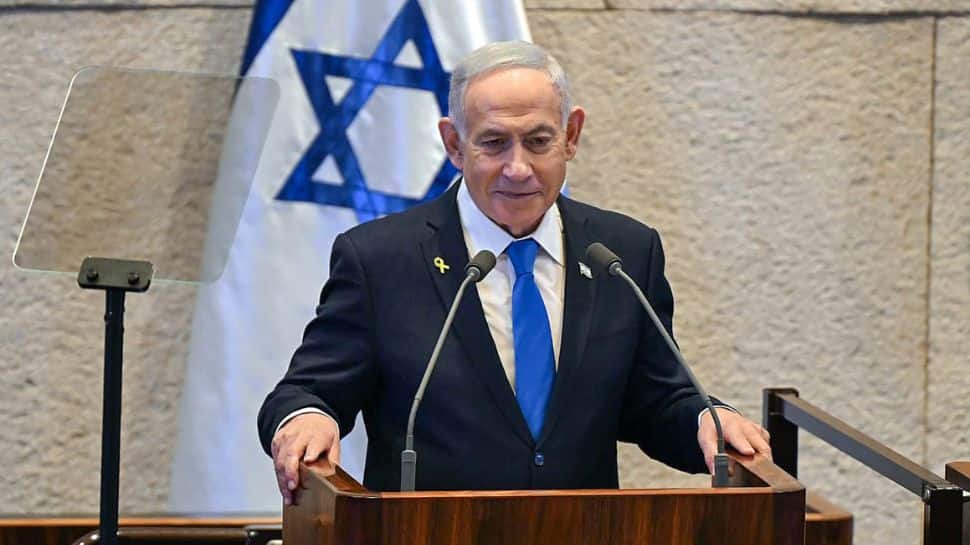
Amidst fresh allegations of ceasefire breaches, Israeli Prime Minister Benjamin Netanyahu called an emergency war council with the Defense Minister and top security officials. In a public statement, Netanyahu’s office made it clear that Israel would respond “swiftly and devastatingly” to what it views as Hamas’s violation of the ceasefire. The statement further directed the Israeli military and security establishment to “take strong action against terrorist targets in the Gaza Strip.”
The Israeli government continues to insist that Hamas is responsible for shattering the truce, while Palestinian officials and international observers report Israeli military operations and airstrikes that have continued regardless of the ceasefire declaration. The mutual recriminations have created a climate of extreme mistrust and fear, with both sides bracing for further escalation.
**Rafah Border Closure: A Humanitarian Lifeline Severed**
In a move that has drawn widespread concern and condemnation, Prime Minister Netanyahu has ordered the closure of the Rafah border crossing, Gaza’s only gateway to Egypt and the outside world not under direct Israeli control. The closure is to remain “until further notice,” with Netanyahu explicitly linking its reopening to the return of the bodies of Israeli hostages held by Hamas.
For Gaza’s 2.3 million residents, the Rafah crossing is far more than a border—it is a critical humanitarian lifeline. The crossing is typically used to bring in desperately needed medical supplies, food, and other humanitarian aid, as well as to evacuate the sick and wounded. Its closure effectively traps civilians inside a war zone, cutting them off from essential resources and any chance of escape.
Netanyahu’s office issued a stark ultimatum: “The Rafah border crossing will not open until further notice. Its opening will be under consideration in accordance with the manner in which Hamas implements its part in return for the deceased hostages and implementation of the agreed-upon framework.” In essence, the Israeli government is demanding that Hamas return the bodies of all Israeli hostages in exchange for even the most basic humanitarian access for Gaza’s civilians.
**Bodies of Hostages Returned Amid Mounting Anger**
In a grim development, Hamas did return the bodies of two more Israeli captives to the Red Cross, which in turn transferred them to Israeli personnel. The Israel Defense Forces (IDF) confirmed the transfer and emphasized that Hamas is still required to return the remains of all hostages as part of existing agreements. For families of the missing, the return of two bodies is not enough, and public frustration is growing.
The issue of the hostages—those still alive and those who have died in captivity—remains a deeply emotional and politically charged topic in Israel. The families of captives, along with large swathes of the Israeli public, are demanding that the government do whatever it takes to bring their loved ones home. This pressure is fueling calls for both aggressive military action and for renewed negotiations with Hamas, leading to a volatile and unpredictable political atmosphere.
**Diplomatic Chaos: Planned Reopening of Rafah Thwarted**
Prior to Netanyahu’s order, the Palestinian Embassy in Cairo had announced that the Rafah