
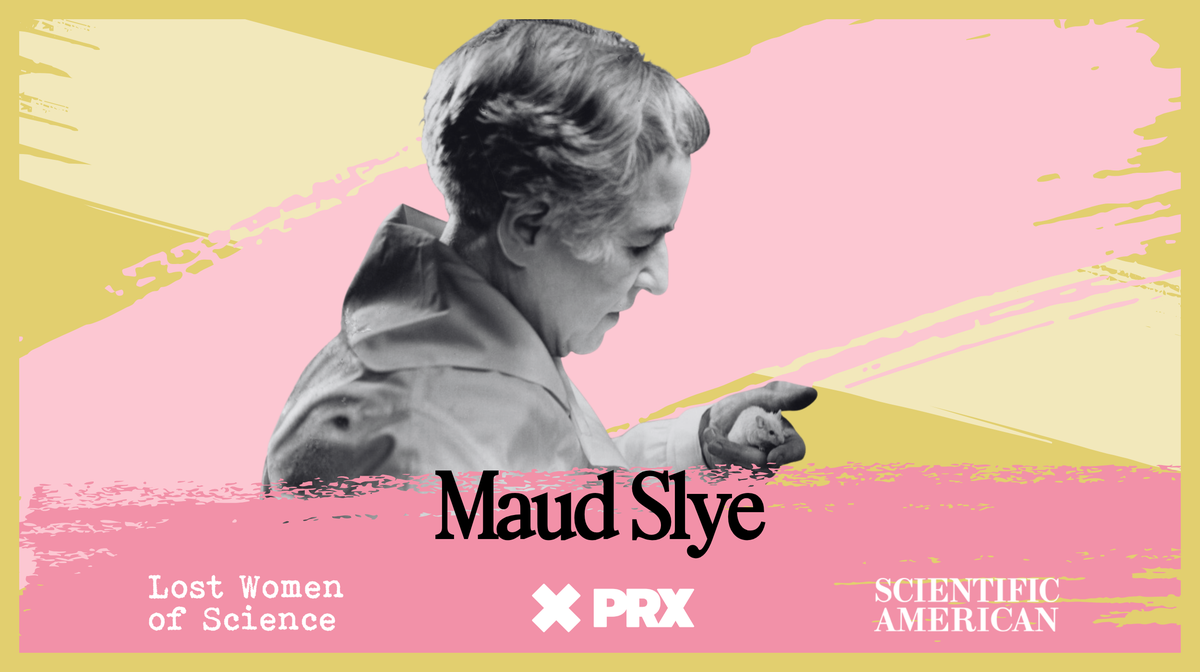
Maud Slye and Her Legacy in Cancer Research: A Detailed Exploration
In the early decades of the 20th century, the scientific community was fervently searching for answers to one of medicine’s most perplexing questions: What causes cancer? Among those who ventured into this uncharted territory was Maud Slye, a relatively unknown cancer researcher whose ambitious work with mice at the University of Chicago would both illuminate and complicate our understanding of cancer’s origins. Slye’s research suggested that susceptibility to cancer was hereditary, a notion that challenged prevailing ideas of the time and sparked both admiration and controversy. Her story is one of pioneering science, personal determination, flawed theories, and the complex interplay of ethics and genetics.
Early Life and Academic Beginnings
Maud Slye was born around 1869 in Minneapolis, though some records and Slye herself claimed 1879—likely an attempt to circumvent mandatory retirement rules later in her career. Raised in modest circumstances, she pursued higher education at the University of Chicago starting in 1895. Financial constraints meant Maud had to work diligently to support herself, including serving as a part-time secretary to the university president while completing her undergraduate degree.
Her academic journey was marked by challenges, including a nervous breakdown that led her to leave Chicago temporarily. Seeking respite and new opportunities, Slye moved to Woods Hole, Massachusetts, a hub for biological research, where she stayed with relatives and immersed herself in scientific environments. She later enrolled at Brown University, earning her bachelor’s degree in 1899.
Transitioning from Teaching to Research
Following graduation, like many women of her era, Slye took up teaching at a Normal School in Rhode Island. However, her proximity to Woods Hole’s scientific community proved pivotal. There, she met Charles Whitman, the first director of the Woods Hole Marine Biological Laboratory and head of biological sciences at the University of Chicago. Impressed by her potential, Whitman invited Slye back to Chicago in 1908 to serve as his graduate assistant, launching her into a serious research career.
Slye’s initial research focused on the genetics of the Japanese waltzing mouse, a breed known for its distinctive circling behavior caused by an inner ear defect. Although she misinterpreted the behavior as purely genetic without understanding its physiological cause, this work laid the groundwork for her interest in heredity and inheritance patterns.
The Scientific Context: Genetics and Cancer in the Early 1900s
During Slye’s early research years, the field of genetics was emerging from the shadow of Gregor Mendel’s rediscovered laws of inheritance. Mendel’s experiments with pea plants, which described dominant and recessive traits, had only been widely recognized since 1900. The concept of genes was still nascent, and terminology was fluid. Scientists were beginning to grasp that traits were inherited in discrete units rather than through blending, but many questions remained.
At the same time, the causes of cancer were hotly debated. Theories ranged from physical irritants and chronic inflammation to infections and diet. Some speculated that environmental factors like soot exposure in chimney sweeps led to cancer, while others posited germs or diet complexity as culprits. The idea that cancer could be hereditary was controversial, with some fearing it would strip hope from patients and families.
Slye’s Mouse Colony and Her Groundbreaking Hypothesis
To investigate cancer’s causes, Slye took a rigorous and methodical approach. She began breeding mice in the basement of the University of Chicago’s Zoology building, carefully documenting their lineage and health outcomes. What started as a modest colony quickly expanded to tens of thousands of mice, eventually requiring a three-story building to house them all.
Managing such a vast colony was an enormous logistical challenge. Mice require constant care: clean cages, appropriate food, nesting materials, and conditions conducive to breeding. Slye’s dedication was extraordinary; she even moved across the street from the lab to minimize commute time and sacrificed personal needs to support her research.
Through meticulous records, Slye observed distinct patterns: some inbred mouse families showed almost universal cancer incidence, while others appeared virtually immune. When mice from cancer-prone strains were bred with those from cancer-resistant strains, their offspring rarely developed cancer. From these findings, Slye concluded that cancer susceptibility was controlled by a single recessive gene, echoing Mendelian inheritance.
Eugenics as a Proposed Solution
Slye’s genetic model led her to a controversial solution: the application of eugenics to eradicate cancer. She advocated for controlled breeding among humans, suggesting that individuals from cancer-prone families should only reproduce with those from cancer-free lineages to eliminate the recessive cancer gene over generations.
This approach reflected a broader eugenics movement prevalent in early 20th-century science, which sought to improve human populations through selective breeding. However, Slye’s version was somewhat moderate; she opposed sterilization and coercive measures, emphasizing scientific mating over romantic considerations.
Her stance was ethically problematic, dismissing personal freedoms and the complexities of human relationships. Moreover, she herself remained unmarried and childless, which may have influenced her detached view on reproduction and romance.
Scientific Reassessment and Limitations of Slye’s Model
Modern genetics and oncology have since revealed that cancer is far more complex than Slye’s single-gene model suggested. Only about 5-10% of cancers are hereditary, involving mutations in numerous genes rather than a single recessive gene. For example, mutations in the BRCA1 and BRCA2 genes significantly increase cancer risk but are inherited in a dominant fashion—meaning one copy from either parent can confer risk.
Medical geneticist Raymond Kim explains that while Slye’s work was pioneering, her assumptions about inheritance patterns and the simplicity of cancer genetics were incorrect. Her belief that mating strategies could eliminate cancer does not hold given the multifactorial nature of cancer development, including environmental and lifestyle factors.
Despite these shortcomings, Slye’s research was instrumental in convincing the scientific community to take hereditary cancer risk seriously, paving the way for genetic testing and targeted screenings that benefit patients today.
Scientific Controversies and Personal Struggles
Slye’s career was marked by significant disputes with peers and institutions. She clashed with the American Cancer Society over public messaging on hereditary cancer risk, feeling that their reassurances downplayed the genetic danger and undermined her eugenic proposals.
More notably, she engaged in a prolonged feud with Clarence Cook Little, a rising star in mouse genetics, who publicly criticized her understanding of Mendelian inheritance. Little pointed out errors in her explanations of coat color genetics in mice, accusing her of misrepresenting basic genetic principles. Slye staunchly defended her work, refusing to concede mistakes.
This stubbornness was both a strength and a weakness. While it helped her maintain her scientific standing in a male-dominated field, it also alienated colleagues and raised questions about her grasp of genetics. Historians speculate that as a woman with less formal training than some male contemporaries, Slye may have felt compelled to defend herself aggressively to gain respect.
Legacy and Recognition
Despite controversies and errors, Maud Slye’s contributions to cancer research were significant. She amassed an unparalleled dataset on cancer incidence in mice, demonstrating heritable cancer risk and influencing subsequent research directions. Her advocacy shifted scientific perspectives toward the genetic components of cancer, a foundational insight for modern oncology.
Slye received considerable recognition during her lifetime: she was featured in prominent publications, awarded prizes, granted an honorary doctorate, and recommended for a Nobel Prize by the American College of Physicians. She rose to associate professor at the University of Chicago and retired with a pension.
However, her name remains relatively unknown today, overshadowed by more prominent figures and complicated by her flawed theories and eugenic stance. The Lost Women of Science initiative seeks to reclaim her story, acknowledging both her achievements and shortcomings.
Reflection on Science, Ethics, and Progress
Slye’s story illustrates the complexities of scientific progress: how groundbreaking work can coexist with significant errors and ethical missteps. It highlights the challenges faced by women in early 20th-century science, who had to navigate limited opportunities, skepticism, and gender bias.
Her commitment to rigorous data collection and her insistence on heredity’s role in cancer remain influential, even as modern science has moved beyond her simplistic genetic model. The ethical issues surrounding eugenics serve as a cautionary tale about the dangers of applying scientific theories without regard for human rights and dignity.
Today, knowledge of hereditary cancer informs genetic testing, early detection, and personalized medicine, offering hope and actionable options for those at risk. Maud Slye’s work helped lay the groundwork for these advances, making her a figure worth remembering and learning from.
Conclusion
Maud Slye, the “mouse lady” of early cancer genetics, was a pioneering yet flawed scientist whose dedication and research advanced understanding of hereditary cancer risk. Her life story intertwines scientific ambition, personal struggle, and ethical controversy, reflecting the complex nature of scientific discovery and its human context. While her eugenic proposals and some scientific interpretations were misguided, her meticulous data collection and advocacy for genetic factors in cancer have left a lasting impact. Remembering her contributes to a richer, more nuanced history of science and underscores the importance of critical reflection as we continue to unravel the mysteries of cancer.